Iran said it launched missile and drone attacks on US military sites in Bahrain and Kuwait on Wednesday after the United States carried out a fresh wave of strikes on Iranian targets near the Strait of Hormuz.
The escalation marks another serious blow to the fragile ceasefire and the Islamabad Memorandum, with both sides accusing each other of violating the agreement.
Iran’s top joint military command, Khatam al-Anbiya Central Headquarters, condemned the US strikes as a “blatant act of aggression” and warned that Iranian armed forces would deliver a “crushing response.”
The military command said US interference in the management of the Strait of Hormuz was unacceptable.
It also said the only safe sea route for commercial ships and oil tankers in the Strait of Hormuz would be the one determined by Tehran.
Iran claims attacks on US military sites
Iran’s Islamic Revolutionary Guard Corps said its naval and aerospace forces carried out a joint missile and drone operation against key US military sites in Bahrain and Kuwait.
According to the IRGC, 85 locations were targeted, including US military bases in Bahrain and Kuwait.
The Revolutionary Guards said the targets included the US Fifth Fleet headquarters in Bahrain, Bahrain’s Fifth Naval District, Bandar Salman, and Ali Al Salem Air Base in Kuwait.
Iranian military sources also claimed that Sheikh Isa Air Base in Bahrain was targeted, saying US troops stationed there were attacked.
The IRGC said US bases in the region had become legitimate targets after what it called Washington’s violation of the ceasefire agreement.
US MQ-9 drone shot down
The Revolutionary Guards also claimed that they shot down a US MQ-9 Reaper drone in southern Iran.
Iranian media said the drone was downed in the Bushehr area after it allegedly attempted to interfere in the Iranian operation.
There was no immediate reaction from the US military to Iran’s claims about the drone or the attacks on US facilities in Bahrain and Kuwait.
Sirens sound in Bahrain and Kuwait
Air raid sirens sounded in Bahrain and Kuwait after Iran announced the attacks.
Bahrain’s Ministry of Interior said sirens had sounded and urged citizens and residents to remain calm and move to the nearest safe place.
The ministry later said sirens had sounded for a second time on Wednesday. It did not immediately provide further details about the reason for the alert.
Bahraini authorities said they were confronting drones and missiles coming from Iran.
The siren has been sounded .Citizens and residents are urged to remain calm and head to the nearest safe place.
— Ministry of Interior (@moi_bahrain) July 8, 2026
In Kuwait, state news agency KUNA reported that sirens had sounded across the country. The Kuwaiti army later said air defences were confronting “hostile” missile and drone attacks.
Kuwaiti authorities appealed to citizens to follow safety and security instructions. Kuwait also said its defence system had been restored after the attacks. There were no confirmed reports of casualties or damage in Bahrain or Kuwait.
US says strikes followed tanker attacks
The United States earlier launched fresh military strikes on Iranian targets after accusing Tehran of attacking three commercial vessels in and near the Strait of Hormuz.
US Central Command said the operation targeted Iranian military sites linked to attacks on shipping in the strategic waterway.
CENTCOM said more than 60 small boats belonging to the Islamic Revolutionary Guard Corps were among the targets hit.
The US military said Iranian air defence systems, command and control networks, coastal radar sites, coastal surveillance systems, surface-to-air missiles, anti-ship cruise missile sites, drone launch sites and missile installations were also targeted.
A US official told Reuters the strikes were aimed at Iranian air defence systems, coastal surveillance systems, surface-to-air missiles, anti-ship cruise missiles and drone launch sites.
CENTCOM said the strikes were intended to impose a heavy cost on Iran for targeting commercial shipping crewed by civilians in an international waterway.
Also Read: Saudi, Qatari tankers damaged near Strait of Hormuz
“The unwarranted aggression by Iranian forces is a clear and dangerous violation of the ceasefire and undermines freedom of navigation,” CENTCOM said.
Explosions reported in southern Iran
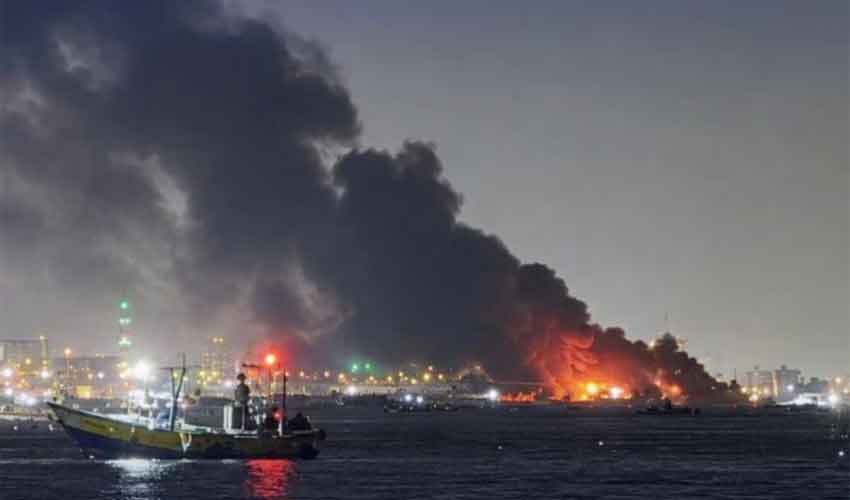
Iranian media reported explosions in several areas after the US strikes. Blasts were heard on Qeshm Island, Kharg Island, Sirik and Bandar Abbas, according to Iranian reports.
Iran’s Press TV said several explosions were heard in southern Kharg Island, a key oil hub from where Iran exports around 90% of its crude oil.
Also Read: US strikes over 80 Iran targets near Hormuz
CENTCOM did not mention Kharg Island in its statement.
Iranian state media said several people were injured by shrapnel from an “enemy projectile” that hit a commercial pier in Sirik.
The injured were shifted to hospital, while reports also said fishing piers in Sirik and Bandar Abbas were hit. No civilian deaths were reported in Iran.
US revokes Iran oil licence
Along with the military strikes, Washington revoked a licence that had allowed Iran to sell oil.
Iran’s Foreign Ministry condemned the move, calling it a breach of the framework agreement aimed at ending the war.
The ministry said Washington would bear responsibility for the consequences and warned that Iran would take any measure it deemed necessary to protect its interests and national security.
Tehran denies tanker attack allegations
While Washington accused Iran of firing on commercial vessels, Tehran denied responsibility for the latest attacks on ships in the Strait of Hormuz.
Qatar blamed Iran for attacking vessels, including the Qatari liquefied natural gas tanker Al Rekayyat. The tanker reportedly caught fire in its engine room after being struck by a drone, though its crew remained safe and was being evacuated.
A Saudi-flagged crude oil tanker, believed to be the supertanker Wedyan, was also damaged off Oman, maritime security sources said. The cause of the damage was not immediately clear.
Iran’s Foreign Ministry called Qatar’s accusations perplexing and said Tehran was diligently fulfilling its commitments.
However, it also said commercial vessels faced risks if they used routes not coordinated with Iran.
A second US official, speaking on condition of anonymity, said initial indications suggested Iran had fired at three commercial vessels.
Iran accuses US of violating Islamabad memorandum
The Revolutionary Guards said the US attacks violated the Islamabad Memorandum and the ceasefire framework.
The IRGC described Iran’s missile and drone operation as its first response to the violation of the ceasefire and the Islamabad agreement.
The Guards also claimed the US carried out the strikes to divert attention from condolence ceremonies for Iran’s late Supreme Leader.
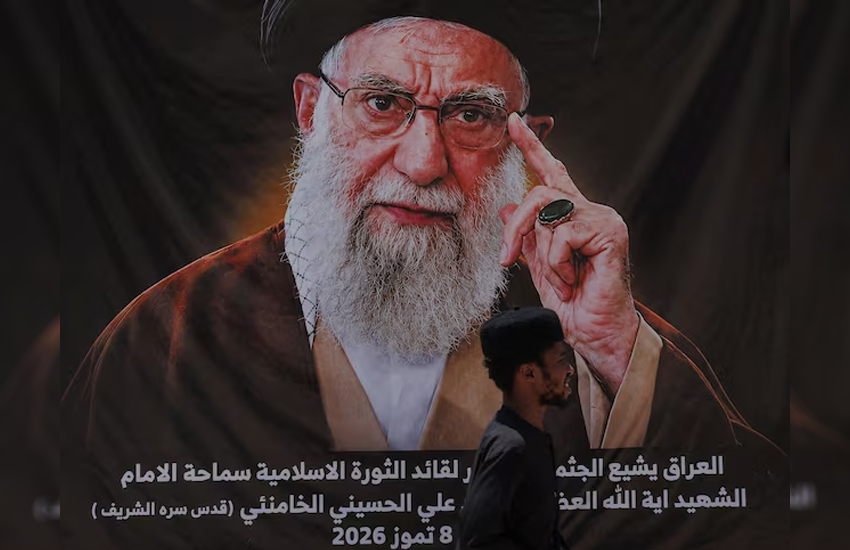
Huge crowds had gathered in Qom to mourn Ayatollah Ali Khamenei, who was killed with his daughter, granddaughter, son-in-law and daughter-in-law on the first day of the war.
Ghalibaf says Iran ‘will not fold’
Iranian parliament speaker and top negotiator Mohammad Baqer Ghalibaf accused the United States of breaching the ceasefire agreement.
He cited the latest US military strikes, the reimposition of sanctions on Iranian oil exports, threats of further attacks, US objections to Iran’s actions in the Strait of Hormuz, and Israel’s continued attacks on Lebanon as violations of the memorandum of understanding.
“The era of bullying and extortion is over,” Ghalibaf said in a post on X.
Major MOU Violations by the US:
— محمدباقر قالیباف | MB Ghalibaf (@mb_ghalibaf) July 8, 2026
Violating Iranian adjustments in the Strait
Persistent threats of further strikes
Reinstating oil sanctions
Attacks on southern Iran
Continued Zionist aggression on🇱🇧
The era of bullying and extortion is over. It leads nowhere. We don’t fold.
“We don’t fold,” he added.
NATO Secretary General Mark Rutte said before a summit of NATO leaders in Ankara that the new US attacks on Iran were “absolutely necessary.”
Rutte said that when a ceasefire is in place and Iran violates it, it is crucial for the United States to respond forcefully.
Ceasefire faces renewed threat
The latest exchange is the newest threat to the fragile ceasefire agreement reached last month between the United States and Iran.
The ceasefire was meant to create a 60-day window for negotiations on a permanent agreement after the war began with US and Israeli strikes across Iran.
However, indirect talks in Qatar ended last week without signs of progress.
US President Donald Trump has repeatedly warned that bombing could resume unless Iran agrees to “make a deal.”
Iranian Foreign Minister Abbas Araqchi said negotiations on a final deal would not begin if threats continued.
The renewed fighting has sharply increased tensions around the Strait of Hormuz, one of the world’s most important energy corridors.
Iran’s clerical leadership has been seeking a permanent system to collect fees from ships using routes in the area, a move that could shift the balance of power in a region where Washington has long acted as a security guarantor.
Tehran has insisted that safe passage through the strait must be coordinated with Iran, while Washington says freedom of navigation must be protected.