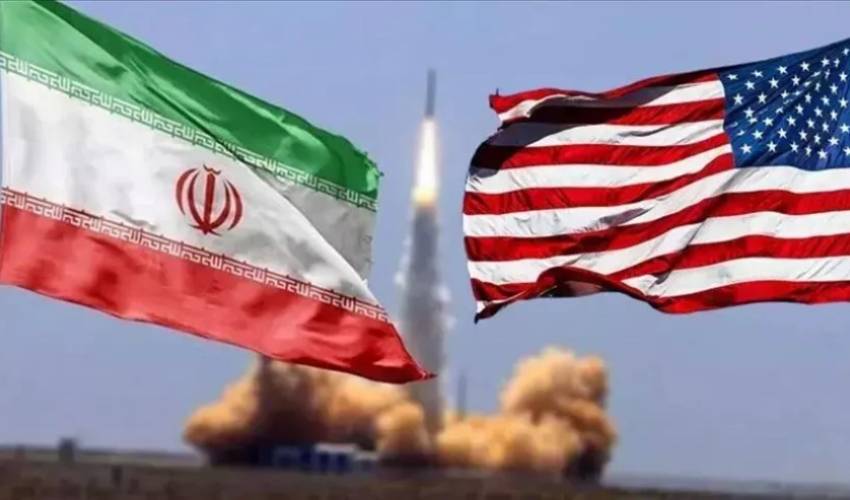
The United States and Iran exchanged fresh military strikes for a second consecutive day on Thursday, dramatically escalating tensions in the Gulf as Washington launched attacks on around 90 Iranian military targets following attacks on commercial shipping in the Strait of Hormuz, while Tehran retaliated by targeting US military facilities in Kuwait and Bahrain.
The US military said it carried out a new wave of strikes to degrade Iran's ability to threaten commercial shipping and freedom of navigation through the Strait of Hormuz, one of the world's most important oil transit routes.
US Central Command (CENTCOM) said American forces struck approximately 90 Iranian military targets, including:
- Air defence systems
- Coastal surveillance assets
- Missile and drone storage sites
- Naval capabilities
- Military logistics infrastructure along Iran's coastline
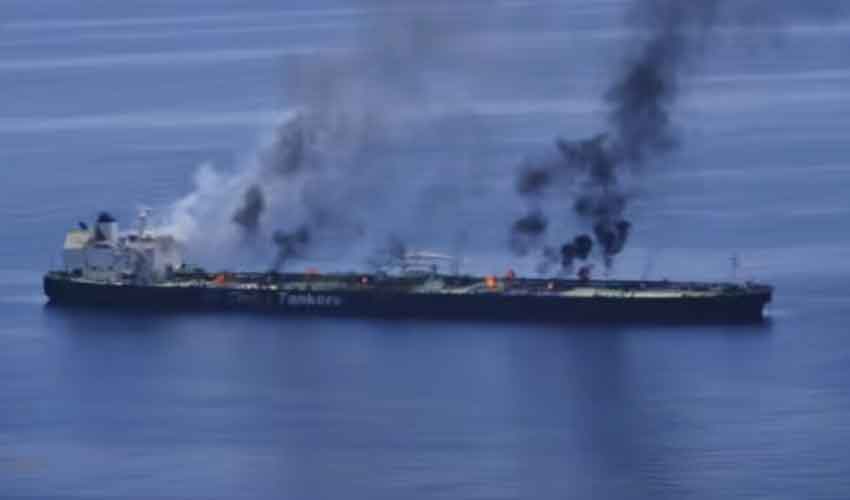
The operation followed strikes carried out a day earlier after Iran allegedly attacked three commercial cargo vessels transiting the Strait of Hormuz.
President Donald Trump described the latest military action as retaliation for Tuesday's attacks on commercial shipping.
"This is in retribution for yesterday's bombing of ships by Iran. If it happens again, it will get much worse!" Trump wrote on Truth Social.
A US official said Wednesday's operation involved more targets than Tuesday night's strikes.
Explosions reported across southern Iran
Iranian media reported explosions across several southern cities and strategic coastal locations, including:
- Bandar Abbas
- Chabahar
- Konarak
- Sirik
- Jask
- Bushehr
- Iranshahr
- Qeshm Island
- Abu Musa Island
- Aqqala
Iranian state television reported at least eight explosions in Bandar Abbas, while air defence systems were activated in the port city.
Authorities said two missiles struck Sirik and Jask, while Abu Musa Island was also hit.
In Chabahar, attacks reportedly damaged two docks, a maritime traffic control tower and a logistics depot. Shrapnel also struck Imam Ali Hospital, while several electricity transmission lines were damaged, causing temporary power outages before service was partially restored.
In Iranshahr, Iranian state media said an airport facility was struck, killing at least one firefighter and injuring others.
Authorities in Bushehr said attacks near the city did not damage Iran's nuclear power plant.
Iranian media also reported that the Aq Tekeh Khan railway bridge near Aqqala was struck.
Three killed in US strike near Iran’s Ahvaz
The IRNA news agency reported that the strike has killed at least three people and left several others wounded.
Valiollah Hayati, the deputy governor of Khuzestan for security and law enforcement, told IRNA that “the Israeli-US regime targeted a location on the outskirts of Ahvaz” in the early hours of the morning.
“Rescue and medical operations are currently underway,” he added.
Iran retaliates with attacks on Gulf bases
Hours after the US operation, Iran launched missile and drone attacks targeting US military facilities in Kuwait and Bahrain.
The Islamic Revolutionary Guard Corps (IRGC) said its naval and aerospace forces jointly targeted:
- Camp Arifjan military base (Kuwait)
- Ali Al Salem Air Base (Kuwait)
- Juffair Naval Base (Bahrain)
- Sheikh Isa Air Base (Bahrain)
Kuwait's Defence Ministry said its air defence systems intercepted missiles and drones.
Bahrain reported explosions in Manama and activated warning sirens, while Qatar briefly issued an elevated security alert before later declaring the situation safe.
The IRGC described the attacks as the first phase of a "punitive response" to US military action.
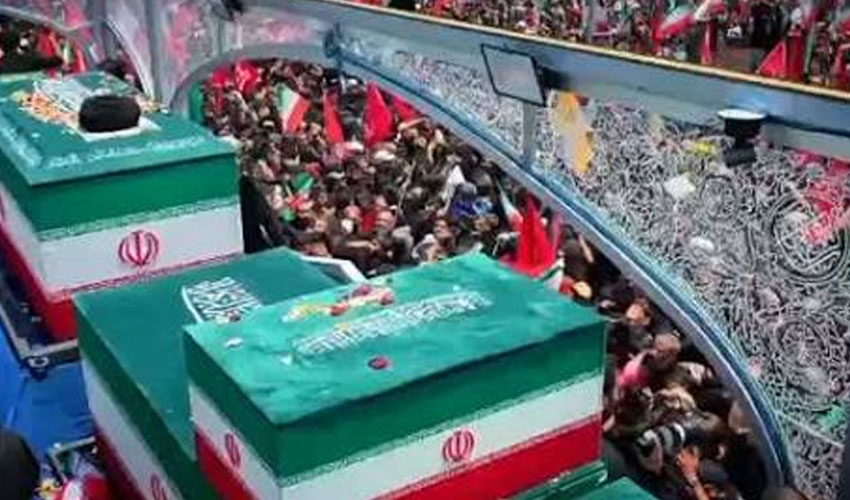
It also claimed US strikes had targeted roads and bridges leading to Mashhad ahead of the funeral of former Supreme Leader Ayatollah Ali Khamenei, accusing Washington of attempting to overshadow the ceremony.
The IRGC warned that any further US attacks would trigger expanded retaliation against additional American bases across the region.
Trump says ceasefire is 'over'
The latest escalation came after President Trump declared that the memorandum of understanding (MoU) signed with Iran in June was effectively finished.
Asked during the NATO summit in Türkiye whether the agreement remained in force, Trump replied:
"To me, I think it's over. I don't want to deal with them."
He later accused Tehran of repeatedly violating the agreement.
"I found them to be very dishonourable people."
Despite the escalation, Trump said he did not expect a return to a prolonged war.
"Anything that happens is going to be over very quickly."
He also reiterated that Iran would never be allowed to obtain nuclear weapons and warned that Washington could strike additional Iranian targets if necessary.
Iran vows retaliation
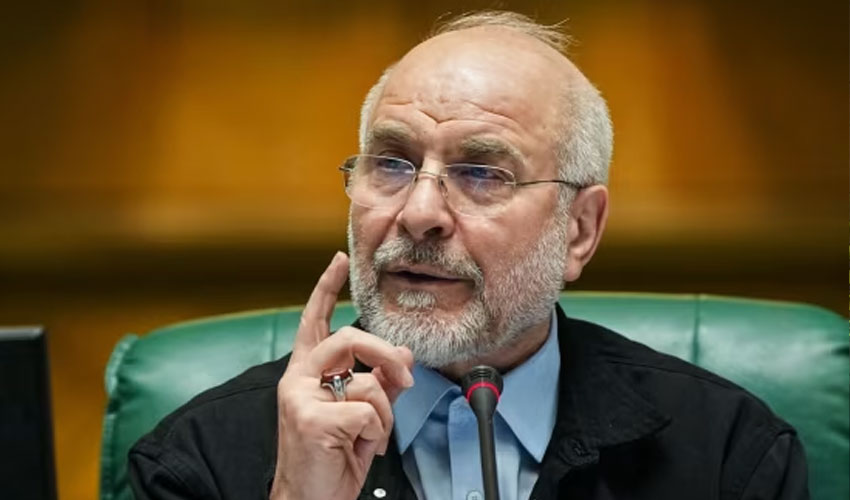
Iran's parliamentary speaker and chief negotiator Mohammad Baqer Qalibaf warned the United States that continued military action would provoke further retaliation.
"The US has yet to learn that bullying and breaking its commitments no longer come without a cost. If you strike, you will be struck back," he wrote on X.
Foreign Minister Abbas Araghchi also responded to Trump's remarks, saying:
"We do not answer vulgarity with vulgarity, but with action: fearlessly and with great valour."
Foreign Ministry spokesman Esmaeil Baqaei accused Washington of violating the June memorandum of understanding, arguing that the agreement recognised Iran's responsibility for ensuring the safe passage of vessels through the Strait of Hormuz.
Iran's mission to the United Nations also submitted a letter to the UN Security Council, accusing the United States of violating the UN Charter and breaching the bilateral memorandum.
Background
The memorandum of understanding signed on June 17 established a 60-day ceasefire period and outlined negotiations aimed at ending the conflict, ensuring safe navigation through the Strait of Hormuz and easing US sanctions on Iran.
The latest exchange marks the most serious escalation since the agreement was signed.
The war began on February 28, following US-Israeli military action against Iran.
Oil prices rise
The renewed fighting pushed global oil prices higher.
Brent crude rose about one percent to nearly $78.80 per barrel, although prices remained well below April's peak of more than $120.
The Strait of Hormuz normally carries around one-fifth of global oil supplies, making any disruption a major concern for international energy markets.