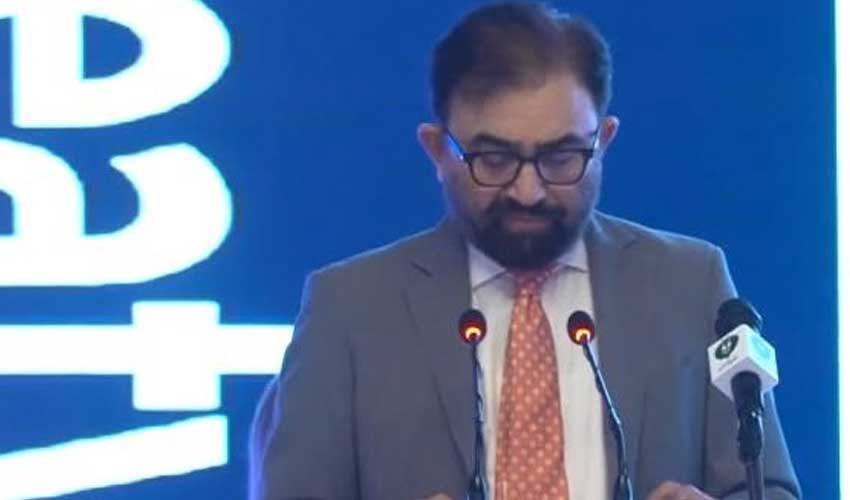
A group of 118 prominent figures from Pakistan, India and South Asia has jointly appealed to the prime ministers of Pakistan and India to resume dialogue and take confidence-building measures for peace, stability and shared prosperity.
The joint appeal was issued from the platform of the Center for Peace and Progress.
The signatories include prominent politicians, former diplomats, journalists, academics and civil society members from both countries.
Those who joined the appeal include former Pakistani foreign minister Khurshid Kasuri, former ministers from Indian-occupied Kashmir Farooq Abdullah and Mehbooba Mufti.
Former ambassadors Ashraf Jahangir Qazi and Imtiaz Alam are also among the signatories, along with Sandeep Pandey, Professor Manoj Jha and Professor Saifuddin Soz.
Mirwaiz Umar Farooq, Mani Shankar Aiyar, Muhammad Mehdi, Center for Peace and Progress Chairman OP Shah and former RAW chief AS Dulat also joined the appeal.
Gopa Mukherjee, Farhatullah Babar, Pervez Hoodbhoy and Dr Ramesh Raina are also among those who endorsed the call.
Dialogue termed only viable path
In the text of the appeal, the signatories said persistent communication and dialogue are the only viable ways to resolve differences and promote stability and prosperity.
They urged both prime ministers to consider a series of proposed confidence-building measures to reduce tensions and rebuild trust.
Call to restore diplomatic relations
The appeal called for the restoration of full diplomatic relations between Pakistan and India.
It urged both governments to appoint High Commissioners in New Delhi and Islamabad and normalize visa services for citizens of both countries.
The signatories called for the resumption of comprehensive bilateral dialogue on all outstanding issues. They also specifically urged the resumption of talks on Jammu and Kashmir.
The appeal further called for demilitarization and de-escalation measures to support sustainable peace in the region, while addressing the legitimate security concerns of both countries.
People-to-people contacts emphasized
The appeal stressed the need to reconnect people and families divided across borders.
It called for easing travel restrictions and enabling exchanges among families, students, academics, journalists, artists, businesspeople and civil society groups.
The signatories also urged both sides to encourage cultural, educational, sports and religious exchanges to restore trust between societies.
Trade and economic ties proposed
The appeal called for the opening of trade routes and the restoration of normal trade relations. It also urged both countries to re-establish “Most Favoured Nation” or equivalent non-discriminatory trade arrangements.
The signatories said regional economic integration and shared prosperity should be promoted.
Transport and connectivity routes
The appeal called for fully opening the Attari-Wagah land border for trade and travel. It also proposed re-establishing the Srinagar-Muzaffarabad bus service to reunite separated families.
The signatories urged the resumption of the Delhi-Lahore bus service, Samjhauta Express and Thar Express train services. They also called for reopening the Kargil-Ladakh to Skardu-Gilgit-Baltistan route.
The appeal further recommended reopening airspace for commercial flights to reduce travel time and cost and improve connectivity.
Religious and cultural corridors
The signatories called for reopening the Kartarpur Sahib Corridor as a key confidence-building measure. They also urged reopening Sharda Peeth, a sacred religious site for Kashmiri Pandits in the Neelum Valley.
The appeal called for facilitating visits to religious and cultural heritage sites on both sides of the border. It also encouraged pilgrimage tourism and cultural exchanges to enhance mutual understanding.
The appeal urged both countries to lift restrictions on media outlets, news channels and digital platforms. It also called for allowing journalists from both countries to travel and work freely.
The signatories said professional exchanges between media outlets should be promoted to counter misinformation and improve public awareness.


.jpg)