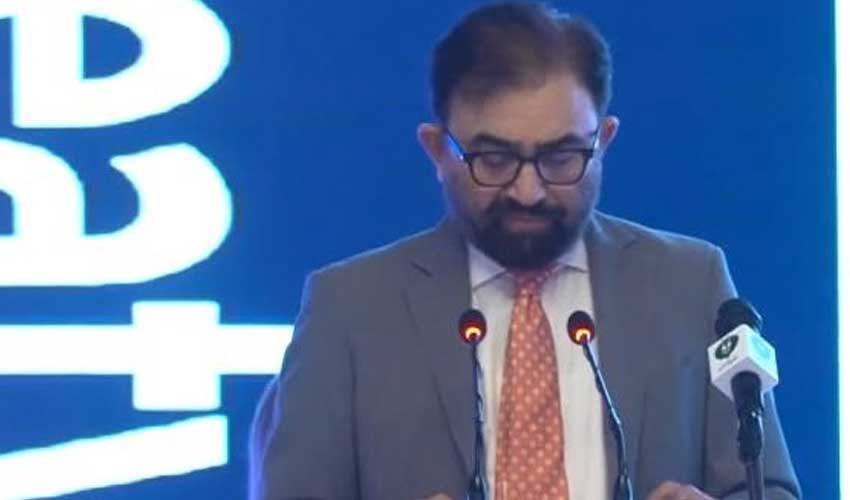
Pakistan’s Commissioner for Indus Waters (PCIW), Syed Muhammad Mehar Ali Shah said on Tuesday that Pakistan cannot allow the diversion of its share of waters.
Non-provision of data could affect millions of Pakistanis
He stated that water is directly linked to human life and cannot be used as a weapon under any circumstances. He added that the non-provision of data could affect the lives of millions of Pakistanis.
Pakistan has already taken the matter of alleged violations of the Indus Waters Treaty to the United Nations. He said that the construction of the Chenab–Beas link by India is completely illegal.
Under the treaty, India is bound to allow Pakistan inspection of such developments, he said. He maintained that India cannot divert the waters of the Chenab into the Beas.
Shah warned that India’s diversion of the Chenab flow could affect around 1.9 million water flow units.
He said Pakistan lies downstream on the rivers and timely data is essential for the country. Shah termed India’s unilateral suspension of treaty obligations as illegal and a breach of the agreement.
He said a letter had already been sent to India requesting the provision of data. Shah stressed that accurate and timely information on river flows is mandatory under the treaty.
He noted that India has not been complying with the treaty since August 2023. Pakistan has taken two related disputes over controversial hydroelectric projects to a court of arbitration, he said.
The court, he added, directed that no interference be made in the western rivers. It has also made clear that the treaty cannot be suspended or terminated unilaterally.
He said the arbitration court has clarified the matter twice. He stated that the treaty contains a total of 12 clauses. Shah said: "Clause 9 allows the matter to be taken to international arbitration.' He said the Indus Waters Treaty is not merely a document, but a matter concerning the lives of 240 million people.
He added that all agreed principles of the treaty must be implemented. He said the treaty provides a comprehensive mechanism for dispute resolution.
He termed it as an agreement aimed at reducing tensions between two nuclear powers and ensuring peace. He said Pakistan’s agriculture, food security and economy are linked with the treaty.
He added that there is no space for political debate on the Indus Waters Treaty.