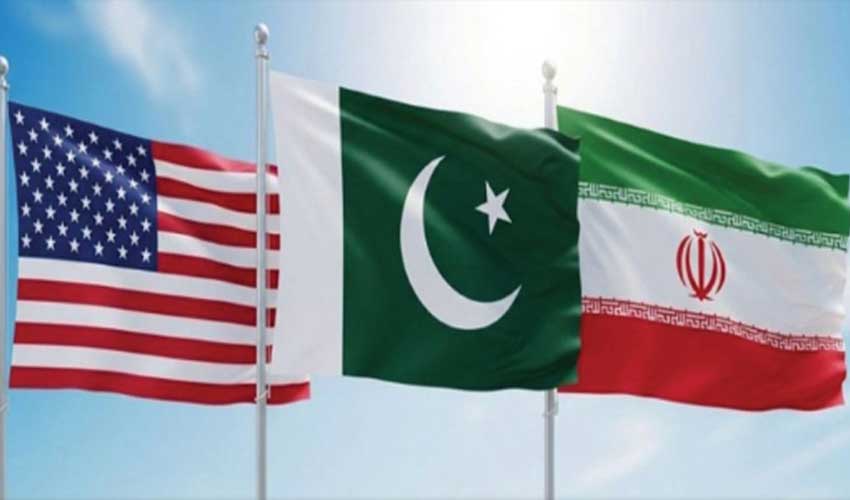
Deputy Prime Minister and Foreign Minister Ishaq Dar has credited Pakistan’s diplomatic efforts for helping secure a ceasefire between the United States and Iran, saying Islamabad played a crucial role in facilitating direct engagement between the two countries after decades of hostility.
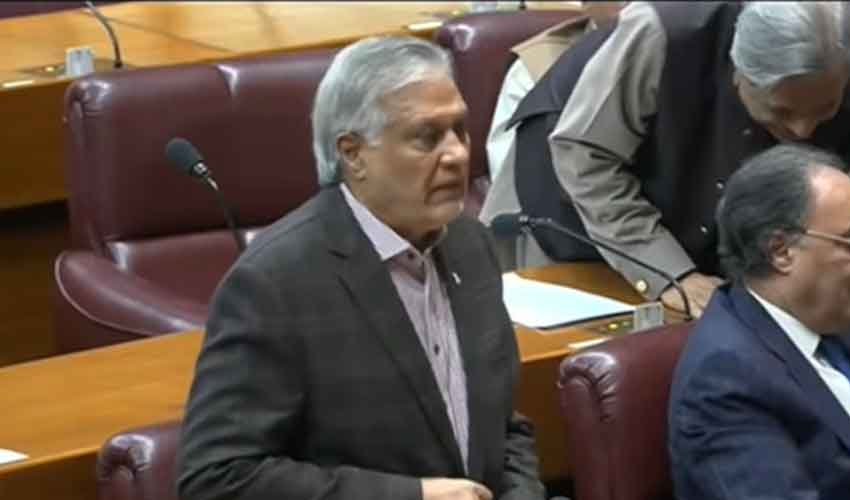
Addressing the National Assembly, Dar revealed details of the peace process, the signing of the agreement and Pakistan’s role as a neutral mediator, while also highlighting the country’s growing diplomatic influence on the global stage.
Dar said Pakistan acted as a trusted mediator throughout the process and did not allow confidential information from either side to become public during the trust-building phase.
According to him, the details of the negotiations were not shared even with major world powers. “We made it clear that we could not share the document unless both parties granted permission,” Dar told lawmakers.
He added that Pakistan remained committed to maintaining confidence between the parties throughout the negotiations.
Breakthrough came on June 18
The deputy prime minister disclosed that significant developments took place on the night of June 18, when Pakistan’s diplomatic team was fully prepared for a possible breakthrough.
He said US President Donald Trump was attending the G7 Summit in France at the time and decided there that the agreement should be signed electronically.
According to Dar, all arrangements had already been completed for a formal signing ceremony in Geneva on June 19. However, Pakistan received information on the night of June 18 that President Trump had signed the agreement on the sidelines of the G7 meeting in France.
Dar said the Iranian president also signed the document, while Prime Minister Shehbaz Sharif signed it from Pakistan. He informed the House that the agreement consists of a three-page document containing all key details of the arrangement.
Original agreement finalised in Geneva
Ishaq Dar stated that the original agreement was concluded in Geneva on June 19 and that the entire peace process had been designed in two phases.
He presented a copy of the document to the speaker of the National Assembly and said both houses of parliament had the right to place it on the official record.
The deputy prime minister also invited fellow lawmakers to review the document to eliminate any misunderstandings regarding its contents.
Two-phase peace process outlined
Explaining the agreement, Dar said the first phase focused on reopening the Strait of Hormuz and reducing immediate tensions. He said it was initially expected that the issue could be resolved within two to three weeks.
The second phase, according to the agreement, involves technical talks that begin after the signing. Dar said the key topics for the second phase include Iran’s nuclear programme, sanctions and frozen assets, and the issue of Lebanon.
Lebanon conflict delayed further talks
The foreign minister noted that when efforts were underway to reopen the Strait of Hormuz, Israel launched another attack in Lebanon.
According to Dar, the renewed violence delayed progress in the next phase of negotiations. He added that Prime Minister Shehbaz Sharif later traveled to Switzerland to continue diplomatic engagement related to the peace process.
As a result of Pakistan’s efforts, a declaration was issued on June 22, which was also placed on the record of the House.
Dar noted that the Ministry of Foreign Affairs had uploaded a copy of the declaration to its official website, while he also submitted the declaration issued by four countries in Switzerland on June 22 to parliament.
Pakistan emerges as regional peacemaker
The deputy prime minister said Pakistan’s role in the negotiations had strengthened its international standing.
Referring to past criticism that Pakistan was diplomatically isolated, he said the country is now being recognized as a provider of regional security and peace.
Dar paid tribute to Prime Minister Shehbaz Sharif, the Ministry of Foreign Affairs and Pakistan’s diplomatic team for what he described as proactive diplomacy. “This is the same country that was once described as diplomatically isolated,” he said.
Dar said Pakistan’s efforts helped save countless lives by contributing to the ceasefire. He noted that thousands of people had been killed before the cessation of hostilities and stressed that preventing further bloodshed was a major achievement.
“All those who were martyred were Muslims,” he said.
Quoting a widely recognized humanitarian principle, Dar added that saving one life is equivalent to saving all of humanity.
He also thanked Allah Almighty for granting Pakistan the opportunity to contribute to peace and save lives under the leadership of the prime minister, the field marshal and the Foreign Office.
Domestic politics and dialogue
During his speech, Dar also reflected on Pakistan’s internal political environment. He said he believes in negotiations and recalled his role during the 2014 sit-in, but argued that certain actions had made dialogue more difficult.
According to him, political differences should remain within reasonable limits and should never lead to attacks on state institutions.
He referred to incidents involving GHQ, security installations and the Corps Commander House, saying such events had complicated the political landscape.
Economic recovery and falling oil prices
The deputy prime minister also highlighted what he described as signs of economic recovery. He said oil prices had declined and economic conditions were improving.
Dar noted that developments linked to the Strait of Hormuz had also helped ease concerns over additional fees, charges, permits and shipping-related restrictions.
Discussing broader foreign policy initiatives, Dar revealed that important discussions were taking place with China on March 31 when he received a call from the Chinese foreign minister. He subsequently traveled to China for a one-day visit to continue diplomatic consultations.
The deputy prime minister also announced that Pakistan will host the OIC Women’s Conference in July. He described the Organization of Islamic Cooperation (OIC) as the largest international forum after the United Nations, with 57 member states.
Pakistan to assume key SCO leadership roles
Ishaq Dar further said that Pakistan is set to assume the chairmanship of the Shanghai Cooperation Organization (SCO) in July.
A meeting of SCO foreign ministers is scheduled to take place in Kyrgyzstan, where Pakistan will formally accept the chairmanship. He added that Pakistan will also chair the SCO Heads of State forum and host a major SCO summit in 2027.
According to Dar, presidents and prime ministers from member countries are expected to attend the gathering, further enhancing Pakistan’s diplomatic profile on the international stage.