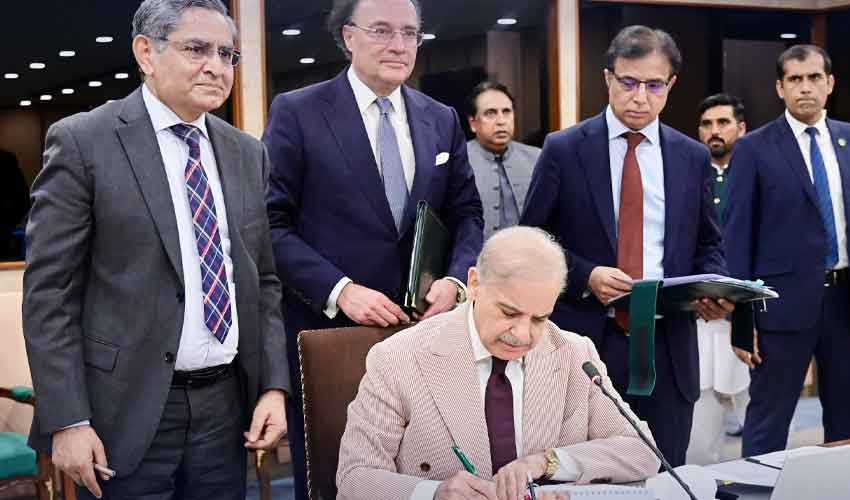
The federal government has completed the final stage before presenting the Budget 2026-27 in the National Assembly, with the federal cabinet approving budget proposals worth Rs18,771 billion during a special meeting chaired by Prime Minister Shehbaz Sharif.
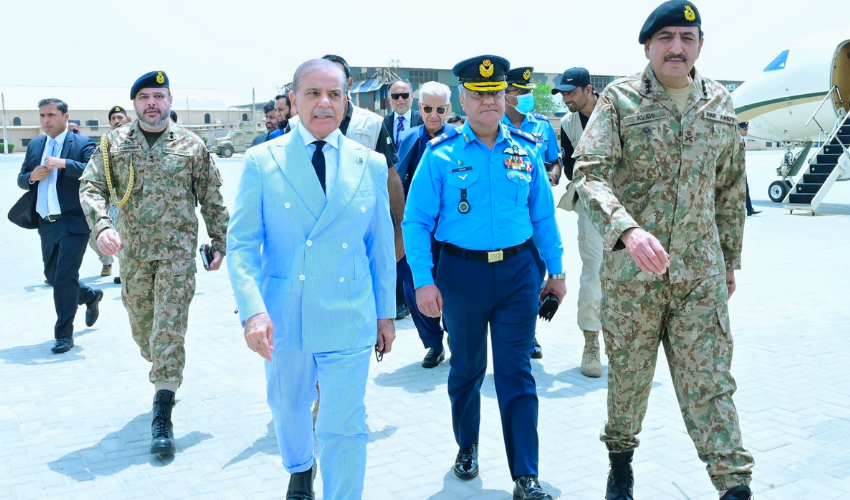
A special meeting of the federal cabinet was held in Islamabad under the chairmanship of Prime Minister Shehbaz Sharif to finalise the federal budget for the upcoming fiscal year.
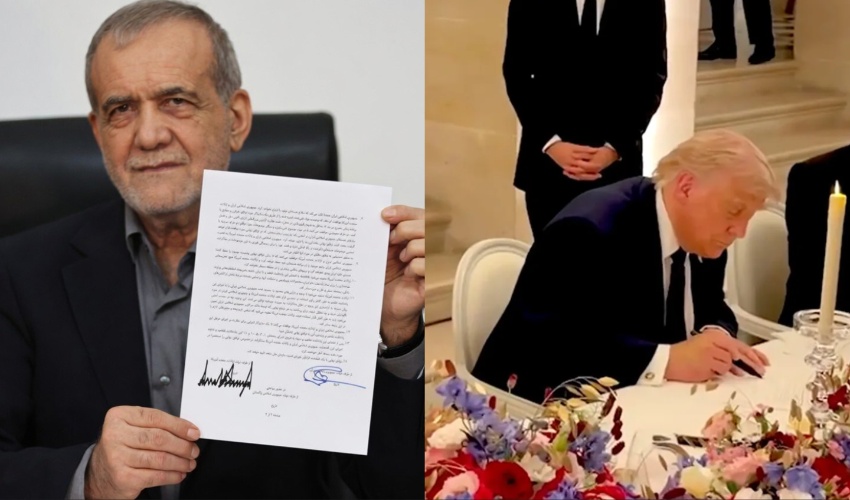
During the meeting, the cabinet approved budget proposals totaling Rs18,771 billion. The prime minister also formally signed the budget documents ahead of their presentation in parliament.
The approval marks the final step before the federal budget is tabled in the National Assembly.
Salary and pension increase proposed
According to sources, the government has proposed an increase in salaries and pensions for government employees.
Sources said a 7% increase in salaries and pensions each was proposed during the cabinet meeting. Following the session, Federal Minister Rana Tanveer Hussain confirmed a 7% increase in salaries for government employees.
Also Read: Relief expected for salaried people as govt to announce budget today
The proposed relief measure is expected to be formally announced during the budget presentation.
Key budget figures unveiled
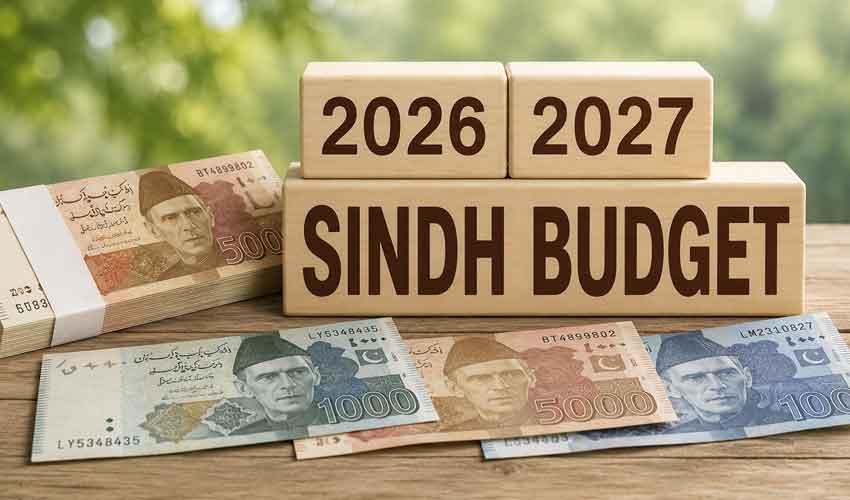
According to budget documents, the total volume of the federal budget for the next fiscal year has been set at Rs18,771 billion.
The Federal Board of Revenue (FBR) has been assigned a revenue collection target of Rs15,264 billion for the upcoming fiscal year. The government has allocated Rs3,000 billion for defence spending in Budget 2026-27.
A significant portion of federal expenditures will go toward debt servicing, with Rs8,054 billion earmarked for interest payments.
Also Read: Interest-free loans for 86,000 people in Budget 2026-27
The Ministry of Finance has allocated Rs1,169 billion for pensions, while Rs1,071 billion has been set aside for running the affairs of the civil government.
A majority of cabinet members reportedly called for an increase in salaries in line with inflation. The budget includes a proposal to increase salaries and pensions of government employees by seven percent.
PPP not to boycott of budget session
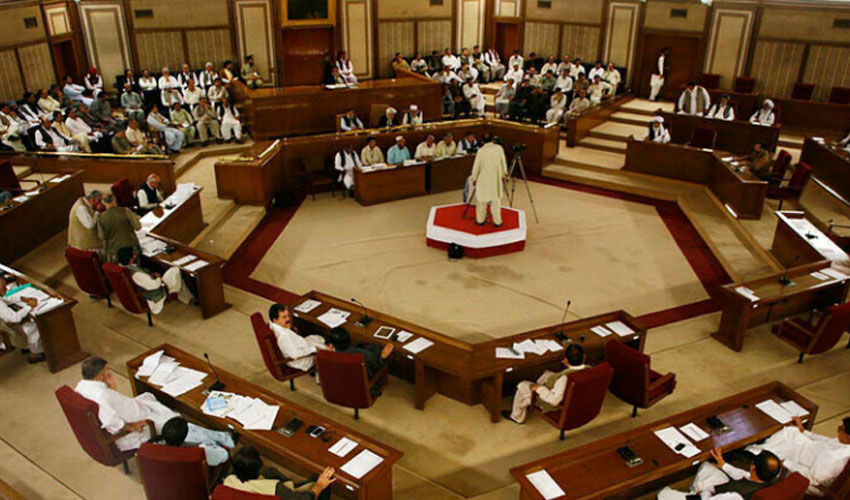
Meanwhile, according to a spokesman, the Pakistan Peoples Party (PPP) has decided against boycotting the budget session.
Sources said PPP Chairman Bilawal Bhutto Zardari would not attend the meeting, while some party members would be present. The spokesperson said PPP will be part of budget process in national interest.
PM highlights economic progress
Addressing the cabinet meeting, Prime Minister Sharif said inflation had declined from 38% to single digits over the past two years.
He acknowledged that the crisis in Gulf countries had contributed to inflationary pressures and created challenges in reducing interest rates. Despite these difficulties, he noted that the policy rate had been brought down from 22.5% to 11%.
Also Read: Pakistan's development budget set at Rs1tr
The PM said Pakistan's economy remained stable despite multiple challenges and expressed hope that the country’s third budget under the current government would accelerate economic activity after receiving cabinet approval.
Focus on security, water and energy
Shehbaz stressed that economic development could not be achieved without strong national security.
“If security is not strong, development remains out of reach,” he said, adding that Pakistan must urgently create additional water reservoirs and invest in alternative energy sources.
He noted that significant funding would be required for solar power, wind energy, battery storage and related projects to strengthen the country’s energy future.
Discussions with provinces over resources
The prime minister revealed that extensive discussions had taken place with all four provinces over the past one and a half months regarding resource sharing and development financing.
According to Shehbaz Sharif, detailed consultations were held with Punjab, Sindh, Balochistan and Khyber Pakhtunkhwa. The provinces were informed about the federation’s need for additional funds, leading to what he described as meaningful and constructive dialogue.
Also Read: GDP growth projected at 4%, inflation estimated at 8.2%
He said he personally visited Punjab with his team to explain the federal government's position and thanked Nawaz Sharif and Maryam Nawaz for showing openness regarding the federation’s legitimate requirements.
Provinces assured cooperation
The PM said Sindh also assured full cooperation after several rounds of discussions. He thanked President Asif Ali Zardari, Bilawal Bhutto Zardari and the PPP leadership for their support in decisions taken in the national interest.
Shehbaz Sharif also praised the chief minister of Balochistan for demonstrating generosity and willingness to support federal efforts. He further noted that Khyber Pakhtunkhwa Chief Minister Sohail Afridi had shown a positive approach toward national development priorities.
According to the prime minister, all four provinces unanimously supported the development plan during the National Economic Council meeting, calling it a strong example of national unity and solidarity.
IMF talks and economic reforms
The prime minister thanked Deputy Prime Minister Ishaq Dar, the finance minister, law minister, Rana Sanaullah, Ahsan Iqbal, the defence minister and other cabinet members and officials for their role in budget preparation and negotiations with the provinces.
He said the government’s economic team had worked day and night with the IMF and held extensive discussions with the lender.
Also Read: Budget proposes major changes to salaried tax structure
Shehbaz disclosed that he personally held a one-and-a-half-hour telephone conversation with the IMF managing director, who expressed satisfaction with Pakistan’s economic performance and appreciated the country’s progress.
The prime minister said the budget would include tax relief measures and initiatives aimed at accelerating economic growth.
CPEC 2.0 and China
Referring to his recent visit to China, the prime minister said discussions on CPEC 2.0 had been highly encouraging.
Also Read: Govt employees protest in Islamabad, demand pay raise
He outlined four major areas of focus under the next phase of the project: agriculture, artificial intelligence, information technology, mines and minerals, special economic zones, and the government-to-government development of the Karakoram Highway.
Allies support budget process
The prime minister said detailed discussions had also been held with the PPP regarding budget approval. He added that coalition partners extended full support, including members of MQM-P, the Istehkam-e-Pakistan Party led by Abdul Aleem Khan, Pakistan Muslim League allies, the Balochistan Awami Party led by Mir Khalid Magsi, and the National Party.
According to Shehbaz Sharif, the support and cooperation of allied parties played an important role in finalizing the budget proposals.



.jpg)