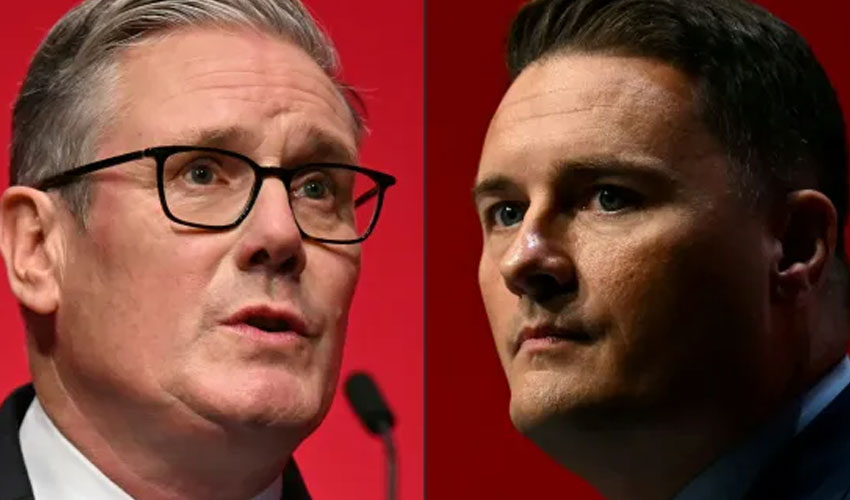
Britain’s political landscape has been thrown into fresh uncertainty after Health Secretary Wes Streeting resigned from government, triggering a new wave of instability within the ruling Labour Party.
The resignation adds further pressure on Prime Minister Keir Starmer, whose leadership is increasingly under scrutiny following poor local election results.
Wes Streeting announced his resignation from the Cabinet, stating that he no longer had confidence in Starmer’s leadership.
In a post on social media platform X, Streeting said the Labour Party’s declining popularity was a key factor in its recent electoral setbacks across England, Scotland, and Wales.
He added that it was becoming clear Starmer would not lead the party into the next general election and called for an open debate on Labour’s future direction.
Although his statement stopped short of formally triggering a leadership contest, it has significantly intensified internal pressure within the party.
Growing calls for leadership change
Streeting’s resignation comes amid a broader wave of discontent within Labour ranks.
Reports indicate that several junior ministers have already stepped down, while more than 80 MPs have reportedly urged Starmer to resign or set out a clear roadmap for transition.
However, no formal leadership challenge has yet been launched, and Starmer remains in office.
Shortly after Streeting’s announcement, Labour MP Josh Simons also resigned his parliamentary seat.
Simons said he was stepping aside to allow Greater Manchester Mayor Andy Burnham to return to Parliament and potentially challenge Starmer’s leadership.
Burnham later confirmed he would seek permission to stand in the resulting by-election, signaling a possible shift in Labour’s internal power dynamics.Andy Burnham has positioned himself as a candidate advocating for broader national change, arguing that stronger leadership is needed to address economic challenges across the UK.
Meanwhile, Labour deputy leader Angela Rayner has also been discussed as a potential leadership contender, though she recently faced scrutiny over tax-related issues before being cleared by authorities.
Starmer defends leadership amid pressure
Despite growing unrest, Starmer has vowed to remain in office and fight any potential leadership challenge.
His office has repeatedly stated that the Prime Minister remains focused on governance and delivering key promises, particularly around reforming public services and stabilizing the economy.
Finance Minister Rachel Reeves has also urged party colleagues to avoid internal conflict, warning that political instability could risk economic disruption.
The crisis follows disappointing local election results for Labour, which saw significant gains by rival parties, including Reform UK and the Green Party.
The party also lost control of the Welsh parliament and failed to improve its position in Scotland, further fueling internal criticism of Starmer’s leadership.