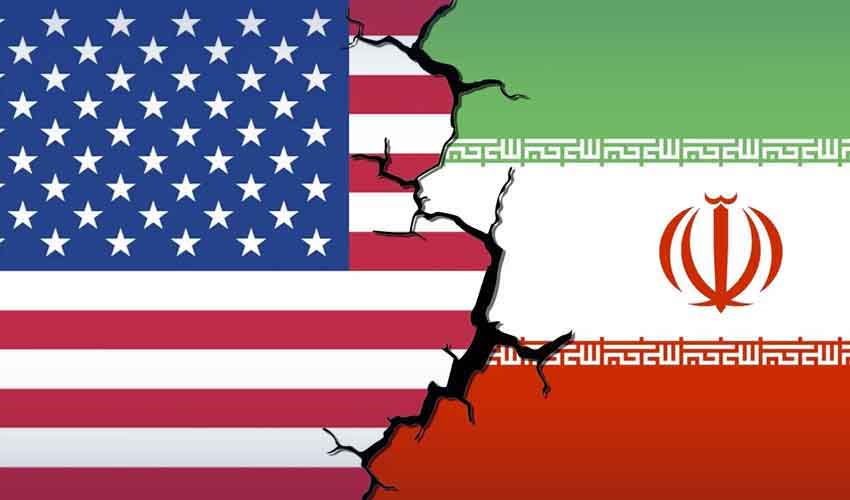
The United States and Iran appear closer than ever to reaching a framework agreement aimed at ending months of conflict and launching detailed nuclear negotiations, as President Donald Trump’s top envoys met nuclear experts in Tennessee to prepare for a potential breakthrough.
According to Axios, Trump envoys Steve Witkoff and Jared Kushner visited Oak Ridge, Tennessee, on Thursday to consult with technical specialists who could play a key role in implementing the nuclear provisions of a future agreement with Iran.
The visit comes as negotiations between Washington and Tehran enter what US officials describe as a “very serious phase,” although a final agreement remains uncertain.
White House seeks framework agreement to end war
The White House is reportedly pursuing a memorandum of understanding (MOU) with Iran designed to formally end the war and establish a roadmap for comprehensive nuclear negotiations.
While several issues remain unresolved, discussions are said to be in their final stages.
Also Read: US attacks Iranian sites after Iran launches drones in Gulf
“This meeting in Oak Ridge doesn't mean that a deal is going to happen, but it is a sign that the negotiations are in a very serious phase and that there is a good chance to get it done, and we want to be prepared,” a US official told Axios regarding the Tennessee meeting.
Oak Ridge is home to some of America's leading experts in uranium processing and centrifuge technology. A team of roughly 100 specialists has reportedly been assembled to support negotiations and implementation efforts if a preliminary agreement is reached.
Draft agreement takes shape
According to Axios, US and Iranian officials agreed last week on terms for a proposed 60-day MOU that would cover several major issues, including:
-
Extension of the current ceasefire
-
Reopening the Strait of Hormuz
-
Resumption of Iranian oil sales
-
Discussions over Iran’s enriched uranium stockpile
-
Future limits on uranium enrichment
The draft framework is reportedly a 14-point document currently being discussed by Witkoff, Kushner and Iranian representatives through both direct contacts and intermediaries.
If approved, the memorandum would formally end hostilities and create a 30-day period for broader negotiations focused on maritime security, Iran’s nuclear program and sanctions relief.
Potential venues for those talks include Islamabad and Geneva.
Trump and Iran seek changes to draft
Despite progress, both sides are seeking revisions.
Axios reported that President Trump requested two changes to the emerging memorandum on Friday, while Iranian negotiators are also expected to submit amendments.
One major sticking point involves the timeline for reducing Iran’s stockpile of enriched uranium. Washington wants the process completed within 60 days, while Tehran is seeking a 90-day timeline.
The two sides also remain divided over the amount and timing of frozen Iranian assets that would be released under any agreement.
Also Read: Mojtaba Khamenei leading Iran with full authority: Araghchi
According to Axios, Washington is awaiting Iran’s official response within the next 48 hours. While no agreement has been finalized, sources told the publication that this is the closest the parties have come to a deal since the conflict began.
A Pakistani source familiar with the negotiations also confirmed the progress to Reuters.
Frozen assets emerge as key obstacle
Iranian officials continue to insist that access to frozen assets is essential for any breakthrough.
Mohsen Rezaei, military adviser to Supreme Leader Mojtaba Khamenei, told CNN that negotiations have reached a deadlock and that responsibility for moving talks forward now rests with President Trump.
“Trump must break this deadlock,” Rezaei said. “The ball is in Trump’s court.”
A senior Iranian official told CNN that negotiations depend on Washington releasing $24 billion in frozen Iranian assets.
Under Tehran’s proposal, $12 billion would be released immediately after signing an agreement, while the remaining funds would be unlocked later.
Also Read: Trump says Iran deal not needed to access uranium
“This is a test that America must pass, and the path will be opened,” Rezaei said. “This is our own money, not America’s money.”
The US position remains that any release of funds should occur only after Iran takes concrete steps to dismantle elements of its nuclear program.
US believes agreement within reach
Earlier this week, Axios reported that Washington believes it is close to securing a one-page memorandum of understanding that would end the war and provide a framework for future nuclear talks.
Under the proposal, Iran would commit to a moratorium on uranium enrichment, while the United States would gradually lift sanctions and release billions of dollars in frozen Iranian assets.
Both sides would also ease restrictions affecting shipping through the Strait of Hormuz.
US officials reportedly said President Trump’s decision to pause a newly announced operation in the Strait of Hormuz and avoid undermining the fragile ceasefire was influenced by the progress achieved in negotiations.
Major differences over uranium enrichment
One of the most difficult issues involves the duration of restrictions on Iran’s uranium enrichment activities. US negotiators are reportedly seeking a long-term halt lasting between 12 and 15 years, after initially proposing a 20-year restriction.
Iran, however, has suggested a much shorter five-year period. Washington is also seeking an automatic extension mechanism that would prolong the moratorium if Iran violates any part of the agreement.
Once the restriction period expires, Iran would be allowed to resume enrichment at a low level of 3.67%.
The draft framework would require Iran to pledge that it will not pursue nuclear weapons or engage in weaponization activities. Negotiators are also discussing measures that would prevent the operation of underground nuclear facilities.
Tehran would additionally accept enhanced international monitoring, including short-notice inspections by United Nations inspectors.
Another significant proposal under consideration involves removing Iran’s stockpile of highly enriched uranium from the country — a long-standing US objective that Iran had previously resisted.
Also Read: Iran Supreme Leader says CIA conspiracies thwarted
One option being discussed would see the material transferred to the United States.
If talks advance to the implementation phase, the team of experts assembled at Oak Ridge would help develop plans for handling Iran’s nuclear material, enforcing enrichment limits and verifying compliance.
Some of the specialists involved recently participated in efforts to recover enriched uranium from Venezuela, which was transferred to South Carolina for processing last month.
Several experts who attended the Oak Ridge meeting had also accompanied Witkoff and Kushner during previous negotiations with Iranian officials in Oman before the war began.
Broader conflict if talks fail
Despite signs of progress, Iranian officials have warned that renewed conflict remains possible. Rezaei said Iran would expand military operations beyond the Persian Gulf if hostilities resumed.
“We will give another dimension to the war by attacking these other American bases that we have been attacking so far,” he said.
Although he described the likelihood of renewed war as low, he insisted Iran was prepared for any scenario, including a potential US ground invasion.
“The world will understand Iran’s true capabilities,” Rezaei said. “Our land power is many times greater than our missiles.”
Also Read: Saudi FM stresses joint efforts to ensure regional stability
He also described the recent conflict as a victory for Iran.
“In previous wars, Iran has always been defeated,” Rezaei said. “This is the first time Iran has emerged victorious in wars.”
Rezaei dismissed the prospect of personally meeting President Trump and expressed skepticism about reaching a final nuclear agreement, citing what he called Trump’s “ambiguity” strategy and his withdrawal from the 2015 nuclear deal during his first term.
Future of talks remains uncertain
While Washington and Tehran appear closer to a framework agreement than at any point since the war began, substantial differences remain over sanctions relief, frozen assets, uranium enrichment timelines and implementation mechanisms.
Axios reported that many provisions in the draft memorandum would only take effect if a broader final agreement is ultimately reached, leaving open the possibility that tensions could flare again or settle into a prolonged but unresolved standoff.
For now, both sides are waiting for critical responses and revisions that could determine whether the current diplomatic momentum results in a historic agreement or another breakdown in negotiations.
.jpg)