An op-ed published in The National Interest has highlighted Pakistan’s growing role in global diplomacy, particularly in the Middle East.
The article points to Islamabad’s involvement in US-Iran engagement efforts and wider regional stabilization initiatives.
It argues Pakistan is no longer on the diplomatic sidelines but increasingly part of crisis management at the global level.
The op-ed describes a notable shift in Pakistan’s international positioning, suggesting that its influence is expanding beyond South Asia into Middle Eastern diplomacy.
It argues that Pakistan is now being viewed as a central actor in managing regional crises, particularly where traditional diplomatic channels face limitations.
The piece presents this shift as part of a broader geopolitical realignment in which Pakistan is gaining strategic relevance.
US-Iran Ceasefire and Islamabad Talks
According to the article, Pakistan played a facilitating role in a fragile US-Iran ceasefire process following weeks of regional escalation.
It highlights the Islamabad talks held on April 12–13, which reportedly brought senior US and Iranian officials into indirect or structured engagement.
While no final agreement was reached, the op-ed notes that the discussions marked an important initial step toward dialogue.
The article credits Pakistan’s military leadership with helping enable sensitive communication between rival states.
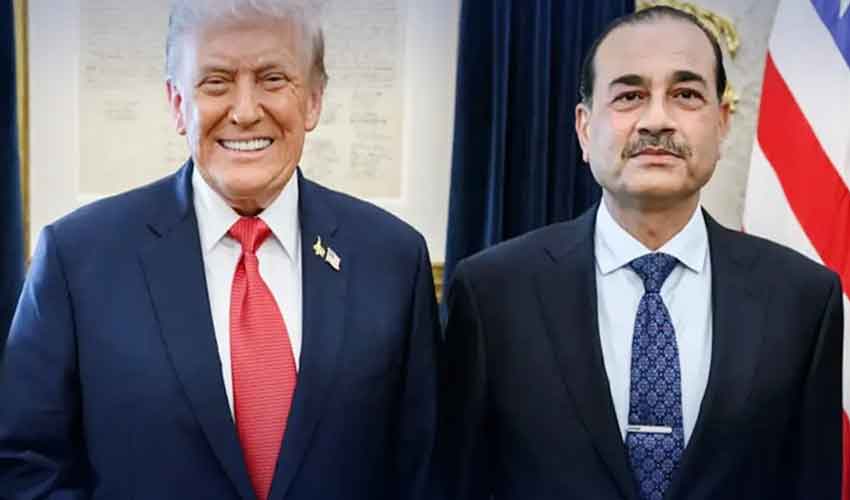
Field Marshal Syed Asim Munir is described in the op-ed as playing a role in facilitating diplomatic momentum through established regional and international relationships.
It further suggests that military-led diplomacy has become increasingly relevant in high-risk geopolitical environments.
Rise of military diplomacy in Pakistan
The op-ed argues that Pakistan’s armed forces are functioning as an extension of its diplomatic outreach.
It claims that military leaders often have faster access to counterparts and intelligence networks compared to traditional diplomatic channels.
Former Pakistani officials are also cited in the piece, describing “military diplomacy” as an emerging tool in modern foreign policy.
The article frames this as part of a broader global trend where military institutions sometimes step into peacemaking roles when formal diplomacy slows.
Strategic partnerships and regional influence
The op-ed highlights Pakistan’s defense-oriented relationships with China, Saudi Arabia, the UAE, Qatar, Egypt, Jordan, and other regional actors.
It suggests these partnerships contribute to Pakistan’s growing diplomatic weight in regional security discussions.
The Pakistan-China military relationship is described as particularly significant in shaping regional perceptions.
A key reference in the article is the Pakistan–Saudi mutual defense agreement signed in September 2025.
The op-ed presents this as an important marker of Pakistan’s evolving role as a regional security interlocutor.
It is portrayed as strengthening Pakistan’s strategic influence in the Middle East.
Role in Gaza and wider Middle East stability
The article also references Pakistan’s reported involvement in broader Middle East stabilization efforts.
It mentions Pakistan’s supportive role in implementing the Gaza ceasefire and possible participation in international stabilization mechanisms.
These developments are presented as part of Pakistan’s expanding diplomatic footprint in conflict resolution beyond its immediate region.
Reactions and ongoing diplomatic efforts
The op-ed notes mixed reactions and continued uncertainty following the Islamabad talks.
It references reported disappointment from Iranian officials and contrasting public statements from US figures regarding the outcome.
Despite delays in a second round of talks, the article suggests that backchannel communication may still be ongoing.
It describes the overall process as fragile but not completely stalled.
The piece argues that Pakistan’s growing role has been enabled by gaps in traditional diplomatic mediation.
It points to reduced effectiveness of certain regional mediators and limited UN capacity in managing fast-moving crises.
This vacuum, according to the op-ed, has created space for alternative actors like Pakistan to step in.