Pakistan’s military performance during the May Indo-Pak conflict has prompted a major rethink in Washington, with a leading US publication declaring 2025 a year of “revolutionary change” in Pakistan–United States relations.
An article published in the Washington Times says the long-standing “India First” approach in Washington effectively ended in 2025, with Pakistan regaining strategic importance.
According to the paper, Pakistan has transitioned from being viewed as an unreliable partner to a central pillar in President Donald Trump’s evolving South Asia policy.
Indo-Pak clash becomes turning point
The newspaper notes that the brief but intense Indo-Pak conflict in May proved decisive in reshaping US perceptions.
Pakistan’s military discipline, strategic focus, and asymmetric capabilities reportedly surprised President Trump and senior US officials, who had previously underestimated Islamabad’s capacity.
The article states that at the start of 2025, Washington viewed Pakistan as diplomatically isolated, politically questionable, and overly aligned with the Taliban.
By the end of the year, however, Pakistan had emerged as a partner country, experiencing what the paper describes as one of the fastest reputational turnarounds in recent US foreign policy history.
India’s trajectory raises doubts in Washington
While the US initially sought to strengthen India through the Quad and other forums, concerns grew over New Delhi’s domestic politics and diplomatic rigidity.
The Washington Times highlights India’s restrictions on personal freedoms, uneven military performance, and inflexible diplomacy as factors that weakened its image as a reliable regional stabilizer.
The first thaw in relations reportedly came through discreet counterterrorism exchanges between Islamabad and Washington.
These engagements signaled substantive cooperation and laid the groundwork for improved ties, which gained momentum after President Trump publicly praised Pakistan in a national address in March.
Following Trump’s remarks, Islamabad moved quickly to expand cooperation, with each limited engagement earning unexpected goodwill in Washington.
According to the analysis, this created a “virtuous cycle” in which cooperation led to praise, and praise encouraged deeper engagement between the two sides.
Field Marshal Asim Munir gains prominence
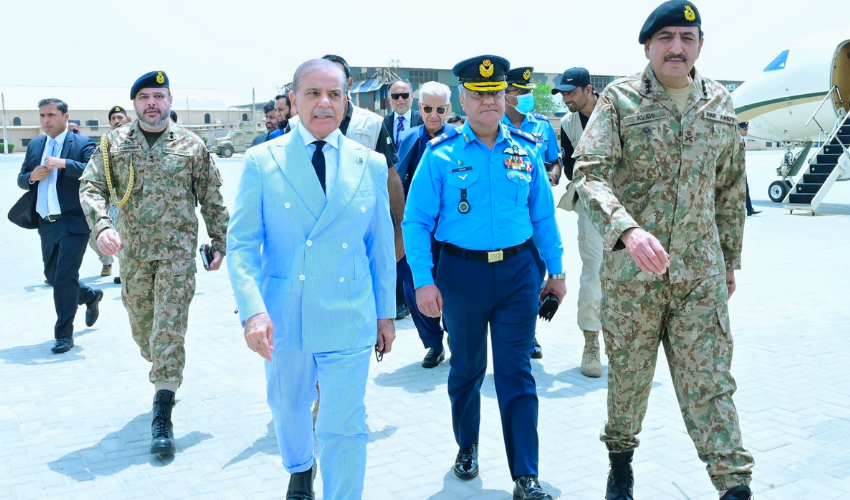
The article gives special attention to Field Marshal Syed Asim Munir, noting his role in Pakistan’s military modernization and command restructuring.
It says the position of Chief of Defence Forces was activated, with Asim Munir holding the role alongside his duties as army chief.
The Washington Times describes Asim Munir as a rising figure within Trump’s inner circle, with officials half-jokingly referring to their rapport as a “bromance.”
He was labeled a “Disciplined Dark Horse” and a “Deliberate Mystery,” with his White House lunch meeting described as unprecedented for a Pakistani military chief.
The paper notes that India’s cold response to Trump’s mediation efforts during the ceasefire displeased the US president.
In contrast, Pakistan’s acceptance of American mediation with gratitude significantly boosted its standing in Washington.
Following the May conflict, Pakistan was described as an “Emerging Asset” anchoring Trump’s broader South Asia vision.
The article adds that Islamabad is now seen as offering Washington strategic channels on Iran, the Middle East, and a counterweight to China’s regional influence.



.jpg)