Ghost School, the only Pakistani feature selected for the Red Sea International Film Festival, tackles the pressing issues of ghost schools and girls’ education in Pakistan.
This marks the feature film debut of Seemab Gul, who serves as the director, writer, and producer of the project.
Gul, who began her career with short films and documentaries, initially conceived Ghost School as a documentary before expanding it into a full-length feature set in a fishing village on the outskirts of Karachi.
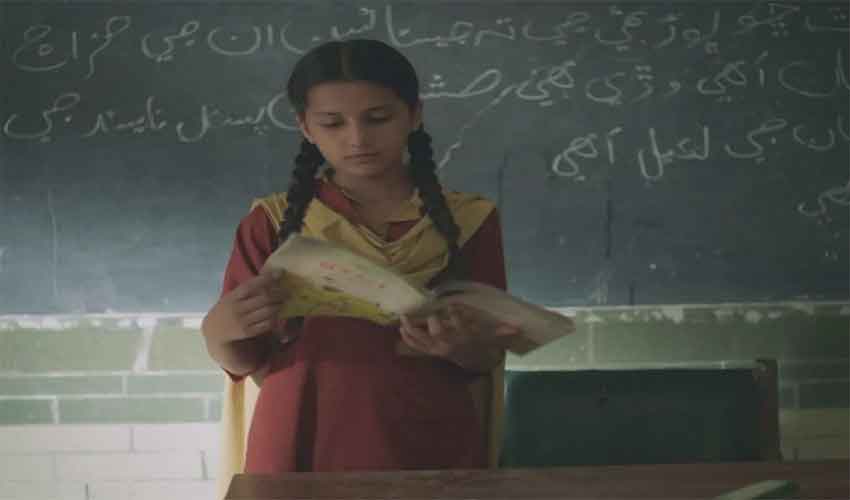
The film explores the struggles of girls’ education in rural Pakistan through the eyes of Rabia, played brilliantly by Nazualiya Arsalan. When Rabia’s school closes due to rumors of a djinn haunting the premises - an excuse used by teachers to facilitate her departure from the village - she questions the supernatural claims and seeks to uncover the truth behind the corrupt system led by the village elder.
Gul’s use of non-professional actors, inspired by Iranian cinema, adds authenticity to the story, while the djinn subplot introduces a sense of intrigue without veering into horror.
Prior to Ghost School, Gul worked on another feature, Haven of Hope, which was delayed due to unprofessional producers. Determined to take control of her work, she chose to write, direct, and produce Ghost School independently. She financed the project with the support of friends and family, writing it in just ten weeks and filming it over two weeks in Chashma Goth and another village near Karachi.
The film premiered globally at the Toronto International Film Festival earlier this year and allowed Gul to apply lessons from her time at the London Film School. Despite financial challenges - she borrowed from her post-production team and owes her editor - Gul’s commitment to Pakistani stories remained steadfast.
Gul cites Iranian filmmakers such as Abbas Kiarostami, Jafar Panahi, and Samira Makhmalbaf as key influences, admiring their focus on social realities and human struggle. She draws parallels between Iranian and Pakistani culture, noting that both are deeply rooted in tragedy, in contrast to the celebratory nature of Indian cinema.
Despite living abroad, Gul returned to Pakistani subjects to preserve cultural heritage, observing that many second- and third-generation immigrants are disconnected from their roots beyond language and cuisine.
With Ghost School, Gul not only gained recognition as a filmmaker but also reaffirmed her trust in Pakistani talent - all crew members, except for one Afghan based in London, are Pakistani. Her previous project, Haven of Hope, has since secured financing from 11 different sources, including the Red Sea Film Foundation, and is a co-production across five countries.
Ghost School is expected to hit Pakistani cinemas this summer, marking a significant milestone for both Gul and socially conscious Pakistani cinema.







.jpg)