The Foreign Office on Friday confirmed that talks between Pakistan and the Afghan Taliban began in Istanbul on Thursday and are still ongoing under the presence and supervision of mediators.
In his weekly media briefing, Foreign Office Spokesperson Tahir Hussain Andrabi said the discussions are being held in a “constructive environment,” but no conclusion has yet been reached.
“The talks have not ended nor have they reached any conclusion,” Andrabi clarified, adding that Pakistan’s negotiating delegation has been sharing information with mediators regarding ‘Fitna al-Khawarij’, a term often used by Pakistan to refer to militant groups operating from Afghan soil.
Pak position on Afghanistan: Clear and evidence-based
The spokesperson emphasized that Pakistan’s demand is simple and evidence-based — that Afghanistan must take decisive action against the Fitna al-Khawarij.
“Our demands are very simple, clear, authorial, and evidence-based,” Andrabi stated. “We will not make any statement or comment until the results of the talks are out.”
He added that Pakistan’s national security adviser on Afghan affairs and the director general for Afghanistan are part of the delegation currently in Istanbul, engaging in dialogue facilitated by international mediators.
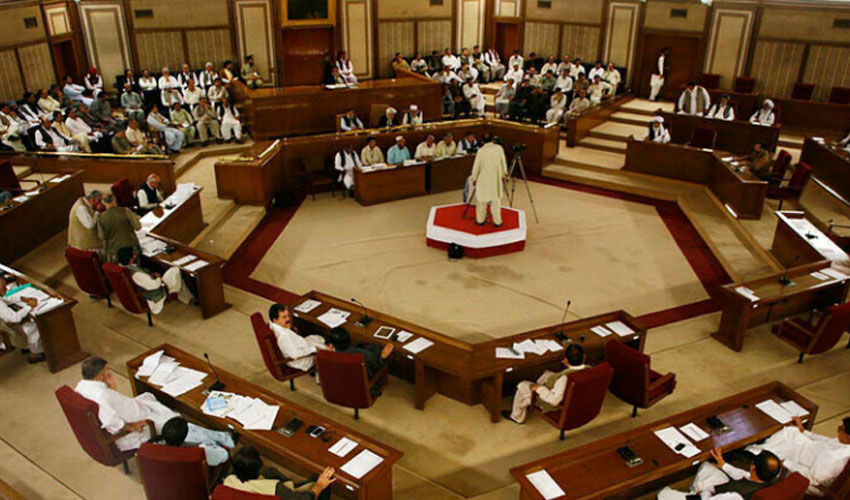
Responding to a question about Pakistan’s position on sending troops to Gaza, the Foreign Office spokesperson said that any such decision will be made by the parliament.
Also Read: Pakistan dismisses Indian media claims on Hindu pilgrims as baseless
“The decision to send troops to Gaza has to be made by the parliament,” Andrabi reiterated, highlighting that Pakistan remains focused on diplomatic and humanitarian support in coordination with international partners.
Indian media claims on Hindu, Sikh pilgrims
Addressing reports from Indian media that Hindu pilgrims were prevented from entering Pakistan, Andrabi categorically denied the allegations.
“Such claims are contrary to facts,” he said. “Pakistan has issued visas to 2,400 Hindu pilgrims for their religious visit.”
He explained that a small number of pilgrims were sent back due to incomplete documentation, and that visas would be reissued once the required documents are submitted.
Also Read: Pakistan-Afghan delegations resume talks in Istanbul
Similarly, Andrabi clarified that Pakistan did not stop Sikh pilgrims from visiting the Kartarpur Corridor, confirming that over 2,000 Sikh pilgrims were granted visas for the visit.
Indian media reports termed baseless
Criticizing Indian media coverage, the Foreign Office spokesperson said, “Indian media only has stories about meetings of intelligence officers and giving money — all without basis.”
He emphasized that Pakistan remains committed to religious freedom and routinely facilitates pilgrims of all faiths under existing bilateral protocols.
President’s visit to Qatar and regional issues
Speaking about regional diplomacy, Andrabi confirmed that the President of Pakistan recently visited Qatar, where he met several international leaders to discuss bilateral and economic cooperation.
He also cautioned against India’s violations of the Indus Waters Treaty, calling them “a serious threat to regional stability.”
“The Indus Waters Treaty must be respected,” he said, underscoring Pakistan’s commitment to resolving water disputes through dialogue and international law.
On the other hand, Defence Minister Khawaja Asif has said that Pakistan seeks the Pak-Afghan talks to result in a written agreement rather than verbal understandings.
Also Read: Pakistan seeks written accord in talks with Afghanistan: Asif
Speaking to the media outside Parliament House, the minister said the government wants everything to be clear and made part of the agreement, adding that if there is any violation, then Qatar and Turkiye will act as guarantors. Asif said Pakistan does not require anyone’s direction for the Pak-Afghan negotiations, adding that the talks between Afghanistan and Pakistan are essential, as peace is a necessity for the region.
The defence minister said Pakistan desires peace, prosperity, and trade in the region, saying, "The peace and trade are vital for the region, and that is what we are striving for. Whoever is giving guarantees should do so in writing, and we shall proceed."




.jpg)