US Treasury Secretary Scott Bessent has warned that the US may raise secondary tariffs on India.
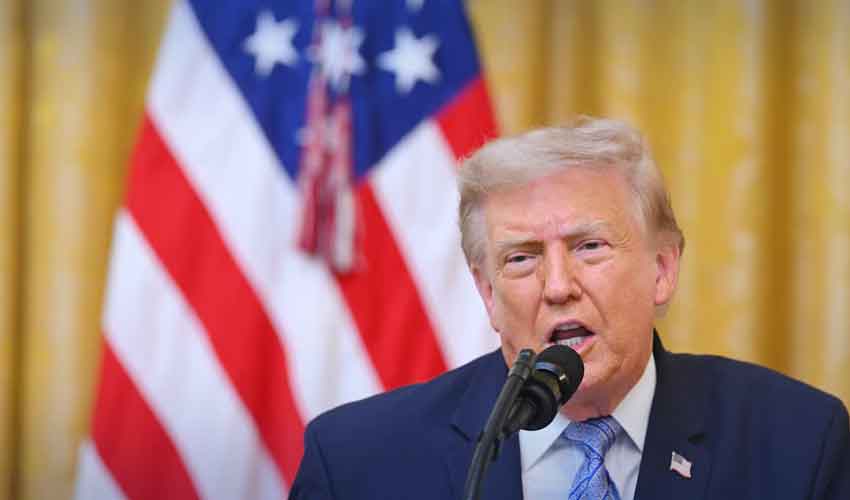
He said the decision would be based on the outcome of US President Donald Trump's meeting with his Russian counterpart Vladimir Putin in Alaska on Friday.
"We have imposed secondary tariffs on Indians who buy Russian oil. And I could see that if things don't go well, sanctions or secondary tariffs could be increased," Bessent said in an interview with Bloomberg TV on Wednesday.
Earlier this month, Trump imposed a 25% penalty on India, as well as 25% tariffs on Russian oil and weapons.
The United States has been attempting to mediate a cease-fire between Russia and Ukraine, and on Wednesday, Trump warned of "severe consequences" if Moscow did not agree to a peace deal.
Trump and Putin are scheduled to meet in Anchorage on Friday to discuss how to end the war in Ukraine.
"President Trump is meeting with President Putin, and the Europeans are waiting in the wings, arguing about how and what he should do. The Europeans must join us in these sanctions. The Europeans must be willing to impose these secondary sanctions," Bessent said.
Since the Ukraine war, Delhi has increased its imports of cheap Russian crude, straining India-US relations and disrupting ongoing trade talks with Washington.
Russian oil accounted for 35% to 40% of India's oil imports in 2024, up from 3% in 2021.
Delhi has defended its purchases of Russian oil, claiming that as a major energy importer, it must purchase the most affordable crude to protect millions of poor Indians from rising prices.
Bessent's comments follow an interview with Fox Business on Tuesday in which he described India as a "bit recalcitrant" in trade negotiations.
Trump claims his tariffs are part of his administration's strategy to boost the US economy and make global trade more equitable.
He has repeatedly referred to India as a tariff abuser and is eager to reduce a $45 billion (£33 billion) trade deficit with Asia's third largest economy.
Trade talks between Delhi and Washington have been ongoing for several months and are expected to resume on August 25, when US negotiators arrive in India.
However, experts say India's refusal to reduce agricultural and dairy duties has been a major stumbling block in the negotiations.
Trump's new 50% tariff rate on India is set to take effect on August 27, which some experts have compared to a trade embargo between the two countries.
It makes India the most heavily taxed US trading partner in Asia, and it is expected to severely impede export-focused industries such as textiles and jewellery, potentially slowing India's growth by up to half a percentage point.
.jpg)