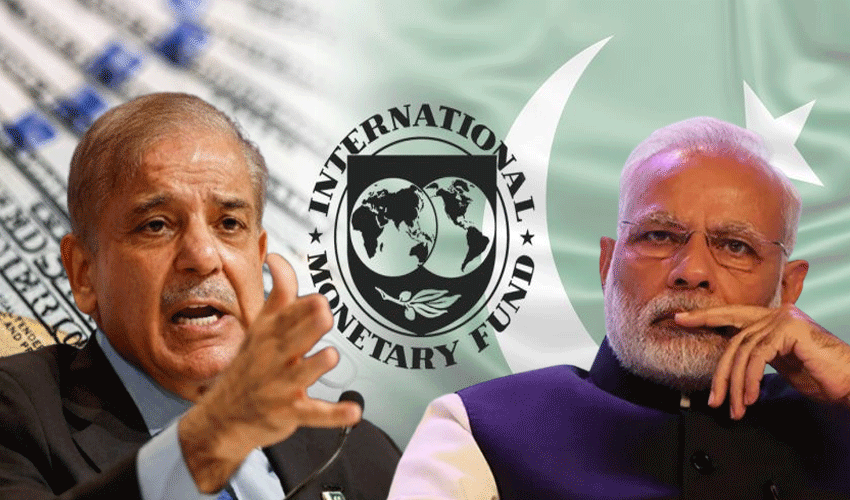
The International Monetary Fund (IMF) has dismissed India's request to halt Pakistan's financial aid, confirming that the scheduled Executive Board meeting on May 9 will proceed as planned.
The meeting will consider Pakistan’s financial assistance requests, including a significant $2.3 billion aid package.
Mahir Benisi, an IMF representative, clarified that the meeting would take place on May 9 without delay, and Pakistan's request for assistance will be discussed. When asked about India's objections, Benisi emphasized that the IMF could not comment on the concerns of other countries.
"The board meeting will be held as scheduled, and we cannot comment on the concerns of other nations," he told SAMAA.
Pakistan’s Ministry of Finance officials have expressed confidence that the country will receive crucial financial support during this meeting. They expect approval for the $1.3 billion Resilience and Sustainability Facility (RSF) program, aimed at addressing climate change challenges, alongside a crucial addition of $1 billion to the ongoing $7 billion Extended Fund Facility (EFF) program. These funds are expected to be disbursed in installments over 28 months.
The RSF program, if approved, will help Pakistan combat the severe impacts of climate change, an issue that has become a growing concern for the country. The program aims to strengthen Pakistan’s climate resilience, with the first installment expected soon after the meeting. The IMF had signed the staff-level agreement for the RSF on March 25, 2025, marking a significant step in securing international support.
India’s demand for the IMF to review its financial assistance to Pakistan has raised eyebrows internationally. An Indian government source told Reuters that New Delhi had officially asked the IMF to review the loans disbursed to Pakistan, though no specific details of the request were provided. This demand came amid heightened tensions between the two nations following the deadly Pahalgam attack in Kashmir, in which 26 people were killed. India has accused Pakistan of involvement, an allegation Islamabad has vehemently denied.
In response to these developments, Khurram Shahzad, an advisor to Pakistan’s Finance Minister, reassured the public, stating that the IMF program is on track. "The latest review has been completed successfully, and we are moving forward as planned," he affirmed, highlighting the productive spring meetings with financial institutions in Washington. Shahzad also noted that Pakistan had held over 70 meetings, with strong interest from international investors in supporting the country’s economic recovery.
Tensions between India and Pakistan have reached a critical point in recent weeks, with both nations engaging in a series of retaliatory measures. India suspended a vital river water-sharing treaty, and both countries have closed their airspace to each other’s airlines. The geopolitical situation remains tense, but the IMF’s decision to proceed with Pakistan’s financial aid despite India’s request indicates a clear move towards stabilizing the region's economy.
Pakistan, which secured the $7 billion bailout package from the IMF last year, continues to rely on international support to stabilize its economy and avoid a default. The country’s economic outlook has improved under the IMF program, and officials remain optimistic about future prospects despite the ongoing geopolitical tensions.

.jpg)
.jpg)



.jpg)