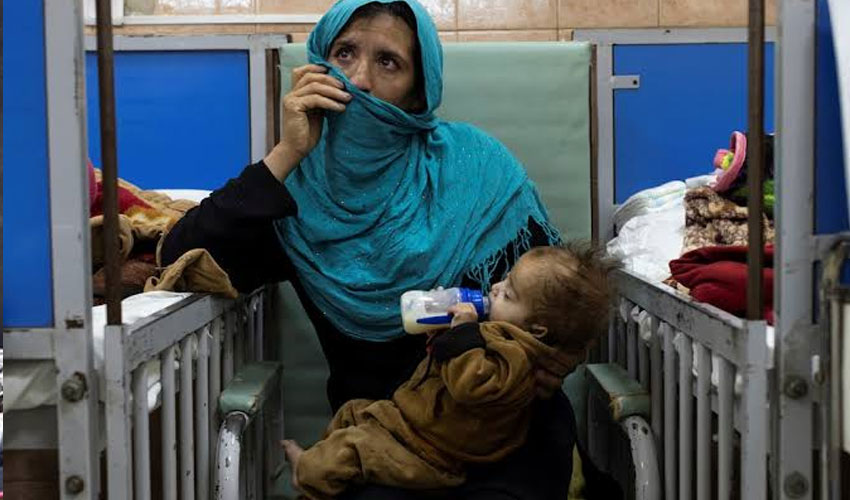
Nearly 3.7 million children under the age of five in Afghanistan are suffering from acute malnutrition as declining humanitarian funding forces essential healthcare services to close, Save the Children said.
The aid agency said nearly one in 10 young children in the country is now affected by acute malnutrition, with conditions worsening in two-thirds of Afghanistan’s provinces during the second quarter of 2026 compared with the same period last year.
According to Save the Children, acute malnutrition among children under five has increased by 14% over the past four years, reaching about 3.7 million children this year.
Acute malnutrition, also known as wasting, is a potentially life-threatening condition in which children become dangerously underweight for their height because of inadequate food intake or severe illness.
Healthcare services hit by funding cuts
Save the Children said the worsening crisis is closely linked to declining humanitarian assistance.
Around 600 essential healthcare facilities have closed, affecting nearly 4 million people, about half of them children, the organisation said.
Humanitarian funding for Afghanistan has fallen by almost 70%, from $3.27 billion in 2022 to about $1 billion in 2025.
So far in 2026, only around $438 million in humanitarian funding has been secured, leaving a funding gap of about 74%, according to the aid agency.
Save the Children said it has managed to keep 14 health clinics operating, including facilities serving remote and mountainous communities in northern Afghanistan.
Return of refugees adds pressure
The humanitarian crisis has been further compounded by the return of millions of Afghans from neighbouring countries.
Save the Children said Afghanistan’s population has increased by about 12% since September 2023, largely due to more than six million Afghans returning from Pakistan and Iran amid tighter restrictions and deportations.
The country is also grappling with severe food insecurity, internal displacement, natural disasters, recent conflict and years of drought, placing additional pressure on already limited resources.
Save the Children Afghanistan Country Director Ashish Damle warned that the international community needs to act before vulnerable families reach a breaking point.
The agency also said restrictions on humanitarian operations, including limits on the participation of women aid workers, have made it more difficult for organisations to reach women and children.
Afghanistan faces growing humanitarian needs
International assistance to Afghanistan has declined significantly since the Taliban returned to power in 2021, with major donors shifting from large-scale development programmes towards more limited humanitarian operations.
The combination of falling aid, population growth and worsening humanitarian conditions has raised concerns that Afghanistan’s child malnutrition crisis could deteriorate further without additional international support.