Crude oil prices fell on Thursday as markets shifted their focus towards weaker global demand forecasts, offsetting concerns over supply disruptions linked to the conflict involving Iran.
According to Reuters, Brent crude futures fell 42 cents, or 0.47%, to $88.56 per barrel, while US West Texas Intermediate (WTI) crude declined 55 cents, or 0.66%, to $82.72 per barrel.
Both benchmarks had recorded gains in recent sessions.
OPEC cuts 2026 demand forecast
The decline came after both the Organization of the Petroleum Exporting Countries (OPEC) and the International Energy Agency (IEA) lowered their forecasts for global oil demand.
OPEC reduced its forecast for global oil demand growth in 2026 to 580,000 barrels per day in its latest monthly oil market report.
The IEA, meanwhile, expects global oil consumption to contract by 1.6 million barrels per day this year, compared with its previous forecast of a 1 million-barrel-per-day decline.
The agency said higher prices and supply restrictions linked to the US-Israeli war with Iran were weighing on consumption.
US crude inventories jump
Oil prices also came under pressure after US crude inventories recorded their biggest weekly increase since January 2023.
Data from the US Energy Information Administration showed commercial crude inventories rose by 17.4 million barrels to 424.4 million barrels in the week ending August 7.
The increase was significantly larger than analysts' expectations of a 1.4 million-barrel decline.
US crude exports also fell during the week, contributing to the inventory build-up.
Iran-US talks remain deadlocked
Meanwhile, concerns over supply disruptions continue to support oil prices.
A senior Iranian source said there had been no progress in talks aimed at reviving an interim agreement with the United States and establishing a timeline for its implementation.
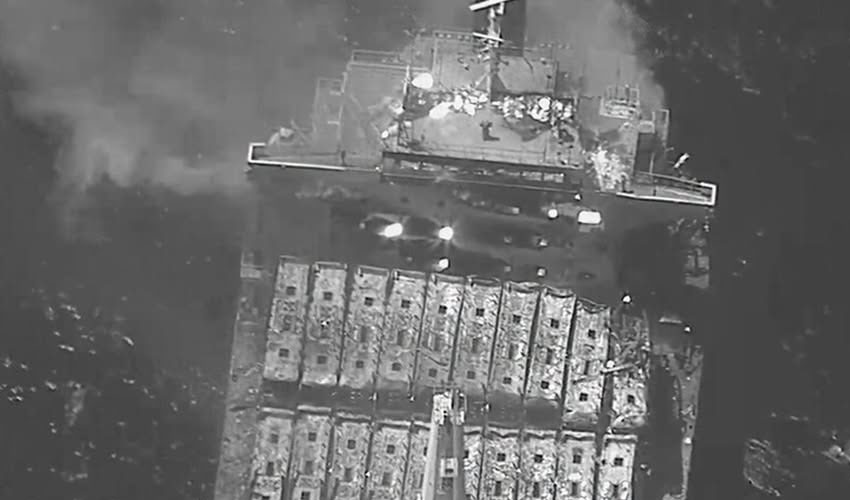
Analysts said the deadlock between Washington and Tehran has helped put a floor under oil prices, particularly amid uncertainty surrounding the Strait of Hormuz, a critical global energy shipping route.
There has also been no clear progress towards reopening the waterway, keeping markets focused on potential disruptions to global oil supplies.
Market remains sensitive to Middle East tensions
Analysts said the outlook for oil prices remains closely tied to developments in the Middle East.
While weaker demand and rising US inventories are putting downward pressure on prices, continued uncertainty over Iran, the Strait of Hormuz and regional security could limit further declines.