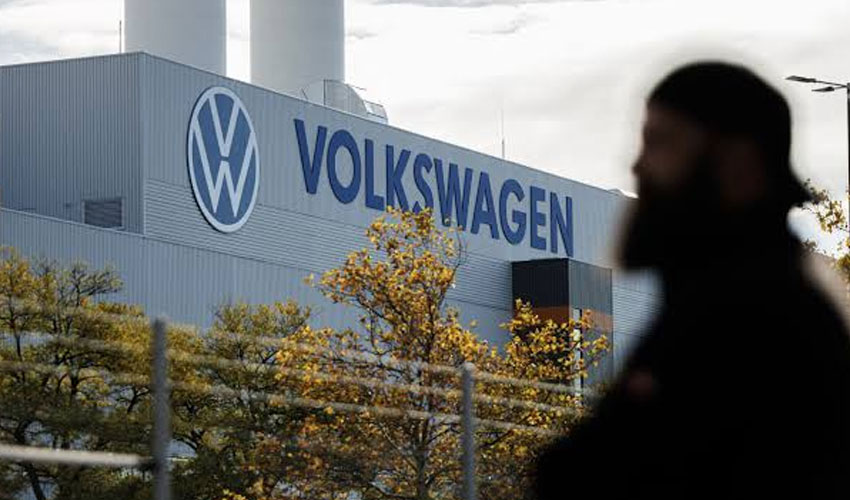
German auto giant Volkswagen has announced plans to significantly reduce its vehicle lineup and lower production capacity as part of a sweeping restructuring strategy, though it stopped short of confirming reports of major job cuts.
Following a key meeting with the company's supervisory board, Volkswagen said it would gradually reduce its model lineup by up to 50% over the coming years to focus on its most profitable and competitive market segments.
The company also revealed that it would reduce its annual production capacity to nine million vehicles, down from its pre-pandemic target of 12 million.
"Our future plan marks the next phase of transformation driven by our own efforts," Volkswagen Chief Executive Officer Oliver Blume said in a statement.
"We are making the Volkswagen Group faster, more resilient and more competitive," he added.
The announcement comes amid reports that Volkswagen is considering closing four factories in Germany and eliminating up to 100,000 jobs, potentially marking the largest restructuring in the company's nearly 90-year history.
However, the automaker did not confirm the reported layoffs or factory closures in its latest statement.
According to media reports, the proposed closures could affect plants in Hanover, Zwickau, Emden, and Audi's facility in Neckarsulm. The plans have sparked strong opposition from German labor unions and politicians.
Volkswagen has already announced workforce reductions and an aggressive product strategy as it grapples with multiple challenges, including rising competition from Chinese electric vehicle manufacturers, US import tariffs and weaker demand in key markets.
Analysts at Jefferies said the company's latest update provided little clarity on whether management had reached an agreement regarding factory closures, investment plans or additional workforce reductions.
Meanwhile, members of Volkswagen's General Works Council and Germany's powerful IG Metall union staged protests outside the company's Zwickau plant, pledging to resist any plans involving factory shutdowns or mass layoffs.
Volkswagen shares edged higher following the announcement but remain down more than 30% this year, reflecting investor concerns over the company's long-term competitiveness and profitability.