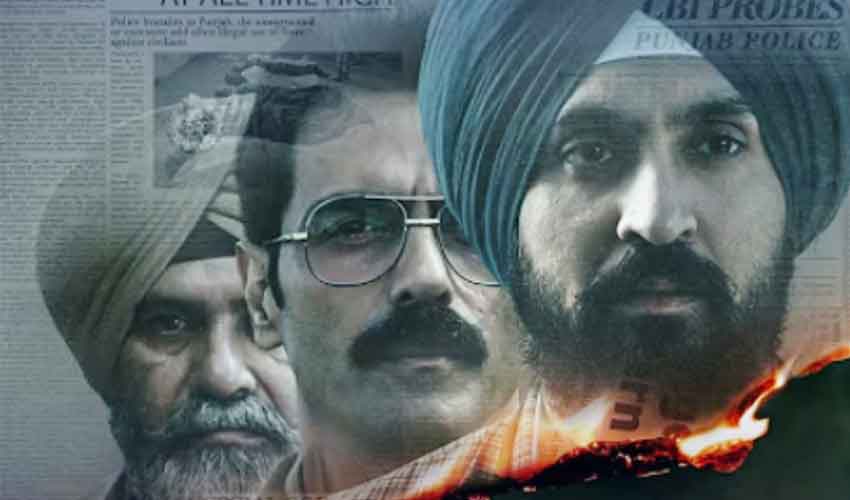
Diljit Dosanjh’s political drama Satluj has once again become the focus of controversy after it was removed from ZEE5 in India just two days after its release.
The move has sparked fresh debate over censorship, artistic freedom and the treatment of films based on sensitive historical events.
Satluj premiered on ZEE5 on July 3 after spending nearly four years caught in certification and release delays.
However, on July 5, the film was removed from ZEE5's Indian catalogue without a detailed public explanation. The platform later confirmed that the movie would remain unavailable in India until further notice, while continuing to stream on ZEE5 Global for viewers outside India.
In a statement, ZEE5 said it stood by the film and its creative vision and was committed to pursuing all appropriate legal and regulatory avenues to restore it for Indian audiences. The platform added, “Satluj may have paused. But the conversation it started hasn’t.”
View this post on Instagram
Film with long censorship battle
The project was originally developed under the titles Ghallughara and later Punjab '95 before finally being released as Satluj.
Director Honey Trehan previously said the film faced years of delays after India's Central Board of Film Certification (CBFC) sought numerous cuts and asked for the original title to be changed. The filmmakers resisted those changes, resulting in a prolonged certification process.
The film was withdrawn from its planned premiere at the Toronto International Film Festival in 2023, and by 2025 it had still not received certification for a theatrical release in India.
Story based on Jaswant Singh Khalra
Directed by Honey Trehan and produced by RSVP Movies and MacGuffin Pictures, Satluj stars Diljit Dosanjh as Sikh human rights activist Jaswant Singh Khalra.
The film follows Khalra's efforts to expose the alleged illegal cremation of thousands of unidentified people in Punjab between 1984 and 1994. Khalra disappeared in 1995, and six Punjab Police officers were later convicted in connection with his abduction and murder.
View this post on Instagram
The cast also includes Arjun Rampal, Kanwaljit Singh, Suvinder Vicky and Geetika Vidya Ohlyan.
Writer Niren Bhatt rejected suggestions that the film could be used as anti-India propaganda. He questioned why Satluj was being treated differently from other politically sensitive films, arguing that if movies such as The Kashmir Files and The Kerala Story could be released, there was no justification for singling out Satluj.
Bhatt also expressed disappointment over what he described as years of silence from authorities, saying the filmmakers were never clearly informed which scenes were considered objectionable or why the film was ultimately removed from the streaming platform.
Govt source cites security concerns
While ZEE5 did not publicly state the reason for removing the film, a government source told news agencies that the platform had been asked to take it down because of security-related concerns.
According to the source, the film was able to debut on an OTT platform because streaming releases do not require certification from the CBFC. After the release came to the government's attention, the platform was reportedly instructed to remove it under intermediary guidelines.
Debate over Sikh-related content
The removal of Satluj has renewed wider discussion over restrictions on works related to Sikh history and politics.
Critics have pointed to previous bans or release restrictions involving Sikh-related films and songs, including Punjab '95, Qaum De Heere, Sadda Haq, Toofan Singh, Sidhu Moosewala's song SYL, and Kanwar Grewal's Rihaa.
Some commentators argue these actions reflect broader concerns about freedom of expression, while authorities have cited legal, regulatory or security considerations in various cases.
The events portrayed in Satluj are rooted in one of the most contentious periods in Punjab's history, spanning the years between 1984 and 1994.
Human rights groups and activists have alleged that thousands of people disappeared or were unlawfully killed during that period. These allegations remain the subject of historical, legal and political debate.
The film's removal has added another chapter to the long-running discussion over how such sensitive episodes of history should be portrayed in cinema and whether creative works dealing with them should face restrictions.