Turkish President Recep Tayyip Erdogan warned that Israel must not be allowed to undermine the United States-Iran memorandum of understanding (MoU), saying lasting peace in the Middle East depends on the support of regional countries.
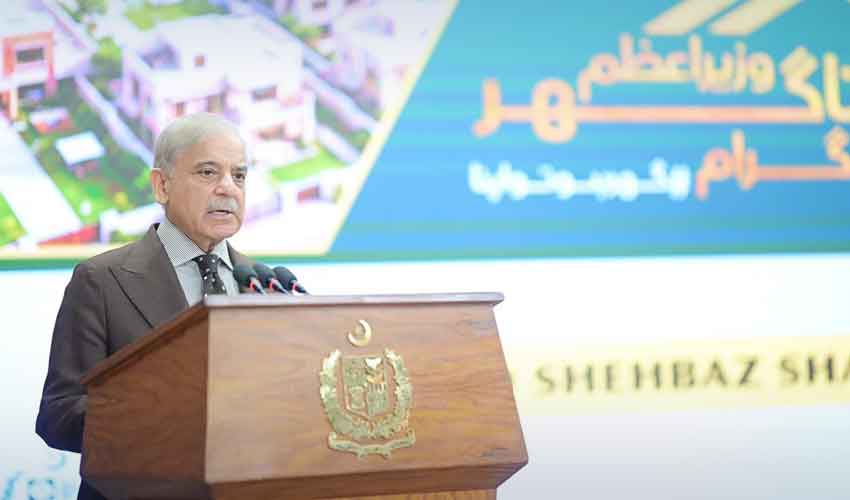
Speaking alongside Pakistani Prime Minister Shehbaz Sharif in Istanbul, Erdogan accused Israel of attempting to derail efforts aimed at ending the conflict.
Erdogan calls for regional role in peace efforts
Addressing a joint appearance with Prime Minister Shehbaz Sharif, Erdogan said durable peace in the Middle East cannot be achieved without the participation and support of countries in the region.
"No solution that does not take strength from the will and contributions of regional countries can be lasting," he said.
The Turkish leader stressed that regional cooperation remains essential to ensuring long-term stability and preventing further conflict.
Erdogan said Ankara was closely monitoring what he described as Israel's attempts to undermine the US-Iran memorandum of understanding.
"We are closely following the Israeli administration's attempts to dynamite the US-Iran deal," he said.
He added that "the current war-addicted Israeli government must not be allowed to drown our geography in the smell of gunpowder and blood again."
The Turkish president has repeatedly accused Israel of trying to weaken the US-Iran agreement and has consistently condemned Israeli military operations in Gaza, Lebanon and Syria.
US-Iran talks continue through Qatar
Erdogan's remarks came after US and Iranian delegations met in Qatar last week for indirect negotiations aimed at advancing discussions following recent military exchanges between the two countries.
Iranian Deputy Foreign Minister Kazem Gharibabadi said Tehran would establish a "communication channel" with Washington to report any violations of the memorandum of understanding.
What US-Iran memorandum includes
The memorandum of understanding, brokered by Qatar and Pakistan, outlines several key commitments aimed at reducing tensions.
The agreement includes:
- A 60-day ceasefire.
- The reopening of the Strait of Hormuz.
- An understanding on Iran's nuclear programme.
- A timeline for reaching a permanent agreement to end the conflict.
Despite the memorandum, tensions have continued between Washington and Tehran.
Last week, both countries carried out tit-for-tat attacks while publicly disputing the interpretation and implementation of the agreement, raising concerns over the durability of the deal.