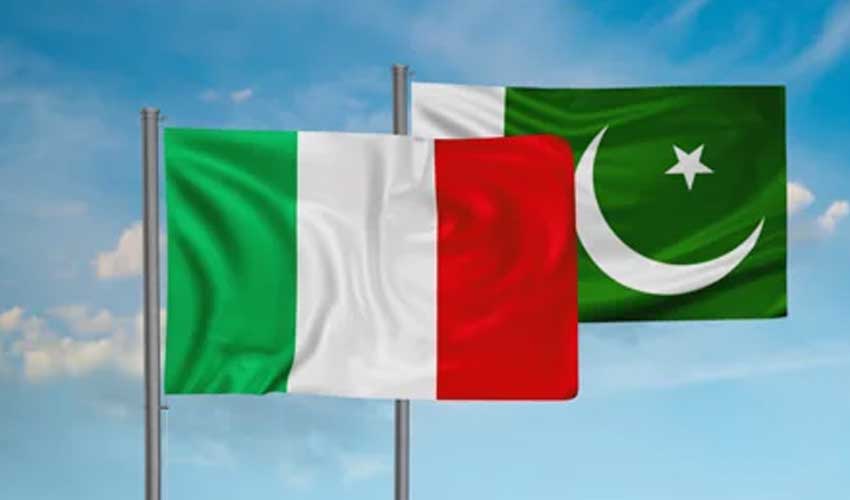
Pakistan and Italy have signed an agreement worth Rs6.3 billion for a technical and professional education and training project in the agricultural sector.
€20m Italy deal to boost agricultural training
According to the Ministry of Economic Affairs, the agreement, equivalent to €20 million, was signed by Secretary Economic Affairs Humair Karim and Italian Ambassador Marilina Armellin.
The ministry said the project would strengthen the technical and professional training system linked with agriculture. Modern training programmes based on market requirements would be introduced to improve the skills of farmers and extension staff.
Project to boost crops and rural livelihoods
The programme has aimed to increase agricultural production, promote sustainable farming practices and improve the economic conditions of rural communities.
The project will focus on the development of high-value crops and strengthening agricultural and food value chains. Special training centres will be established for people associated with horticulture production, processing and marketing.
Special attention will be given to crops
Under the project, special attention will be given to crops including olives, pistachios, dates, mushrooms, cherries, grapes, peaches and almonds.
The Ministry of Economic Affairs said modern Italian agricultural expertise would be combined with Pakistan’s agricultural potential under the programme.
The 42-month project will include 720 training courses, benefiting 18,398 people. Eleven standard training courses will also be prepared for the agriculture sector.
The project will establish 12 model orchards and nurseries, eight climate-resilient environmentally friendly villages, five agricultural and food processing units and two national centres of excellence.
National centres of excellence will be established in Sargodha for citrus production and in Turbat for dates.
POD to implement project through cooperation
The Pakistan Oilseed Department (POD) will implement the project with the cooperation of provincial agriculture departments. The ministry said the programme would create new employment opportunities in rural areas, increase farmers’ incomes and reduce post-harvest losses.