British Prime Minister Keir Starmer has announced his resignation after acknowledging that the Labour Party no longer sees him as the right person to lead it into the next general election.
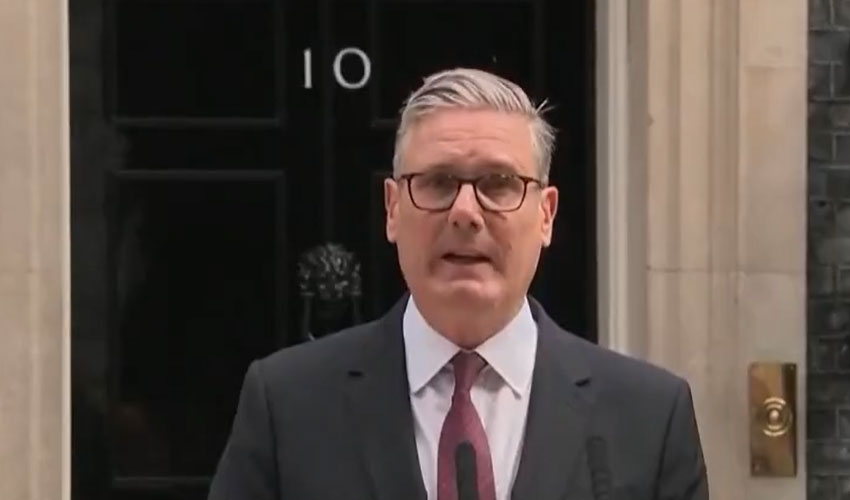
In a televised statement outside 10 Downing Street, Starmer confirmed he would step down as Labour leader and had informed King Charles of his decision, triggering a leadership contest to choose his successor.
Addressing the nation, Starmer said he had accepted the verdict from within the Labour Party and would leave office with "good grace."
The outgoing prime minister said he had listened to concerns from Labour lawmakers and party members and recognized that the party no longer believed he was the right figure to lead it into the next election.
BREAKING: Sir Keir Starmer has announced a timetable for his resignation as prime minister.
— Sky News (@SkyNews) June 22, 2026
Live updates: https://t.co/0NZcBgSmUq pic.twitter.com/awlsBDQYLK
His resignation follows growing internal pressure and comes after a major by-election victory by rival Andy Burnham, which intensified calls for a change in leadership.
Starmer defends Labour's record
Before announcing his departure timetable, Starmer defended his government's achievements.
He highlighted improvements in the economy, rising wages, investment projects, infrastructure development, reduced NHS waiting lists, and expanded protections for workers and renters.
According to Starmer, Labour had delivered stronger economic growth, higher wages, and significant public service improvements since coming to power.
Despite those achievements, mounting dissatisfaction within the party ultimately weakened his position.
Starmer confirmed that Labour's National Executive Committee (NEC) will begin the process of electing a new leader.
Nominations are expected to open on July 9, formally launching the race to replace him.
The winner of the contest is likely to become both Labour leader and the next prime minister, provided the party maintains its parliamentary majority.
How will Labour choose its next leader?
The selection process involves several stages before party members cast their votes.
Step 1: Secure Support From MPs
Any candidate wishing to enter the race must first obtain backing from 81 Labour MPs, equivalent to 20 percent of Labour's parliamentary representation.
Without reaching this threshold, candidates cannot proceed.
Step 2: Gain Support From Local Parties or Trade Unions
Candidates must then receive support from either:
- Five percent of Labour constituency parties, or
- Three affiliated organizations, including at least two trade unions representing five percent of affiliated membership.
This stage ensures leadership hopefuls have support across different parts of the Labour movement.
Step 3: Vote of Party Members
Once candidates qualify, Labour members vote by ranking candidates in order of preference.
If no candidate wins more than 50 percent of first-preference votes, the lowest-ranked candidate is eliminated and votes are redistributed until one contender secures a majority.
How long could the contest take?
The Labour National Executive Committee will determine the exact timetable.
The party's previous leadership contest in 2020 lasted around three months, with nominations opening in January and the winner announced in April.
A similar timeframe would mean Labour members could spend several weeks evaluating candidates before selecting a new leader.
Who could replace Starmer?
Attention is now turning to potential contenders, with many political observers expecting Andy Burnham to emerge as a leading candidate following his recent political momentum.
Other senior Labour figures may also enter the race once nominations officially open.
The coming days are expected to bring increased lobbying, endorsements, and campaigning within the party.
What happens next for the UK govt?
Starmer will remain in office until the leadership transition process is completed.
Once Labour members elect a new leader, that person will take control of the party and is expected to be invited to form a government.
The leadership race is likely to shape Labour's direction on the economy, public services, immigration, and foreign policy ahead of the next general election.