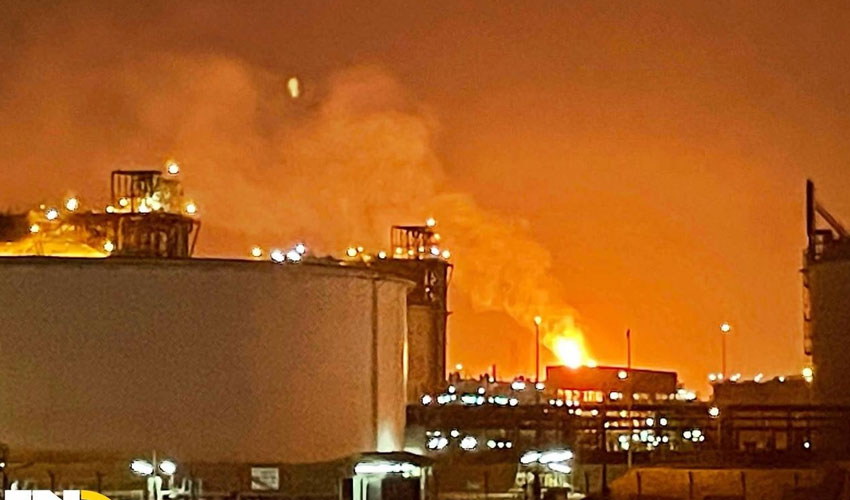
Global oil markets came under pressure on Monday after high-level US–Iran talks concluded in Switzerland.
Prices fell as investors reacted to signals of improved supply prospects and easing geopolitical tensions.
Brent crude fell by $1.53 (1.90%) to $79.04 per barrel at 0656 GMT.
Earlier in the trading session, prices had surged to $82.30 per barrel, driven by initial uncertainty surrounding the talks and geopolitical tensions.
Meanwhile, US West Texas Intermediate (WTI) crude stood at $76.53 per barrel, down 7 cents ahead of contract expiry. The more active August contract dropped 55 cents to $75.30 per barrel.
Impact of US–Iran talks
The decline came after US and Iranian delegations concluded their first round of negotiations in Switzerland, mediated by Pakistan and Qatar.
Iranian Foreign Minister Abbas Araghchi said Tehran had secured waivers for oil and petrochemical exports, along with the release of some frozen assets and plans for reconstruction and development support.
Market analysts said the developments eased immediate fears of supply disruptions in global energy markets.
Market reaction and expert views
Analysts noted that while the talks showed progress, uncertainty remains over long-term outcomes.
IG market strategist Tony Sycamore said the establishment of a high-level committee signaled progress, but its real-world impact remains unclear, particularly amid ongoing tensions in southern Lebanon.
Strait of Hormuz and supply concerns
Before the talks concluded, shipping activity in the Strait of Hormuz dropped sharply after reports that Iran had restricted passage amid tensions.
The waterway is a key global oil transit route, and any disruption typically triggers immediate market volatility.
Despite this, expectations of increased supply helped push prices lower after the talks.
ING analysts warned that risks remain high, noting that the transition toward a long-term agreement could still face major challenges.
They highlighted continued instability in Lebanon and broader regional tensions as key risk factors for energy markets.
Israeli strikes in Lebanon reportedly killed at least 20 people recently, despite a ceasefire agreement with Hezbollah, adding to uncertainty in the region.
Oil markets were also influenced by expectations of higher supply.
Reports suggest more than 25 million barrels of Iranian oil have moved through restricted channels recently, according to Iran’s National Oil Company.
Additionally, Iraq, the UAE, and Kuwait have increased or signaled plans to raise output, with Iraq aiming to restore production to 4.2–4.3 million barrels per day.