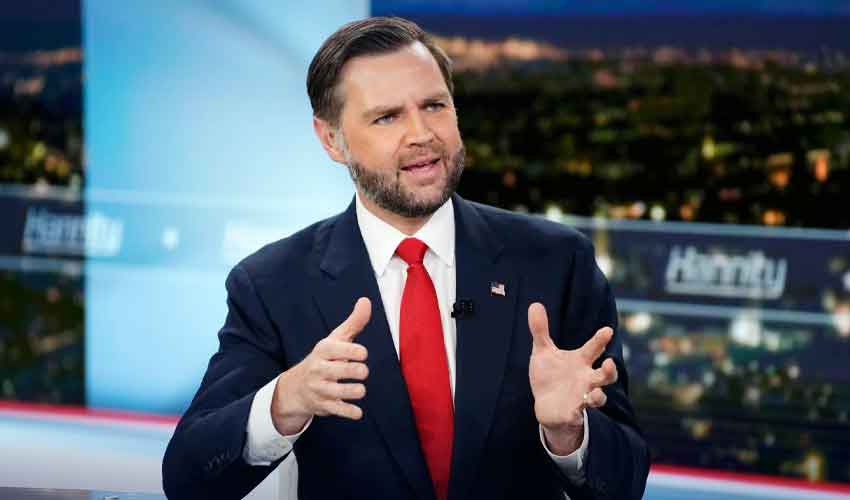
US Vice President JD Vance has said President Donald Trump may release the text of Washington’s agreement with Tehran before Friday, even as the electronically signed US-Iran memorandum of understanding awaits a formal in-person signing in Geneva.
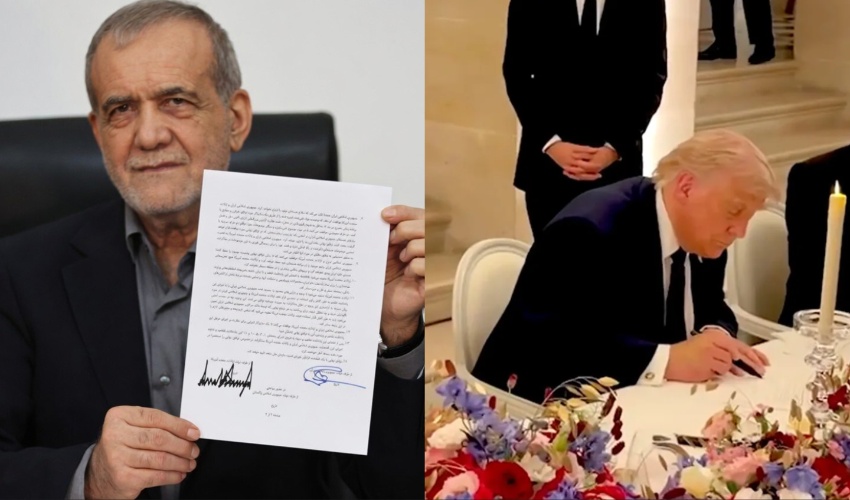
Speaking to Fox News on Monday, Vance said the agreement had already been electronically signed by leaders in the United States and Iran.
He said Trump had indicated that the agreement would be released on Friday, but could decide to make it public earlier.
“There are some diplomatic protocols, there is some sequencing that the Pakistanis have been involved in this, the Qataris have been involved,” Vance said when asked why the memorandum had not yet been released.
“What the president says is the agreement will come out on Friday. He may decide to release the agreement sooner than that. But we have this formal ceremony on Friday and that’s when the president wants to release it,” he added.
Pakistan’s mediation role
Vance’s remarks offered fresh details about Pakistan’s role in diplomatic efforts to end months of conflict between Washington and Tehran.
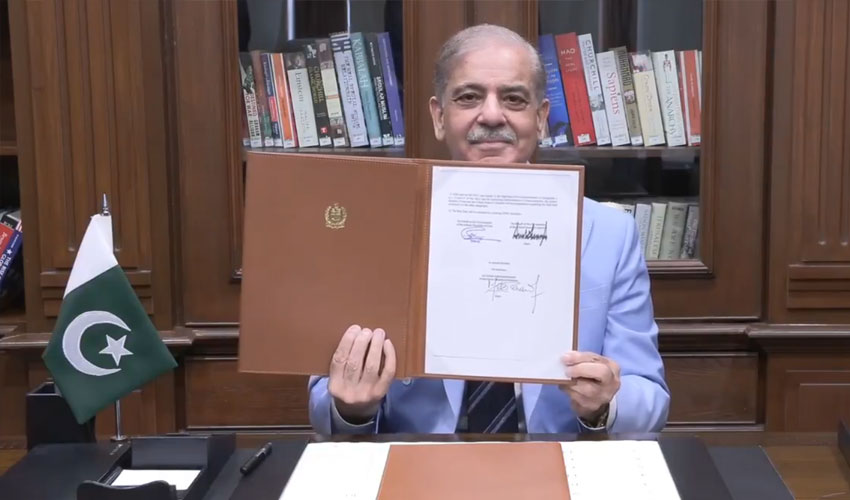
His comments came after Prime Minister Shehbaz Sharif announced that Pakistan would host the formal signing ceremony of the agreement in Geneva.
Also Read: US, Iran reach peace deal; signing on June 19
Pakistani officials have said Islamabad acted as a key intermediary, relaying messages and proposals between the US and Iran after the conflict erupted in February.
Pakistan also hosted the first round of direct US-Iran talks in Islamabad in April and remained engaged with both governments during later negotiations.
China praises Islamabad’s peace efforts
China has also appreciated Pakistan’s role in the process.
According to Pakistan’s state-run Associated Press of Pakistan, China’s foreign ministry welcomed Islamabad’s “initiative and sense of responsibility” in promoting peace and ending hostilities.
Beijing said Pakistan had played an important role in facilitating US-Iran negotiations.
Trump says deal is signed
President Trump and Prime Minister Shehbaz Sharif have both said the agreement will be formally signed in Geneva on Friday.
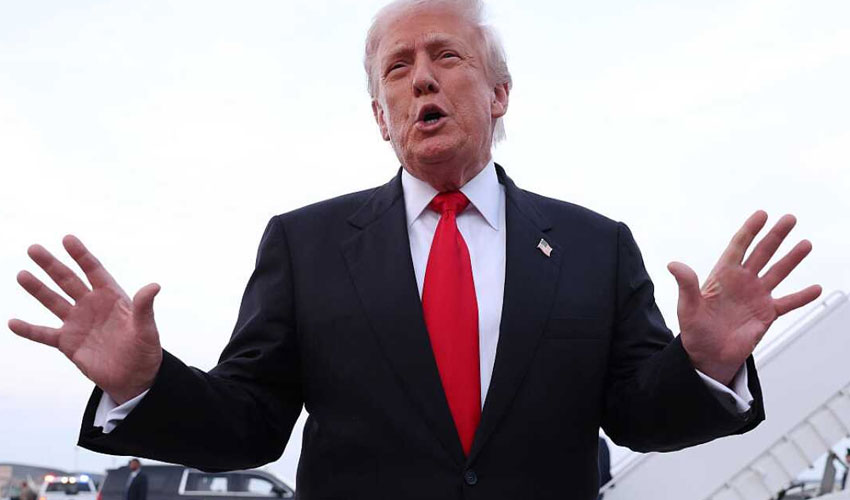
Speaking alongside French President Emmanuel Macron before this week’s G7 meeting, Trump said he did not know whether he would attend the ceremony, but confirmed that Vice President Vance would be present.
“The deal’s all signed. And the strait is already partially opened, as you know,” Trump told reporters after arriving in Evian, France.
“On Friday, it’ll be completely open,” he said.
Strait of Hormuz central to deal
Vance told CNBC that the deal’s two major objectives are reopening the Strait of Hormuz and securing a long-term commitment that Iran will never develop a nuclear weapon.
“Our expectation is that the Strait is going to be opened in a toll-free way for the long term,” Vance said. He added that the issue would be settled during technical negotiations.
Trump said the critical waterway would be “completely open” from Friday, though he added there was still “hunting” underway to ensure it was demined.
Also Read: Iran-US peace deal: Details revealed
The Strait of Hormuz is a vital energy corridor through which roughly a fifth of the world’s oil and gas supplies pass. Its disruption during the conflict pushed up global energy prices and raised concerns about inflation and supply chains.
The US and Iran said they had agreed terms to end the war and reopen the strait, bringing relief to markets. However, officials have stressed that the agreement is still a framework and many details remain unresolved.
Vance told CNBC that “a lot” of important details still need to be worked out, but said the US has “all the cards” in the next phase of talks.
“There are a lot of very important details to figure out that we’re actually going to sit at the table and discuss together and figure out a path forward,” he said.
Iran’s senior leaders expected at signing
Vance said Iranian Foreign Minister Abbas Araghchi and parliamentary speaker Mohammad Bagher Ghalibaf are expected to represent Iran in Switzerland.
Ghalibaf is viewed as a hard-liner, and his participation may signal that Iran’s conservative faction is backing the deal.
Iranian state media reported that Araghchi said a meeting would “probably” take place on Friday in Switzerland, where both sides are expected to officially sign the MoU and hold the first round of negotiations.
The preliminary deal is expected to extend the US-Iran ceasefire for 60 days and create a framework for future negotiations over Tehran’s nuclear programme and other major issues.
Also Read: Vance says Iran won't ever get nuclear weapon under deal
Vance said Iran had committed to “destroy and dispose of” its stockpile of highly enriched material, but the exact process has not yet been finalised. He said the US would discuss how that would happen during the technical negotiation phase.
“They want access to an unsanctioned economy. We’ve talked about, ‘OK, we’re open to that,’ but that would require a long-term commitment to the inspection and verification regime,” Vance said.
No funds released to Iran, Vance says
Vance also said no money had been released to Iran in exchange for signing the agreement. Speaking on ABC’s “Good Morning America,” he said the digital signing of the memorandum on Sunday did not trigger the release of frozen assets.
“There’s been no money released, and that won’t change,” Vance said.
He said sanctions relief would follow only if Iran took verified steps to eliminate its enriched uranium stockpile and accepted a verification regime.
“If they don’t do the right things, if they don’t allow the verification regime, they’re never going to have the money to rebuild their nuclear program to begin with,” he said.
Trump said any sanctions relief for Tehran would depend on its conduct. “It’s really a behavioural thing. If they do what they’re supposed to do, that starts taking effect,” Trump said.
Also Read: US and Iran sign ceasefire agreement, details unclear
The memorandum reportedly includes the possibility of releasing Iran’s frozen funds, sanctions relief and a $300 billion fund to help rebuild Iran if Tehran meets certain benchmarks.
Vance appeared to confirm that the reconstruction fund was part of the discussion, but said it would be financed by neighbouring Gulf states, not the United States. He said the White House would release the text this week and that “Iran doesn’t get a dime of money unless they perform their obligations.”
Republicans demand more details
Vance’s comments came as several Senate Republicans expressed scepticism about the agreement and pressed the White House to release more information.
Senate Majority Leader John Thune said he had not been personally briefed on the deal and wanted to know more about compliance and enforcement.
“I just don’t know enough about it,” Thune told reporters.
Thune said the deal could be a “good one” if financial incentives were conditioned on Iran winding down its nuclear programme, getting rid of enriched uranium and preventing any future nuclear capability.
Also Read: Iran says Lebanon’s sovereignty is key part of US MoU
Republican Senator Thom Tillis also questioned the lack of public detail, asking: “If it’s a secret deal then how can I take it seriously?”
Senator Lindsey Graham, a close Trump ally and longtime Iran hawk, also expressed caution. “The way Iran describes it, it’s awful. The way we describe it, it makes sense to me,” Graham said. “Let’s look at it and see what it actually is.”
Graham said Congress would need to review and vote on the memorandum. Vance responded by warning Graham and others not to rely on what he called Iranian hardliner messaging.
He said critics should wait to see “what’s actually in the agreement.”
Questions remain over enforcement
Trump has not yet explained how the deal will address Iran’s nuclear programme in practical terms. Key questions remain over who will verify Iran’s compliance and who will destroy or remove highly enriched uranium believed to be buried under nuclear sites damaged by US strikes.
Vance told CNN the MoU is “a very general document” and only about one page long. “On a number of issues, we are going to have to figure this stuff out during the technical negotiation phase,” he said.
Deal marks major breakthrough
The US-Iran conflict began on February 28 after joint US-Israeli strikes on Iran triggered a wider regional war. The fighting killed thousands, disrupted shipping through the Strait of Hormuz and shook global energy markets.
While still only a framework, the agreement marks the biggest breakthrough so far toward ending the conflict and reopening the vital energy route.

.jpg)