Iran has confirmed that an agreement has been reached to end the US-Israeli war with the Islamic Republic, while also demanding Israel’s immediate withdrawal from southern Lebanon.
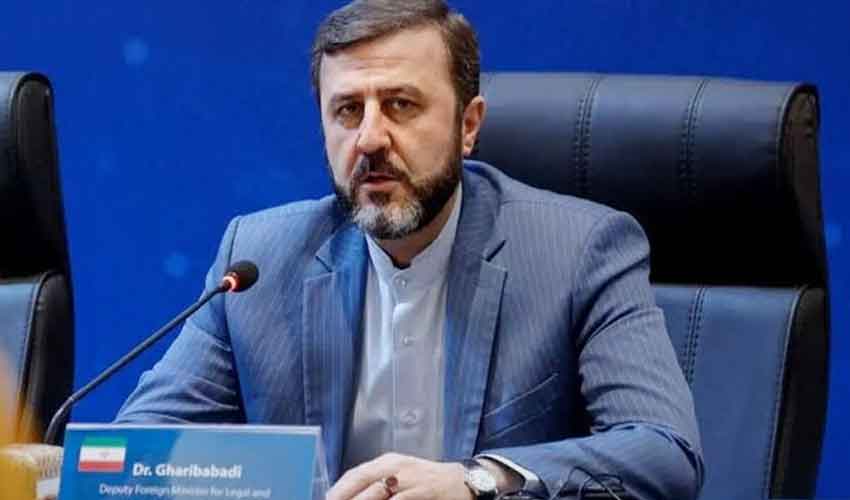
Iranian Deputy Foreign Minister Kazem Gharibabadi said the text of the memorandum of understanding has been finalized and will be formally signed in Geneva, Switzerland, on Friday.
Gharibabadi said the signing ceremony of the Islamabad Accord will take place in Switzerland on Friday.
According to remarks carried by Iran’s semi-official Mehr News Agency, the full text of the memorandum will be published after the official signing.
He said Iranian officials will also explain the various dimensions and achievements of the agreement through public media before the signing ceremony.
بیانیه دبیرخانه شورای عالی امنیت ملی درباره توافق پایان جنگ میان ایران و آمریکا pic.twitter.com/RYMnEadON1
— شورای عالی امنیت ملی (@shoaam_ir) June 14, 2026
War and blockade to end
An Iranian diplomatic mission in India cited Gharibabadi as saying that the immediate and permanent end of the war and all military operations on various fronts, including Lebanon, will be announced from Sunday night.
The post on X also said the end of the US naval blockade against Iran would begin Sunday night US time.
Iran’s Supreme National Security Council said all military operations and hostilities across all fronts, including Lebanon, would end immediately and permanently from Sunday night. It added that the maritime blockade against Iran would be lifted immediately and in full.
Israeli withdrawal from Lebanon
Iran also demanded that Israel immediately withdraw from southern Lebanon.
Gharibabadi said the deal includes a ceasefire in the conflict in Lebanon between Israel and Hezbollah, a point also mentioned earlier by the Pakistani prime minister.
The Iranian statement did not directly refer to the Strait of Hormuz, though US President Donald Trump later said he had authorized its reopening.
60-day talks to focus on sanctions relief
Gharibabadi said negotiations for a final agreement will be held within a 60-day period. He said the talks will mainly focus on the complete lifting of sanctions against Iran, including primary and secondary sanctions, as well as the termination of UN Security Council and IAEA Board of Governors resolutions.
The nuclear issue will also be part of the negotiations, he added.
The Iranian deputy foreign minister said Tehran will enter negotiations only after verification of US commitments. These commitments include ending the war, lifting the blockade and releasing frozen Iranian assets.
He said a mediator will also be present in future negotiations.
‘MoU does not mean trusting the enemy’
Gharibabadi warned that the memorandum of understanding does not mean Iran trusts the enemy.
“If the agreement is violated, we will take measures ourselves,” he said, adding that Iranian forces will remain on alert.
“Our finger will be on the trigger,” he said, stressing that Iran’s military power helped finalize the text of the agreement.
Gharibabadi described the memorandum as the result of both diplomacy and Iran’s military achievements during the conflict.
“The enemy that launched the attack failed in all of its malicious objectives, and the Islamic Republic achieved major victories in the war,” he said.
He added that Iran had included all of its key positions in the draft memorandum.
National Security Council confirms text
Iran’s Supreme National Security Council said the text of the memorandum regarding what it described as “war-ending negotiations” between Tehran and Washington had been finalized on Saturday evening after months of intensive talks.
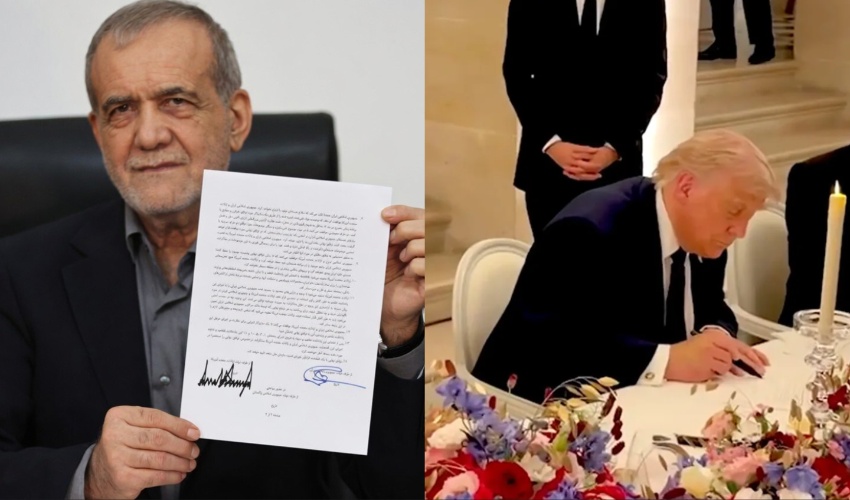
The council said the agreement is scheduled to be formally signed on June 19.
It also thanked Pakistan and Qatar for their mediation efforts.
US President Donald Trump confirmed Sunday that a deal with Iran had been completed.
“The Deal with the Islamic Republic of Iran is now complete,” Trump wrote on Truth Social.
He said he had authorized the “toll free opening of the Strait of Hormuz” along with the “immediate removal” of the US naval blockade of Iranian ports.

.jpg)