Pakistan failed to achieve most of its major economic targets during the current fiscal year, with GDP growth recorded at 3.7% against the annual target of 4.2%, according to the Economic Survey 2025-26.
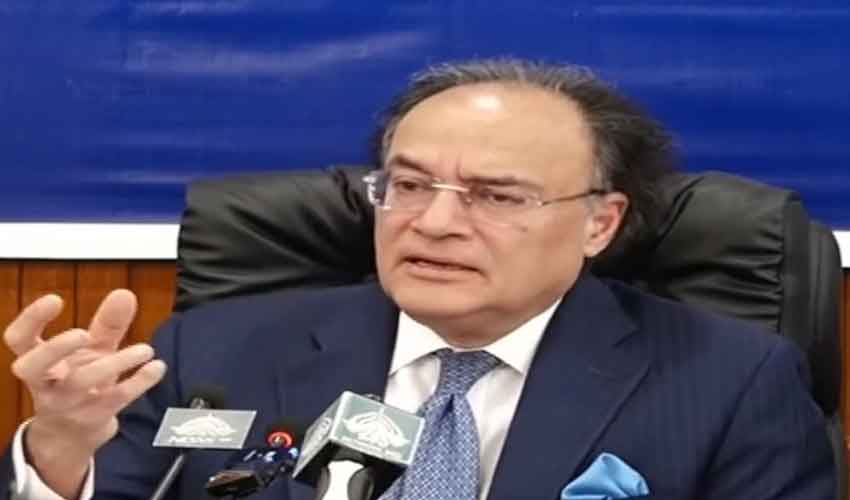
Federal Finance Minister Muhammad Aurangzeb said the economy showed resilience despite internal and external challenges, including regional conflict, monsoon rains and global uncertainty.
According to the Economic Survey, national economic growth remained limited to 3.7% against the target of 4.2%. The size of Pakistan’s economy crossed $452 billion, while the finance minister said the country had been expected to grow above 4% this year.
Aurangzeb said the first month of the fiscal year was marked by uncertainty, while US tariffs on several countries also affected the global economic environment.
Inflation eases, May sees monthly rise
Average inflation remained around 7% during the first 11 months of the fiscal year against the annual target of 7.5%. The finance minister said average inflation stood at 6.7%, adding that inflation has gradually declined over the past two years.
However, the monthly inflation rate was recorded at 11.66% in May 2026.

Per capita income target missed
Per capita income in rupee terms remained limited to Rs533,629 during the current fiscal year. The annual target for per capita income had been set at Rs560,803.
In dollar terms, per capita income increased by $150 to reach $1,901.
Agriculture, industry targets
The agriculture sector grew by 2.89% against the target of 4.5%. The industrial sector also missed its target, recording growth of 3.5% against the 4.3% target, while another survey figure placed industrial growth at 3.51%.
The services sector performed slightly better, growing by 4.09% against the 4% target. The finance minister said services growth stood at 4.9%, with telecom growth recorded at 7.5%.
The manufacturing sector exceeded expectations, growing by 6.6% against the target of 4.7%. Large-scale industries grew by 6.1% against the target of 3.5%, while small industries grew by 8.5% against the target of 8.9%.
Aurangzeb said 16 out of 22 manufacturing sectors showed improvement, including food and textiles.
Sector-wise economic performance
The forest sector grew by 2% against the target of 3.5%, while fisheries recorded 1.6% growth against the target of 3%. The minerals sector grew by only 0.38% against the target of 3%.
Electricity, gas and water supply recorded a negative trend, declining by up to 10% against the growth target of 3.5%. Construction grew by 5.7% against the target of 3.8%.
Wholesale and retail trade grew by 3.7% against the target of 3.9%, while transport grew by 2.3% against the target of 3.4%.

Hotels and food services grew by 3.9% against the target of 4.1%, while communication grew by 5% against the target of 7.5%.
Insurance and financial services recorded 0.32% growth against the target of 5%. Real estate grew by 3.6% against the target of 4.2%, while education grew by 4.5% against the target of 5.2%.
The social sector performed strongly, growing by 6.8% against the target of 4%.
Private sector growth stood at 3.6% against the target of 4.5%.
Major crops post mixed results
Major crops grew by 0.65%, compared to a negative target of 4.5%. Wheat production increased by 4.3% to 29.65 million tonnes.
Rice production rose by 2.8% to 9.998 million tonnes, while sugarcane production increased by 6.2% to 89.45 million tonnes.
Maize production declined by 2.68% to 87.94 million tonnes. Cotton production fell by 0.5%, with output recorded at 70.52 million bales.

Gram production recorded a remarkable growth rate of 50.4%. Potato production rose by 27.6%, while banana production increased by 30.8%.
Mango, turmeric and chilli production increased by 11.6%, 25.1% and 9.2%, respectively. Vegetable production increased by 12.6%, with total output recorded at 403,000 tonnes.
Fruit production rose by 2.8%, with output recorded at 444,000 tonnes.
Livestock sector improves
The livestock sector improved by 3.75%, while production increased by 3.46%. The survey said dairy and livestock account for around 60% of the agricultural economy.
The number of buffaloes in the country stood at 49.11 million, while the number of cows and bulls reached 61.19 million. The number of rams and sheep was recorded at 33.35 million, while goats and she-goats stood at 91.18 million.

The number of camels reached 1.193 million, horses increased to 386,000, and donkeys rose to 6.16 million during the fiscal year.
Remittances rise sharply
Remittances increased by 9% during the current fiscal year. The Economic Survey said remittances reached $38 billion in 11 months and are likely to touch $41 billion by the end of June.
The finance minister said remittances exceeded $33 billion in the first 10 months and played a key role in external payments.
He said overseas Pakistanis sent these remittances, adding that $1 billion out of $4.2 billion in recent inflows came from the UAE.
Exports decline due to rice and sugar
The target for goods exports was set at $35.3 billion, while exports stood at $28 billion in 11 months. Imports were targeted at $65.2 billion and reached $63 billion in 11 months.
Aurangzeb said there were two major reasons for the decline in exports, with rice exports falling by nearly $1 billion and sugar exports also declining.

He said exports should increase in sectors where value addition has been achieved, adding that industries must move toward upgradation.
The finance minister said Pakistani footballs would once again be used in the FIFA World Cup this year, while football exports increased by 18%. Sports exports crossed $3 billion, and freelancer exports reached around $900 million, with their share approaching $1 billion.
Reserves, external account improve
Foreign exchange reserves stood at $17.1 billion, while the government’s target is to increase them to $18 billion by the end of June.
The finance minister said the current account posted a surplus of $72 million from July to March. He said the government made efforts to ensure there was no shortage of petroleum products in the country.
Fiscal deficit and tax revenue
Aurangzeb said the fiscal deficit was brought down to 0.7% of GDP due to fiscal discipline. FBR revenues increased by 10.1%, while tax revenue rose by 11.3%.

He said tax collection increased from Rs7,000 billion to Rs13,000 billion, although the tax shortfall remains a reality. The finance minister said recommendations in the FBR have ended and the use of technology has increased.
He said corruption can only be controlled by reducing human intervention.
Digital monitoring boosts revenue
The government has created a digital production monitoring system.
Aurangzeb said additional revenue of Rs60 billion was collected from cement and sugar through digital monitoring. Another Rs34 billion was generated through the digital audit system.
The number of merchants has now reached 1.7 million.
Investment, companies, privatisation
More than 39,000 new companies were registered during the fiscal year. The total number of registered companies has now exceeded 300,000.
Profits of listed companies increased by 22%.
The finance minister said if local industrialists invest, foreign investors will also come. He said $600 million was invested in the privatization of PIA.

Companies from the telecom and energy sectors both entered and exited the market, while foreign companies also participated in the 5G spectrum auction.
Debt, housing and agriculture loans
The finance minister said the country’s debt currently stands at 68% of GDP. Agricultural loans increased by 22%, while another figure showed a 15% rise in agricultural lending.
He said the government is bringing austerity measures for small farmers. A total of Rs90 billion has been approved for low-income housing.
Aurangzeb said the end rate in the housing sector will be fixed for 10 years.
Energy reforms and privatization of DISCOs
The finance minister said efforts are underway to reduce energy costs. He said cross-subsidies for industries have been abolished to reduce financing costs for the industrial sector.
Three power distribution companies will be privatized this year. The policy rate increased due to regional conflict, he added.
The literacy rate in the country has reached 63%. The finance minister said positive results of difficult economic reforms have started to emerge.

He added that the textile sector remains central to exports, while the petroleum sector grew by 5%. Panda Bonds were also successfully launched during the year.
Regional conflict and economic outlook
Aurangzeb said international economies would also be affected by global uncertainty. He said Pakistan’s economic performance remained good despite the crisis in the Middle East.
The finance minister said the country’s leadership is working to end the regional conflict. He added that although the conflict has ended, its effects will continue until next year.
Govt says economy showed resilience
The finance minister said the Economic Survey reflects the performance of the entire financial year. He said the government successfully dealt with various crises and that the economy showed strong performance despite internal and external challenges.
According to the survey, however, Pakistan missed several key economic targets, including GDP growth, per capita income, agriculture, industry and multiple sectoral goals, while remittances, services, manufacturing, reserves and fiscal discipline showed improvement.


.jpg)


.jpg)