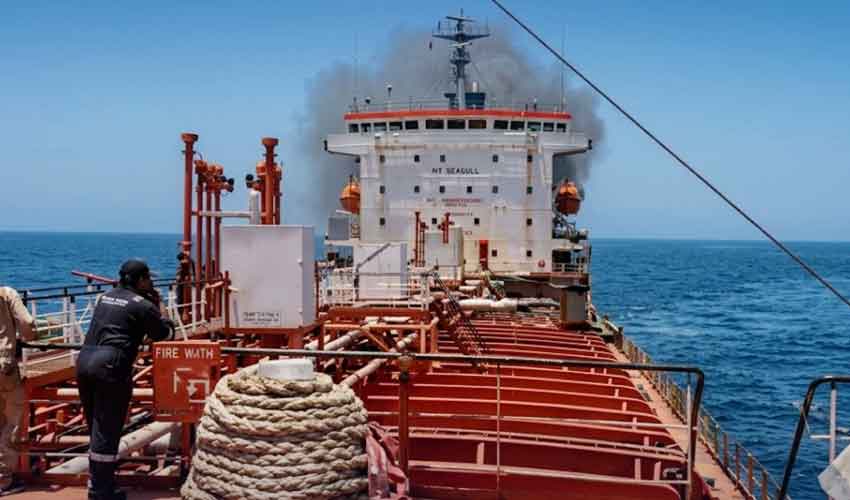
Three Indian sailors were killed in a US military strike on an oil tanker off Oman, India said on Thursday, marking the first reported deaths since Washington began its blockade of Iran-linked shipping on April 13.
India summoned a senior US diplomat in New Delhi and demanded an end to such attacks, as tensions over commercial shipping in the Gulf of Oman and the Strait of Hormuz continue to rise.
Indian Shipping Minister Sarbananda Sonowal confirmed that three Indian seafarers, initially reported missing after the attack on the Palau-flagged MT Settebello, had died.
“It is deeply unfortunate to learn of the tragic incident aboard the Palau-flagged MT Settebello,” Sonowal said in a statement.
“Sadly, three Indian seafarers initially reported missing are now confirmed dead after bodies have been located and identified,” he added.
Sonowal said he had directed officials to ensure the immediate repatriation of the rescued crew members and the swift return of the bodies of the deceased for their final rites.
According to The Hindu, quoting Manoj Yadav, general secretary of the Forward Seamen’s Union of India, the deceased were identified as deck cadet Aditya Sharma, engine fitter Shivanand Chaurasiya and Chief Engineer Patnala Suresh.
Family members of Shivanand Chaurasiya told reporters he had gone to sea about nine months ago and had told his father earlier this week that everything was fine.
Sonowal described the deaths as a “profound loss to our maritime family.”
Oman rescues Indian crew members
The Omani Navy responded to the Settebello’s distress call after the vessel reported an engine fire. India’s foreign ministry said 21 Indian sailors were rescued. The tanker had 28 crew members on board, including 24 Indian citizens.
India has more than 300,000 sailors working in global shipping fleets, according to government data.
US says tanker violated Iran blockade
US Central Command said a US aircraft carried out a precision strike on the Settebello’s engine room after the crew repeatedly failed to comply with directions from American forces.
CENTCOM said the vessel had violated the ongoing blockade by attempting to transport oil from Iran. The US military said the ship was disabled as it transited the Gulf of Oman.
Washington began the blockade of Iran-related shipping on April 13 after Iran sharply curtailed movement through the Strait of Hormuz, one of the world’s most important oil and gas routes.
India summons US diplomat
Indian foreign ministry spokesperson Randhir Jaiswal said New Delhi summoned the US chargé d’affaires on Wednesday to convey its “deepest concerns over the ongoing attacks.”
The protest came after the strike on the Settebello off Oman, in which the three Indian sailors died. “These attacks must cease and end,” Jaiswal told reporters.
“We also call for dialogue and diplomacy so that we can have an early return to peace and stability in the region,” he added.
The US embassy did not immediately respond to requests for comment.
US Navy attacks three ships with Indian crews
Jaiswal said the US Navy had attacked three vessels with Indian crew members this week, including one on Thursday.
The incidents have added strain to India-US ties just ahead of next week’s Group of Seven summit, where Indian Prime Minister Narendra Modi is likely to hold bilateral talks with US President Donald Trump.
On Thursday, Jaiswal said the Guinea-Bissau-flagged Jalveer had also been attacked by the US Navy. Shortly afterward, the US military confirmed that it had disabled a third oil tanker in the Gulf of Oman overnight.
CENTCOM said it acted against the M/T Jalveer as the vessel attempted to transport oil from Iran through the Gulf of Oman.
According to CENTCOM, a US aircraft fired two Hellfire missiles into the ship’s engine room after the crew repeatedly failed to comply with directions from US forces.
British maritime risk management company Vanguard said the vessel’s crew sent a distress call off Oman’s port of Shinas after a fire broke out around its engine room and funnel.
An Indian shipping ministry official said all 20 Indians on board were safe and the crew was being evacuated.
Images posted on social media by the Forward Seamen’s Union of India showed crew members being winched from the vessel by helicopter as thick black smoke rose from its bridge and accommodation cabins.
The Indian embassy in Oman said it was aware of Thursday’s incident and was coordinating with local authorities.
Marivex tanker also targeted earlier
CENTCOM said US forces also disabled the unladen Marivex oil tanker in the Gulf of Oman on Monday after it attempted to sail to an Iranian port.
The vessel also had Indian crew members on board.
Since the blockade began, CENTCOM said US forces have disabled eight non-compliant vessels, redirected 134 ships that complied with instructions and allowed 42 vessels carrying humanitarian aid to pass.
Ships targeted under the US blockade include Iranian vessels as well as so-called shadow fleet tankers. These are typically older vessels without Western insurance, used to transport sanctioned oil while sailing under different national flags to obscure ownership, cargo and movements.
IMO condemns attacks on seafarers
Arsenio Dominguez, secretary-general of the International Maritime Organization, condemned actions that endanger sailors and international shipping.
“I strongly condemn any act from any party that endangers the lives of seafarers and the safety of international shipping. This is simply unacceptable,” he said on Wednesday.
The tanker attacks come as the United States and Iran trade strikes in the sharpest escalation since an April 8 ceasefire.
On Monday, Iran downed a US Apache helicopter, prompting Washington to strike Iranian sites. Iran then launched attacks against US bases in the region.
CENTCOM said on Wednesday night that it had hit “multiple targets” in response to what it called Iran’s “unwarranted and continued aggression.”
Trump threatens more attacks
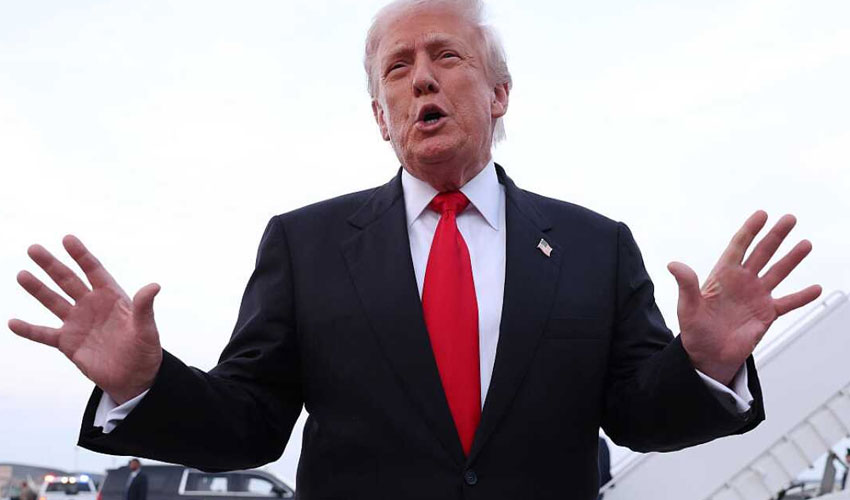
US President Donald Trump said Washington would continue to strike Iran if no peace deal is secured. “We hit them hard yesterday and we're going to hit them hard again today,” Trump said.
“We're going to be attacking them very hard,” he told reporters, adding that the US had the right to respond after Iran downed the Apache helicopter.
Trump also wrote on Truth Social that Iran had “taken too long to negotiate a deal” and would now “have to pay the price.”
Iran’s foreign ministry said the fresh US attacks had “effectively rendered the ceasefire meaningless,” although it stopped short of declaring the ceasefire over.
Strait of Hormuz remains central to conflict
The Strait of Hormuz remains at the center of the conflict, with around 20% of the world’s oil and liquefied natural gas passing through the route.
Since US and Israeli strikes against Iran began at the end of February, the strait has been effectively closed at different stages.
Iran initially announced a blockade, while the US later imposed a naval blockade on Iranian ports.
Although the strait briefly reopened during negotiations, Iran’s joint military command responded to renewed hostilities by announcing its closure again.
Tehran said oil tankers and commercial vessels attempting passage would be shot at.
MUFG analyst Soojin Kim said the latest escalation adds uncertainty to already fragile ceasefire negotiations and risks prolonged supply disruptions that have constrained global crude, fuel and LNG exports since the conflict began.




.jpg)