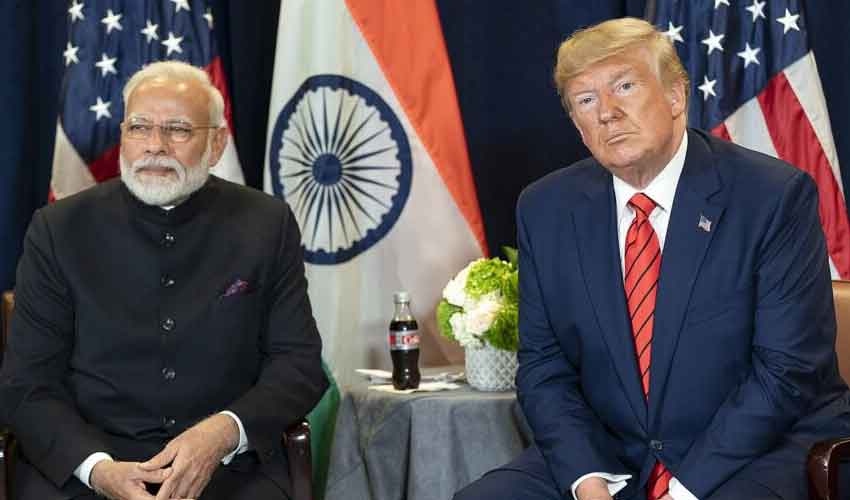
Indian Prime Minister Narendra Modi is likely to hold bilateral talks with U.S. President Donald Trump on the sidelines of the upcoming G7 summit in France, with trade, visas, and energy cooperation expected to dominate the agenda.
The potential meeting comes at a sensitive moment in India–US relations, which have seen both tensions and renewed diplomatic engagement in recent months.
G7 summit set for France
The Group of Seven (G7) summit is scheduled to take place from June 15 to 17 in the French resort town of Évian-les-Bains, bringing together leaders of major global economies.
Prime Minister Modi is set to begin a five-day visit from June 13, which includes participation in the summit and a subsequent visit to Slovakia.
U.S. President Donald Trump is also expected to attend the high-level gathering, along with other global leaders.
Likely Modi–Trump bilateral talks
According to an Indian government source cited by Reuters, Modi and Trump are expected to hold bilateral discussions on the sidelines of the summit.
The proposed meeting would focus on key areas including:
- Trade relations between India and the United States
- Energy cooperation between the two countries
- The issue of H-1B visas affecting Indian professionals
The source said these issues are expected to be central to the dialogue, reflecting both economic and people-to-people concerns.
The possible meeting comes amid ongoing trade tensions between New Delhi and Washington, including disputes over U.S. tariffs on Indian goods.
India has also rejected U.S. allegations regarding forced labour-linked trade concerns tied to proposed tariffs.
Despite friction, both sides have continued discussions on a broader trade agreement, with reports suggesting progress toward an interim deal expected in the coming months.
Diplomatic engagement continues
Recent high-level visits, including that of U.S. Secretary of State Marco Rubio to India, have helped ease tensions and expand discussions on trade, maritime security, and energy cooperation.
Officials on both sides have described engagement as ongoing, even as key differences remain unresolved.
Beyond trade and visas, the two leaders may also discuss broader geopolitical issues, including energy cooperation involving third-party regions.
According to sources, these talks could also touch on global energy supply dynamics and strategic partnerships.

.jpg)