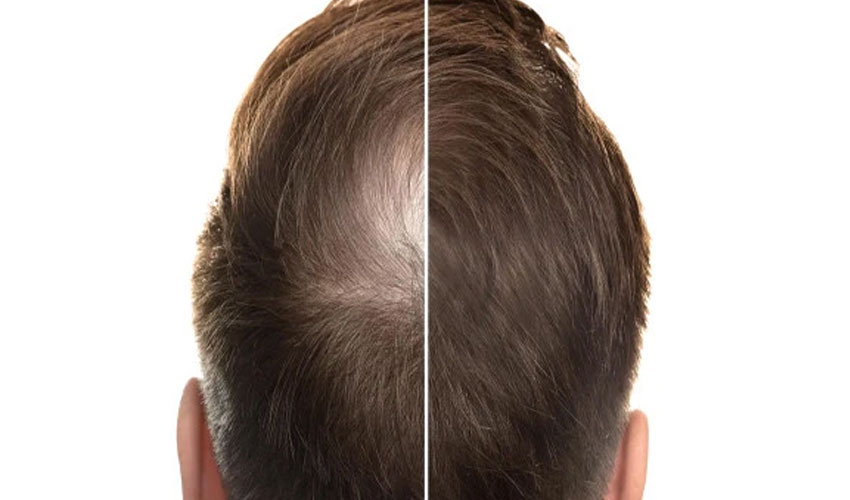
A root used in traditional Chinese medicine for more than a thousand years could offer a new approach to treating baldness, according to a recent scientific review.
Researchers found that Polygonum multiflorum may help address several biological processes involved in androgenetic alopecia, the most common form of hair loss worldwide.
What is androgenetic alopecia?
Androgenetic alopecia, commonly known as pattern baldness, affects millions of men and women around the world. The condition develops gradually as hair follicles shrink over time, producing thinner, weaker, and shorter strands of hair.
As the follicles continue to shrink, hair growth can slow significantly or stop altogether, leading to noticeable hair loss.
The most widely used treatments for androgenetic alopecia include finasteride and minoxidil.
Finasteride works by targeting hormones associated with follicle shrinkage, while minoxidil is applied directly to the scalp to stimulate hair growth. Although both treatments have shown benefits for many users, they are not suitable for everyone.
Some patients remain concerned about potential side effects, including sexual health issues linked to finasteride and scalp irritation associated with minoxidil. These concerns have increased interest in alternative and more natural treatment options.
Ancient remedy gains scientific attention
According to the review, Polygonum multiflorum has been used in traditional Chinese medicine for centuries and is commonly associated with darkening hair and strengthening the body's essence.
Researchers believe the plant deserves closer attention because it appears to influence multiple biological pathways involved in hair growth and hair loss.
One of the key factors behind androgenetic alopecia is a hormone called dihydrotestosterone (DHT). This hormone gradually causes hair follicles to shrink, making it difficult for them to produce healthy and strong hair.
The review suggests that Polygonum multiflorum may help reduce the effects of DHT, potentially protecting hair follicles from one of the main causes of pattern baldness.
Unlike some existing treatments that focus on a single mechanism, researchers noted that the herb may simultaneously affect several biological processes related to hair loss and regrowth.
The review highlights the potential of Polygonum multiflorum as a promising alternative for people seeking different treatment options for hair loss. Its ability to target multiple pathways involved in androgenetic alopecia has attracted scientific interest.
However, the findings come from a scientific review, and further research will be needed to better understand its effectiveness and role in future hair-loss treatments.