Iran and Israel exchanged another round of attacks overnight, with the Israeli military admitting that Iran fired 30 ballistic missiles toward Israeli territory.
The latest escalation came as Tehran accused Israel of violating the ceasefire and blamed the United States for enabling the renewed tensions, warning that the diplomatic process with Washington could be affected.
The Israeli military said Iran launched 30 ballistic missiles toward Israeli territory. According to the Israeli military, the missiles were intercepted by Israel’s defence systems.
Israel also claimed that its air force targeted Iran’s air defence system during the latest round of strikes.
Explosions in Tehran, Isfahan
Iranian media reported that explosions were once again heard in the city of Isfahan. Explosions were also heard in the Iranian capital, Tehran.
Iranian media said Iran’s air defence system destroyed an enemy drone over Tehran.
Iran’s Islamic Revolutionary Guard Corps said missiles were fired at the Israeli industrial city of Haifa. The IRGC said the attacks were carried out in response to Israel’s strike on the Mahshahr petrochemical plant.
Also Read: Iran warns Israel of devastating response to any new action
The Revolutionary Guards accused Israel of starting a dangerous game by targeting non-military installations, saying Israel should have refrained from attacking the chemical plant.
Iranian Defence Ministry warns Israel
Iran’s Ministry of Defence issued a strong warning after the latest escalation.
The ministry said Israel was “closer to destruction than ever” and warned that Iran would not step back from defending its national interests until the enemy was punished.
It added that all defence and logistical capabilities were available to Iran’s armed forces.
Also Read: Trump urges Israel not to retaliate Iran strikes
Ebrahim Rezaei, spokesperson for Iran’s Foreign Policy Commission, said Iran would not remain silent until the enemy felt remorse. He warned that no side should fall victim to any miscalculation, adding that the path to peace and stability passed through the strength of Iran’s internal front.
Rezaei said Iran had increased its military capabilities during the ceasefire and was ready to respond “much more powerfully” than on March 9.
Iran says has full right to defend itself
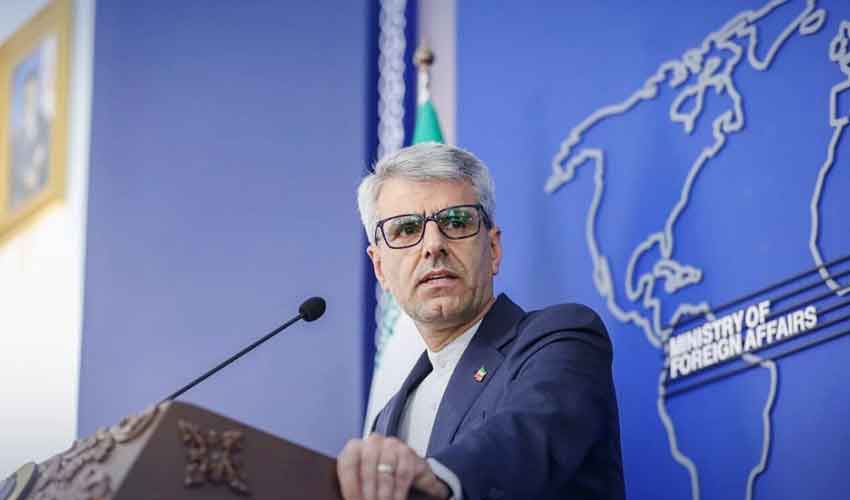
Iranian Foreign Ministry spokesperson Esmail Baqai said Iran had the full right to defend itself. He accused Israel of failing to respect diplomatic principles and warned that Israeli actions could lead the region toward destruction.
Baqai said Iran remained committed both to the diplomatic process and to protecting its national interests, adding that Tehran would use both channels according to the situation.
Also Read: Israel strikes Iran petrochemical complex; Tehran targets key air bases
Baqai said the United States was directly responsible for ceasefire violations. He said Washington’s contradictory policies had disrupted the diplomatic process and urged the US to stop supporting Israel.
According to Baqai, Iran already had concerns over the intentions of the United States and Israel, and developments over the past 24 hours could affect the diplomatic process.
Iran says Israel violated April ceasefire
During a news briefing, Baqai said Iran had remained committed to the ceasefire, but Israel violated it. He said the responsibility for violating the ceasefire rested with Washington, arguing that everything taking place was planned by the United States.
Baqai also said the US was causing tensions to rise again in the region.
The Iranian Foreign Ministry spokesperson said Lebanon was an important part of the ceasefire agreement. He said violating a key clause of the agreement directly affected the diplomatic process.
Also Read: Trump asks Netanyahu to avoid retaliation after Iranian strikes
Tehran has repeatedly argued that Israeli actions in Lebanon undermined regional de-escalation and weakened the chances of progress in negotiations.
Diplomacy with US continues under suspicion
Baqai said the overnight exchanges of fire between Iran and Israel would worsen what he called an already “chaotic diplomatic process” with the United States. He said Tehran was continuing to exchange messages with Washington in an atmosphere of “extreme suspicion.”
According to Baqai, Israel’s actions in Lebanon — whether carried out with US knowledge and consent or not — were aimed at sabotaging diplomacy.
Pakistan’s role highlighted
The Iranian Foreign Ministry spokesperson said the visit of Pakistan’s interior minister Mohsin Naqvi to Tehran on Sunday was part of efforts to continue indirect exchanges with Washington.
The comment indicates that diplomatic contacts are continuing despite the military escalation and growing mistrust between Tehran and Washington.
Baqai also criticised International Atomic Energy Agency chief Rafael Grossi, accusing him of adopting a biased and non-technical position on Iran.
Also Read: Naqvi conveys PM, Field Marshal’s message in meeting with Araghchi
He said Grossi had disregarded the realities of the conflict and taken political positions that harmed the legitimacy of the UN nuclear watchdog.
The Iranian spokesperson warned that Tehran would respond to any resolution against it at this week’s meeting of the IAEA Board of Governors.
Fears grow over wider regional conflict
Baqai said the world should be concerned about the possibility of a broader regional conflict. Iran insists that it is defending its security and national interests, while Israel says it is targeting Iranian military capabilities and air defence systems.
The latest missile exchanges, claims of drone interceptions and attacks on strategic sites have further raised fears that the April ceasefire may be close to collapse.



.jpg)