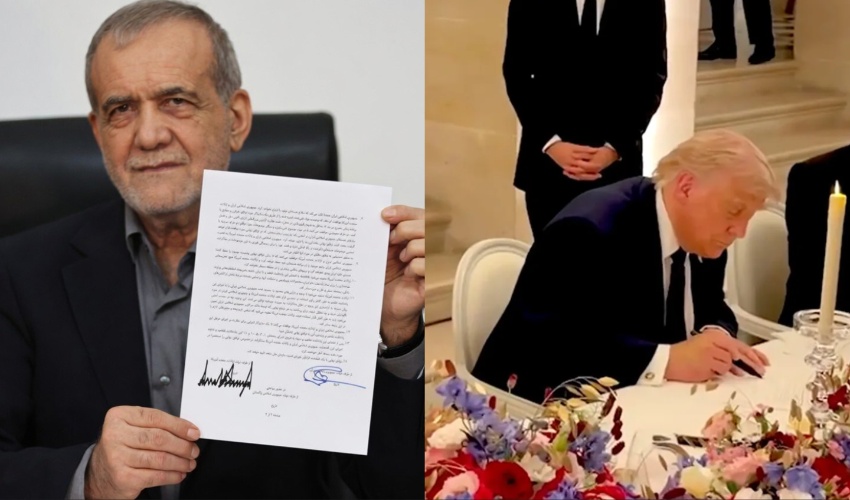
US President Donald Trump has urged Israel to show restraint after Iran’s missile attacks, saying Washington is “very close” to a final agreement with Tehran and does not want the latest escalation to derail diplomacy.
Trump said he would tell Israeli Prime Minister Benjamin Netanyahu not to retaliate, warning that another Israeli response could drag the conflict on and keep tensions across the region alive.
Trump expressed concern over rising Iran-Israel tensions and demanded that both countries stop their attacks. The US president said Iran had fired missiles and that “that’s enough,” adding that Tehran should now return to the negotiating table and finalize a deal.
He claimed no casualties were reported in the recent Iranian attacks and said he hoped Israel would avoid further retaliation to protect diplomatic efforts.
US says final Iran deal close
Trump said Washington was close to reaching a final agreement with Iran before the latest violence erupted.
“We are very close to a final deal with Iran,” Trump said, adding that the agreement was nearly ready to be signed before the new attacks took place.
He said the current situation should not affect the agreement and insisted negotiations would continue despite the Iranian missile strikes.
Trump tells Netanyahu not to retaliate
According to reports, Trump told Netanyahu during a phone call on Sunday to hold off on any response because the United States was close to “doing something good” in terms of a deal with Iran.
A senior US official said the Trump administration did not give Israel a “green light” for its earlier strike in Beirut.
Netanyahu reportedly pushed back during the call but ultimately “pseudo agreed” to stand down, according to the official.
‘I call the shots,’ Trump says
Trump made clear that US policy would be decided by Washington, not Israel. Speaking about Netanyahu, Trump said: “He won’t have any choice” but to accept any agreement secured by the United States.
“I call the shots. I call all the shots. He doesn’t call the shots,” Trump said.
Trump warned that if Israel retaliates, the conflict could continue for much longer. “If Bibi strikes them back, it’s just gonna keep going,” Trump said, referring to Netanyahu by his nickname.
He said both sides had already exchanged attacks and there was no need for another round.
Iran attack followed Israeli strike in Beirut
Iran’s missile barrage came after Israel struck Beirut’s southern suburbs earlier on Sunday. Iran’s Islamic Revolutionary Guard Corps described its attack as a “warning” and threatened broader strikes if aggression was repeated.
The latest Iranian missile attack was the first direct strike on Israel since an April 8 ceasefire halted major hostilities between Iran, Israel and the United States.
Trump criticized Israel’s strike on Beirut and said he was “not happy about it.” The US president voiced concern that the attack and Iran’s response could damage efforts to turn the ceasefire into a wider settlement.
He said the Iranian strikes were “not going to help” negotiations but maintained that a deal remained within reach.
Negotiations enter critical stage
Trump said an agreement with Iran could have been signed early in the week before the latest escalation.
“I would say an agreement would be signed on Monday, Tuesday or Wednesday of this coming week. And now this takes place,” he said in a Fox News interview.
He again urged Iran to “get back to the table and make a deal.”
Trump said any agreement must permanently prevent Iran from obtaining a nuclear weapon. “They cannot have a nuclear weapon,” Trump said, adding that even a one percent chance of Iran acquiring one would be unacceptable.
He said Iran had already agreed to language committing not to “develop” nuclear weapons, but he wanted the deal to also cover whether Iran could “buy, purchase or acquire” them.
Trump warns of military action if talks fail
Trump said he preferred a negotiated settlement but warned that military action remained an option.
“Either I’m going to do it through negotiation — where we’re very close to a deal — or I’m going to blow the hell out of them,” he said.
He added that if talks collapse, the United States could further target Iran’s military capabilities and secure nuclear material by force.
Trump said Washington would retrieve and destroy Iran’s highly enriched uranium stockpile if a deal is reached. He said US equipment would be used to remove or destroy the material either on-site or off-site.
Trump also said he had considered sending US troops to retrieve buried uranium stockpiles at the start of the war but decided against it due to military risks.
US troops to remain in region
Trump said American forces would remain deployed in the region until the talks are completed. He also said Washington would not unfreeze Iranian assets or lift sanctions before a peace deal is reached.
According to Trump, sanctions relief would come only after Iran “behaves” and makes progress under an agreement.
Trump said he was not demanding that Lebanon be included in a short-term agreement with Tehran. The remark comes despite Iran’s insistence that regional issues, including Lebanon, remain part of the broader conflict environment.
Israel’s latest Beirut strike, followed by Iran’s missile attack, has increased concern that the Lebanon front could disrupt wider peace efforts.
Trump comments on Mojtaba Khamenei
Trump also commented on Iran’s Supreme Leader Mojtaba Khamenei, saying he was “pretty badly injured.” He described Khamenei’s continued involvement in decision-making as showing “a certain bravery.”
Trump declined to say whether he knew Khamenei’s exact location, saying only that there was “a good probability” he did.
Alongside negotiations, Washington is lobbying members of the International Atomic Energy Agency’s board of governors to support a draft resolution demanding answers from Iran.
The US-drafted resolution seeks details on what happened to Iran’s bombed nuclear sites and the enriched uranium stored there.
The move risks complicating talks, as Tehran has previously responded to IAEA resolutions by escalating nuclear activity or reducing cooperation with inspectors.
Talks continue despite tensions
Trump insisted that recent attacks had not weakened his determination to reach a diplomatic agreement with Iran. He said the deal could still move forward on its own merits and that the latest missile strikes would not decide its fate.
Diplomatic contacts are continuing as Washington tries to prevent another cycle of retaliation between Israel and Iran.


.jpg)