Israel and Iran exchanged fresh attacks on Monday, raising fears of a wider escalation despite US President Donald Trump’s reported appeal to Israeli Prime Minister Benjamin Netanyahu to avoid further strikes.
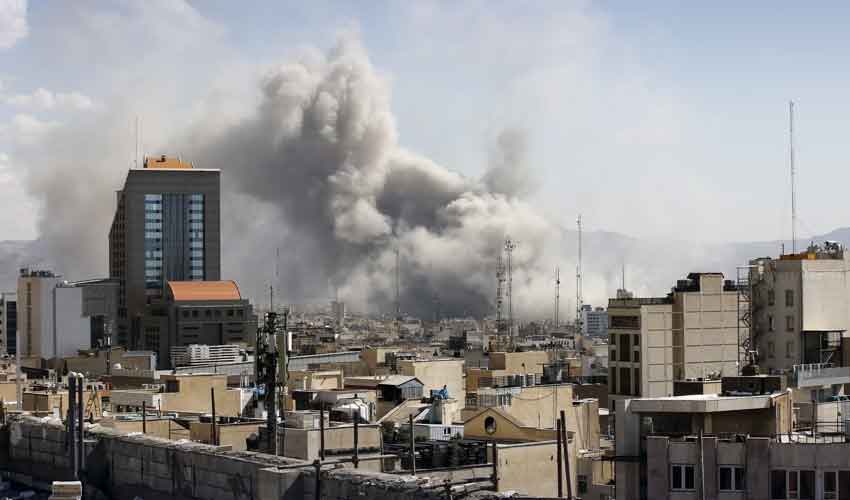
Iran claimed it targeted Israeli air bases in retaliation, while Israel said it struck military targets and a petrochemical complex in southwestern Iran.
Iran’s Revolutionary Guards said they launched attacks on Israel’s Nevatim and Tel Nof air bases in response to Israeli strikes.
The IRGC said the attack was a warning, adding that if aggression was repeated, Iran would deliver a “devastating response.”
Iranian media also reported that missiles were fired again toward Israel, prompting sirens in Tel Aviv and other occupied territories. The Israeli army said its defence systems were activated after identifying missiles launched from Iran.
Israel hits Mahshahr petrochemical complex
Israel’s military confirmed that its air force struck several targets at the Mahshahr petrochemical complex in southwestern Iran.
Iranian media said a part of the plant was damaged in the strike, while the deputy governor for security of Khuzestan province said the Karun petrochemical plant near Bandar-e-Mahshahr was hit by an Israeli projectile.
Also Read: Israel hits Iran with new strikes despite Trump admonition
Iranian state media reported that the Mahshahr special petrochemical economic zone was being evacuated after the attack.
First strike on Iranian energy site
The strike on Mahshahr marks the first Israeli hit on an energy-related site inside Iran since the April 8 ceasefire announced by Trump.
Iran’s state media said enemy projectiles had hit five production lines at the plant since the wider Iran war began on February 28. No further details of Monday’s damage were immediately available.
The Israeli army claimed it bombed 20 locations in Iran, including two Iranian military installations. Local media reported sounds of explosions in Tehran, Tabriz and Isfahan early on Monday as Israel said it had struck military targets in western and central Iran.
Also Read: Trump asks Netanyahu to avoid retaliation after Iranian strikes
Iranian media said the defence system was activated in Kermanshah after Israeli attacks, adding that the strikes were being thwarted through air defence systems.
Iranian state media also reported that there were no casualties in the Israeli attack on Najafabad.
Israel says Iranian missiles intercepted
Israel’s military said it had identified more missiles launched from Iran toward Israeli territory and that its defensive systems were operating to intercept the threat.
Iran’s Revolutionary Guards said Israel used air-launched ballistic missiles in its attacks.
Israel’s ambassador to the United States, Yechiel Leiter, said on X that Iran had fired 11 ballistic missiles at Israel, adding that Israel was targeting Iran’s surface-to-surface missile launch sites and infrastructure facilities.
The Israeli military said it activated aerial defence systems after identifying a missile launched from Yemen toward Israeli territory. If confirmed, it would be the first attack from Yemen on Israel since the ceasefire.
US Ambassador Mike Huckabee said on X that missile alerts sounded at 6am in Jerusalem.
Israeli strikes in Lebanon add pressure on talks
Trump has been pressing Israel to stop attacks in Lebanon to create space for a peace deal with Iran. However, Israel launched strikes in the Beirut area on Sunday for the first time since the US announced a truce plan for Lebanon last week.
Netanyahu said the strikes on Beirut’s southern suburbs, known as Dahiyeh and considered a Hezbollah stronghold, were ordered in response to Hezbollah firing toward Israel.
Also Read: Iran launches missile attack on Israel
Iran has long maintained that any peace deal with Washington depends on a ceasefire also holding in Lebanon. Israel invaded Lebanon in March after Iran-backed Hezbollah fighters fired rockets and drones across the border in solidarity with Tehran.
Iran’s chief peace negotiator, Parliamentary Speaker Mohammed Baqer Qalibaf, said US bases and Israeli assets were legitimate targets because of hostile acts, including the “violation of agreements over Lebanon.”
Before Sunday, Iran had not attacked Israel since the wider ceasefire began in April, though Hezbollah had continued attacks.
Chris Murphy says Israel embarrassed Trump
US Senator Chris Murphy criticised Israel’s latest attacks, saying Netanyahu had ignored Trump’s appeal for restraint.
“Israel embarrassed President Trump by attacking Iran,” Murphy said, adding that Trump had asked Netanyahu to show restraint but the Israeli prime minister did not listen.
Murphy said the war had become a disgrace for Trump and the United States, claiming the US president had lost control of the conflict and shown “serious incompetence” by waging war.
Strait of Hormuz remains central to talks
The wider war has been stalled since the US and Israel paused attacks on Iran in early April.
Tehran has blocked most shipping through the Strait of Hormuz, which carries around one-fifth of the world’s crude oil and liquefied natural gas. Washington has also imposed a blockade on Iranian ports.
US and Iranian officials have said they are close to a preliminary deal to reopen the strait, but both sides have continued trading strikes.
Iran seeks sanctions relief and frozen assets
Trump has said any agreement to end the war must prevent Iran from developing a nuclear weapon. Tehran’s demands include the lifting of US and international sanctions, the release of billions of dollars in frozen assets and recognition of its role over the Strait of Hormuz.
Iranian Ambassador Kazem Jalali told Russia’s Izvestia newspaper that the strait would be opened under “new conditions” to be determined by Iranian and Omani authorities.
Also Read: US close to Iran deal, says President Trump
He said Iran and Oman provide services related to the strait and that fees would be charged for those services, without giving further details.
A source familiar with US plans told Reuters that Washington could make Iranian assets available to Gulf neighbours to repair damage caused by Iran.
Iran’s Deputy Foreign Minister Kazem Gharibabadi said any such diversion of Iranian assets would be illegal and warned that Tehran would take measures in response.


.jpg)