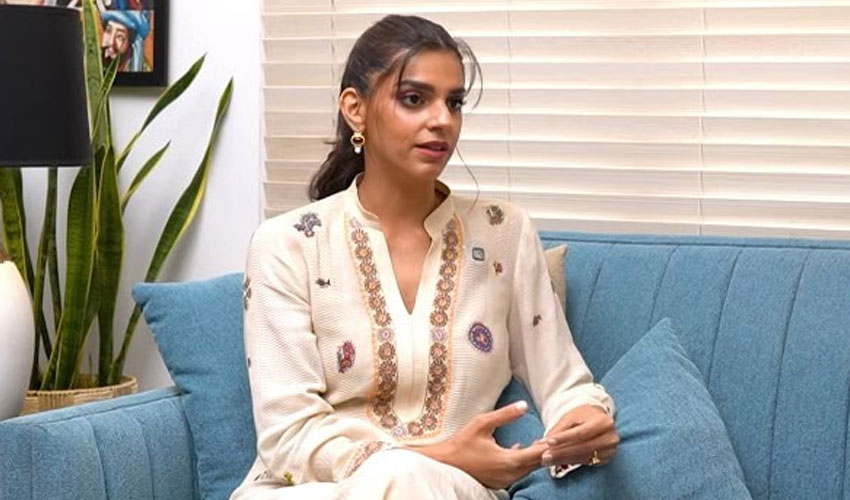
Pakistani actor Sanam Saeed has sparked discussion after sharing her views on women’s rights and workplace equality.
Speaking on a show, she emphasized the importance of communication and framing demands as basic rights rather than using the phrase “woman card.”
Her comments have reignited debate around women’s rights discourse in Pakistan.
Sanam Saeed addressed the broader issue of women’s rights in Pakistan and how conversations around them are often shaped in public spaces.
She highlighted that women should clearly communicate their needs, especially in professional environments, without framing them as emotional or gender-based demands.
According to her perspective, the focus should remain on rights and equality rather than labels.
'Speak about rights, not labels'
During her appearance on Something Haute, Sanam Saeed stressed that communication plays a key role in achieving progress.
She stated that instead of relying on terms like “woman card,” individuals should clearly express how certain demands are rooted in fairness and equal rights.
Her remarks underline the importance of constructive dialogue in addressing workplace and social inequalities.
Women’s rights debate in Pakistan
Women’s rights remain a widely discussed and sensitive topic in Pakistan. While progress has been made in certain areas, activists argue that significant challenges still remain.
Issues such as access to education, inheritance rights, equal pay, and violence against women continue to be part of the national conversation.
At the same time, public discourse has often shifted toward controversies surrounding movements like Aurat March, rather than focusing on structural reforms.
Public reaction
Sanam Saeed’s comments have added another layer to the ongoing debate about how women’s issues are discussed in society.
While many agree with her call for clearer communication of rights, others continue to differ on how gender-based challenges should be framed in public dialogue.
The discussion reflects a broader tension between activism, perception, and societal narratives around equality.

.jpg)