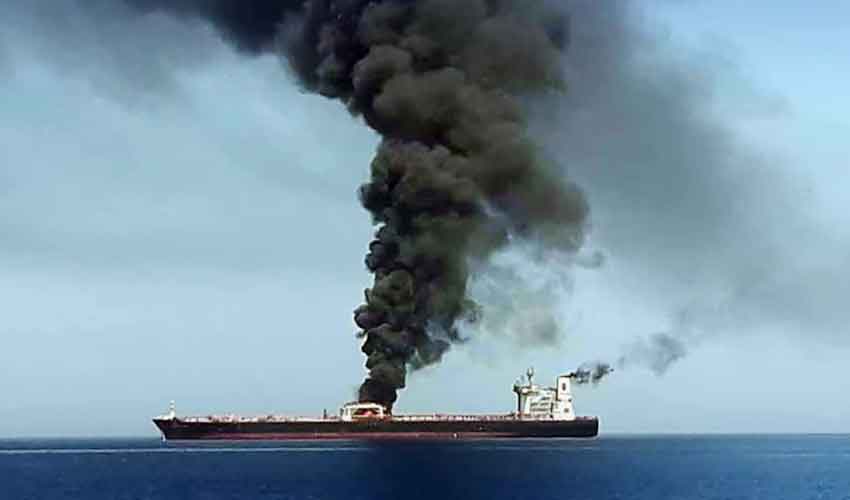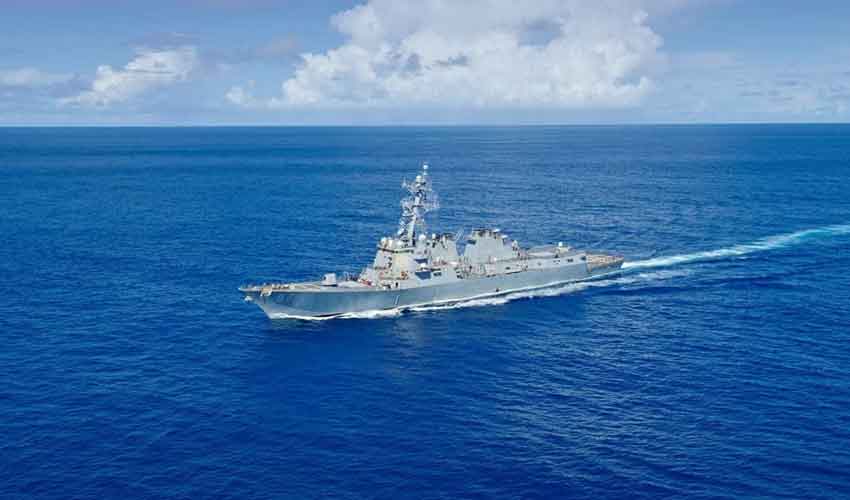
The US Defense Department has estimated that Washington’s naval blockade has cost Iran around $4.8 billion in oil revenue, according to a Pentagon official familiar with the assessment.
The blockade, imposed more than two weeks ago, has become one of President Donald Trump’s main tools to pressure Tehran as negotiations over ending the war remain stuck.
According to a Pentagon assessment cited by The Hill and first reported by Axios, Iran has lost about $4.8 billion in oil revenue because of the US naval blockade.
The blockade was instituted more than two weeks ago and has targeted Iranian oil movements as Washington seeks to increase economic pressure on Tehran.
The Trump administration says the measure is intended to weaken Iran’s ability to finance regional operations and force movement in stalled negotiations.
US says blockade operating with ‘full force’
Acting Pentagon press secretary Joel Valdez said on Friday that the blockade in the Strait of Hormuz was delivering the intended impact.
“The United States’ blockade in the Strait of Hormuz is operating with full force and delivering the decisive impact we intended,” Valdez said.
He added that Washington was “inflicting a devastating blow to the Iranian regime’s ability to fund terrorism and regional destabilization.”
Valdez said US Armed Forces in the region would continue to maintain “unrelenting pressure.”
CENTCOM says 45 vessels turned around
Since the blockade went into effect on April 13, US forces in the Middle East have forced 45 commercial vessels to turn around or return to port.
US Central Command, which oversees American forces in the region, confirmed the figure on Friday. The blockade has affected shipping in the Gulf of Oman, while Iran has continued restricting movement through the Strait of Hormuz.
Diplomatic talks have so far failed to produce progress. At the same time, both countries have enforced their own blockades, deepening the standoff in one of the world’s most important energy corridors.
Iran has choked off the Strait of Hormuz, while US forces have blockaded ships in the Gulf of Oman and around Iranian ports.
Trump cites ceasefire in War Powers timeline
Trump informed Congress on Friday that the ongoing ceasefire with Iran extends the timeline between the start of the conflict on February 28 and the 60-day deadline under the War Powers Act.
The legal question has become increasingly important because the conflict began without direct congressional approval. The administration is arguing that the ceasefire affects how the War Powers timeline should be applied.
Trump briefed on new Iran military options
The president was briefed on Thursday by CENTCOM commander Admiral Brad Cooper and Joint Chiefs of Staff Chairman General Dan Caine. The briefing focused on new potential military options against Iran.
“There are options. Do we want to go and just blast the hell out of them and finish them forever or do we want to try and make a deal?” Trump told reporters on Friday.
He added that he preferred to strike a deal with Iran.
US Navy acting ‘like pirates’
Trump also said on Friday that the US Navy was acting “like pirates” while carrying out Washington’s naval blockade of Iranian ports. He made the comments while describing the seizure of a ship by US forces a few days earlier.
“We took over the ship, we took over the cargo, we took over the oil. It’s a very profitable business,” Trump said on Friday evening.
“We’re like pirates. We’re sort of like pirates but we are not playing games,” he added.
Some vessels leaving Iranian ports have been seized by the United States. Sanctioned container ships and Iranian tankers in Asian waters have also been targeted.
According to Axios, two tankers have been seized during the blockade. Pentagon officials also said 31 tankers carrying 53 million barrels of oil are now “stuck in the Gulf.”
Some ships are reportedly taking longer and more expensive routes to deliver oil to China because of fears of US maritime interdiction.
Strait of Hormuz blockade disrupts global energy flows
Iran has blocked nearly all ships passing through the Strait of Hormuz, except its own, since the start of the war. Trump has imposed a separate blockade on Iranian ports.
The Strait of Hormuz is a critical chokepoint for global energy markets, handling about 20% of the world’s oil and liquefied natural gas shipments.
The war and the blockade have raised oil prices and caused major disruption in energy supplies.
Blockade tied to Pakistan-brokered ceasefire push
The US imposed its blockade on Iranian ports during a temporary truce.
The measure is part of an effort to pressure Iran into accepting a Pakistan-brokered ceasefire that would permanently end the war between Israel, the United States and Iran.
Iran said last month that it had fully reopened the Strait of Hormuz to commercial vessels after a 10-day truce was announced between Israel and the Iranian-backed Hezbollah group in Lebanon.
However, Tehran later reimposed restrictions after the United States refused to lift its blockade before a permanent agreement to end the war was reached.

.jpg)