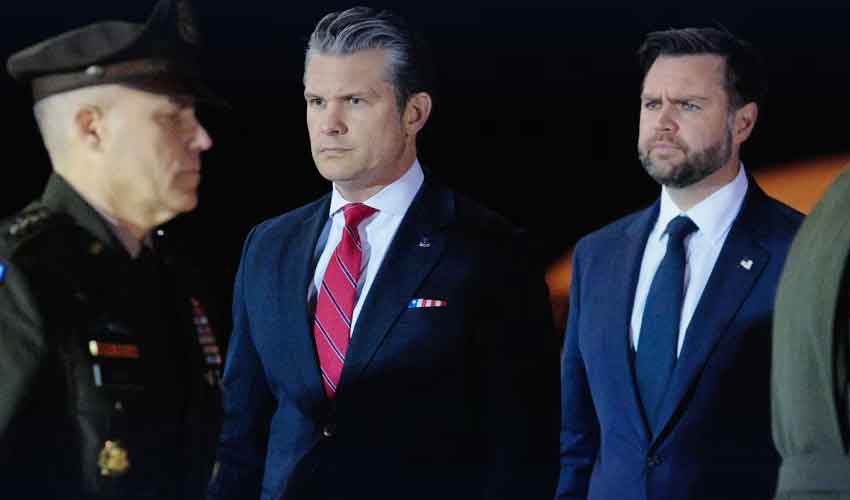
US Vice President JD Vance has repeatedly questioned the Pentagon’s depiction of the Iran war in closed-door meetings, according to a report, raising concerns over whether officials have understated the depletion of US missile stockpiles.
The questions come as Defense Secretary Pete Hegseth and Joint Chiefs Chairman General Dan Caine continue to publicly describe US weapons reserves as robust and the damage to Iran’s military as severe.
According to The Atlantic, Vance has privately asked whether the Pentagon is giving President Donald Trump accurate information about the eight-week conflict with Iran.
Two senior administration officials said the vice president has queried the accuracy of the information provided by the Defense Department.
Vance has also expressed concerns about the availability of certain missile systems in discussions with Trump, several people familiar with the situation said.
Concerns grow over missile stockpiles
Vance’s concerns focus partly on what appears to be a sharp drawdown in US munitions reserves during the Iran conflict.
The consequences of a major depletion could be serious because US forces would need to rely on the same stockpiles in any future conflict involving Taiwan and China, South Korea and North Korea, or Europe and Russia.
According to people familiar with the matter, Vance fears that shortages in key missile systems could weaken US readiness for other major security crises.
Pentagon leaders defend US military position
Defense Secretary Pete Hegseth and General Dan Caine, chairman of the Joint Chiefs of Staff, have publicly said US weapons stockpiles remain strong. They have also portrayed the damage to Iranian forces after eight weeks of fighting as drastic.
Hegseth has described Iran’s air force, navy and defensive infrastructure as severely damaged, while maintaining that the US military campaign has been highly effective.
Advisers to Vance told The Atlantic that the vice president has presented the concerns as his own. They said he has not directly accused Hegseth or Caine of misleading Trump.
However, some within Vance’s inner circle reportedly believe Hegseth’s upbeat portrayal of the war has been “so positive as to be misleading.”
White House says Vance asks probing questions
A White House official defended Vance’s approach, saying the vice president regularly asks detailed questions about national security planning.
The official said Vance “asks a lot of probing questions about our strategic planning, as do all members of the president’s national-security team". Publicly, Vance has remained supportive of the administration’s handling of the conflict.
Hours after Trump announced a 14-day ceasefire on April 8, Hegseth declared an “overwhelming victory” for the United States. He said Operation Epic Fury had “decimated Iran’s military.”
Hegseth also claimed Tehran had begged for a deal to avoid Trump’s threat of being bombed “back to the Stone Ages.”
Ceasefire extended as blockade continues
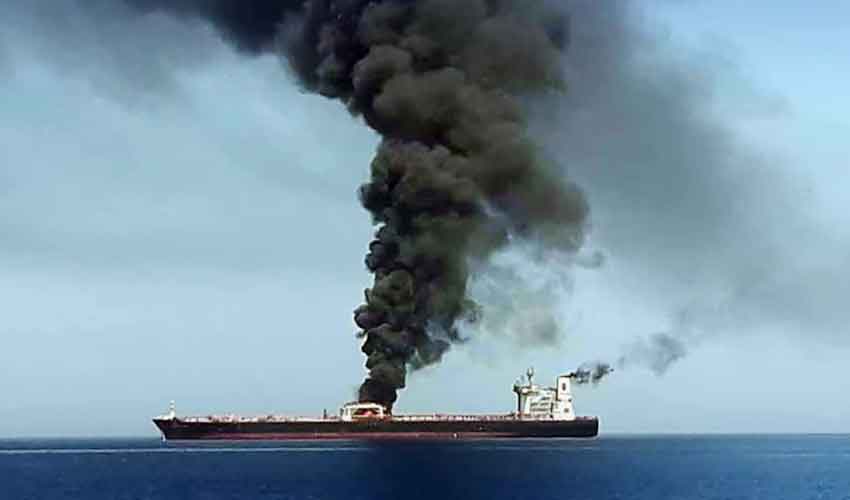
Since Hegseth’s declaration, Trump has extended the ceasefire indefinitely. At the same time, the United States has imposed a blockade in the Strait of Hormuz, choking off roughly 20% of global oil and gas supplies.
Despite the halt in major fighting, a permanent peace settlement remains elusive.
An April 21 report from the Center for Strategic and International Studies warned that the United States may have exhausted roughly half of its Patriot missile interceptors during the Iran conflict. The report also estimated that the US military fired between 190 and 290 THAAD interceptors.
Each THAAD interceptor is worth about $15.5 million. The US is also estimated to have fired between 130 and 250 SM-3 missiles, costing around $28.7 million each.
These are among the most expensive weapons in the US arsenal.
Stockpiles already considered insufficient
CSIS warned that even before the Iran war, US missile stockpiles were considered insufficient for a conflict with a peer competitor. The report said rebuilding reserves to levels adequate for a potential conflict with China would take considerable time.
That warning adds weight to concerns inside the administration about whether the Iran war has weakened US readiness for future crises.
The reported private concerns from Vance reveal a broader debate inside the Trump administration over the real costs of the Iran war.
While Pentagon leaders have emphasized military success and strong weapons reserves, Vance has reportedly pressed for a clearer picture of stockpile levels and long-term readiness.
The issue has become more urgent because the same missiles needed in the Middle East could also be required in a future confrontation involving China, North Korea or Russia.

.jpg)