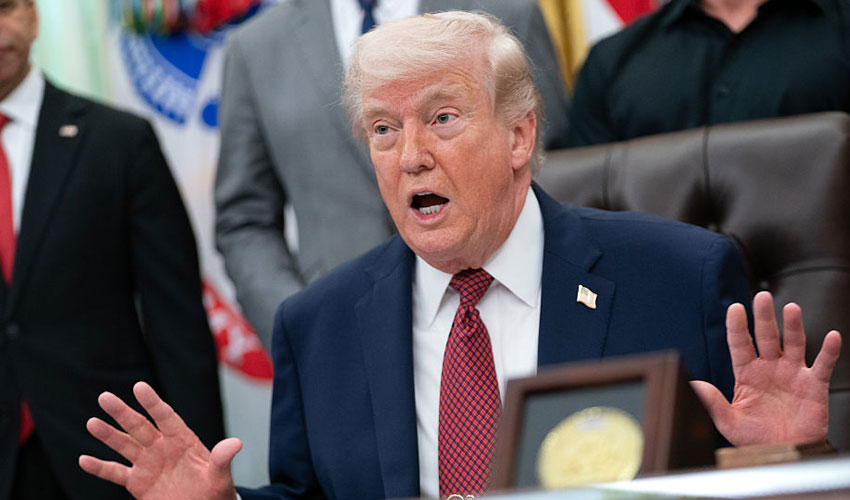
US President Donald Trump said Tuesday that Iran had told him it was in a “state of collapse” and wanted the United States to open the Strait of Hormuz “as soon as possible” while Tehran tries to “figure out” its leadership situation.
Trump did not explain how the message was communicated or identify who in Iran had conveyed it, as stalled negotiations and the continuing naval blockade added pressure to an already fragile cease-fire.
Trump’s remarks came amid reports that he is unhappy with Iran’s latest proposal to reopen the Strait of Hormuz.
The reported plan would call on the United States to end its blockade of Iranian ports in the waterway, while delaying discussion of Iran’s nuclear program.
“We have been clear about our red lines and the President will only make a deal that’s good for the American people and the world,” White House spokesperson Olivia Wales told TIME when asked about the reported proposal.
Rubio says nuclear issue cannot be sidelined
US Secretary of State Marco Rubio dismissed any proposal that does not place Iran’s nuclear capabilities at the center of negotiations.
“There’s no doubt in my mind that at some point in the future if this radical clerical regime remains in charge in Iran, they will decide they want a nuclear weapon,” Rubio told Fox News on Monday night. He said Iran’s nuclear capability remained a “fundamental issue” that “still has to be confronted.”
Asked whether Tehran was serious about reaching a deal, Rubio suggested Iranian negotiators were trying to buy time.
“We can’t let them get away with it,” he said.
“They’re very good negotiators. They’re very experienced negotiators, and we have to ensure that any deal that is made, any agreement that is made, is one that definitively prevents them from sprinting towards a nuclear weapon at any point.”
US rejects Iranian control over key waterway
Rubio also said reopening the Strait of Hormuz cannot depend on Iran maintaining control over the international waterway.
The strait carries around one-fifth of global oil production, making it one of the world’s most important energy routes. “Those are international waterways,” Rubio said.
“They cannot normalize nor can we tolerate them trying to normalize a system in which the Iranians decide who gets to use an international waterway and how much you have to pay them to use it.”
He also stressed that no vessel should have to pay a toll to Iran to secure safe passage.
US naval blockade remains active
The US naval blockade remains in place as negotiations remain deadlocked.
US Central Command said Tuesday that Marines had stopped and searched another vessel to confirm the ship’s voyage would not include a call at an Iranian port.
According to CENTCOM, 39 vessels have been redirected since the US naval blockade began on April 13.
Cease-fire remains stuck in stalemate
The collapse of talks has left the fragile cease-fire in a prolonged stalemate. Trump has blamed the breakdown in negotiations on internal divisions within Iran’s leadership after the initial US-Israeli strikes that killed former Supreme Leader Ayatollah Ali Khamenei.
“Their leaders are gone, which is a good thing, they were far more radicalised than the people we are dealing with right now,” Trump said Sunday.
“The people we’re dealing with now, some of them are very reasonable people and others are not, and they are not getting along, there’s a lot of infighting.”
Iran pushes back on US claims
Iranian officials have rejected Trump’s description of confusion and division within Tehran’s leadership. Officials issued coordinated statements on social media in an effort to project unity.
An Iranian military spokesperson also told state media Tuesday that the conflict was not over and warned of retaliation if military action resumed.
“We do not consider the war to be over,” the spokesperson said, according to state media. “The situation is still considered wartime and the database of targets and forces’ equipment has been updated.”
The spokesperson added that Iran would respond with new methods if attacked again.
“The dear nation is assured that if any aggression is repeated by the enemy, the Islamic Republic of Iran and the Islamic Republic of Iran Army will confront it with new tools and methods and in new arenas.”
Gulf nations meet after attacks on infrastructure
Saudi Arabia hosted a meeting of the Gulf Cooperation Council in Jeddah on Tuesday. It was the first in-person meeting of Gulf and Arab leaders since Iran began striking infrastructure across the region following the start of the war on February 28.
The attacks have eased since the United States and Iran entered a cease-fire, but regional concerns remain high.
Officials from the United Arab Emirates condemned the attacks on regional infrastructure. They described them as a “blatant violation of national sovereignty and a clear breach of international law and the United Nations Charter.”
The UAE officials also affirmed the right of targeted countries to respond.
They said those countries had the right to act in a way that protects their sovereignty, national security, territorial integrity, and the safety of citizens, residents and visitors.
Energy crisis deepens as Hormuz disruption continues
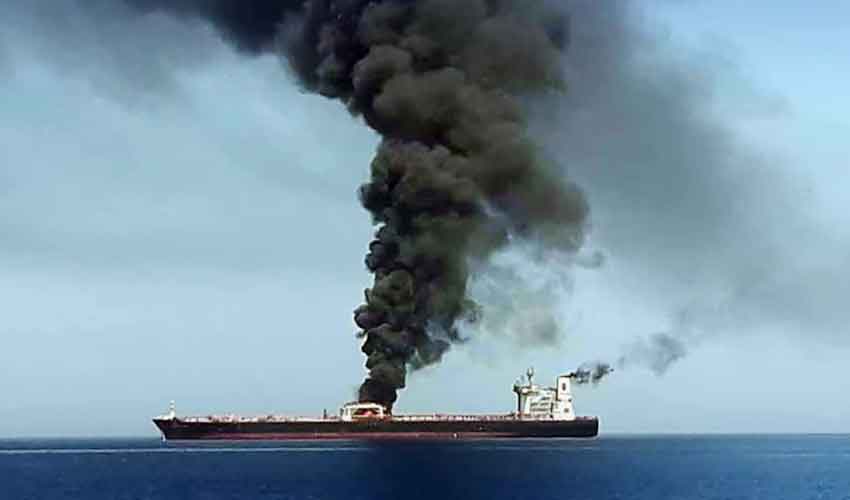
The ongoing disruption of the Strait of Hormuz continues to pressure global energy markets. The waterway is vital for global oil shipments, and uncertainty over its reopening has added to concerns about supply and prices.
Elsewhere, the UAE announced it would leave the Organization of the Petroleum Exporting Countries, including OPEC and OPEC+, effective May 1, 2026.
The move would remove one of the cartel’s largest producers from the group.
Brent crude oil topped $112 per barrel on Tuesday, according to Trade Economics, signaling continued market instability amid the energy crisis.

.jpg)