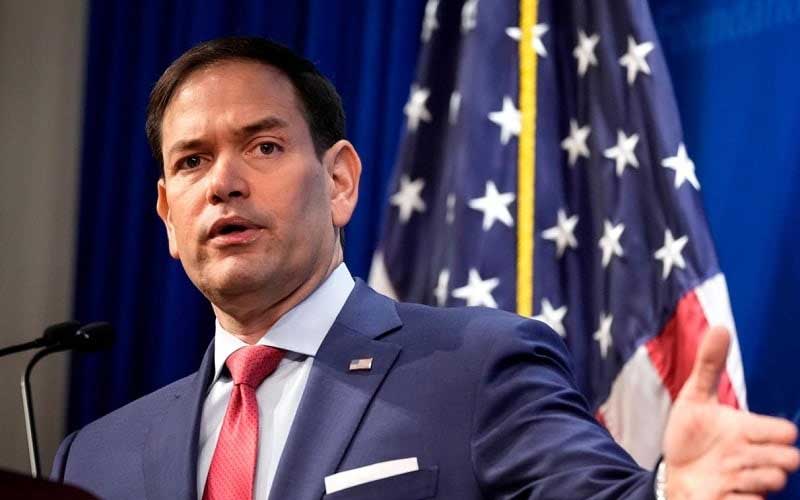
US Secretary of State Marco Rubio has rejected Iran’s reported conditions for reopening the Strait of Hormuz, warning that Tehran is trying to use the key global oil route as an “economic atomic bomb.”
In an interview with Fox News, Rubio said the United States would not allow Iran to use an international waterway for “extortion” or as leverage against the world.
Rubio said Iran appears determined to retain control over the Strait of Hormuz, a scenario he called unacceptable for Washington.
Responding to reports that Iran had proposed reopening the strait after stalled negotiations, Rubio said any arrangement requiring ships to seek Iran’s permission or pay fees would not be considered a real reopening.
“If opening the strait means you need Iran’s permission or have to pay to pass, that’s not opening it,” Rubio said.
He added that the United States could not allow a system where Iran decides who can use an international waterway and at what cost.
‘US will not allow extortion’
The US secretary of state said the Strait of Hormuz is not Iran’s private route but an international waterway. He said Washington would not tolerate Iran trying to normalize a system where ships must coordinate with Tehran, seek permission or face threats.
Rubio said Iran’s position amounts to saying the strait is open only if vessels “coordinate with Iran,” get permission, pay money, or face attack.
“That’s not opening the straits,” he said.
Strait of Hormuz an economic atomic bomb
Rubio described the closure or weaponization of the Strait of Hormuz as an “economic atomic bomb". He said Iran is trying to use the waterway against the entire world and, in his words, boasts about holding around 20% of the world’s oil supply hostage.
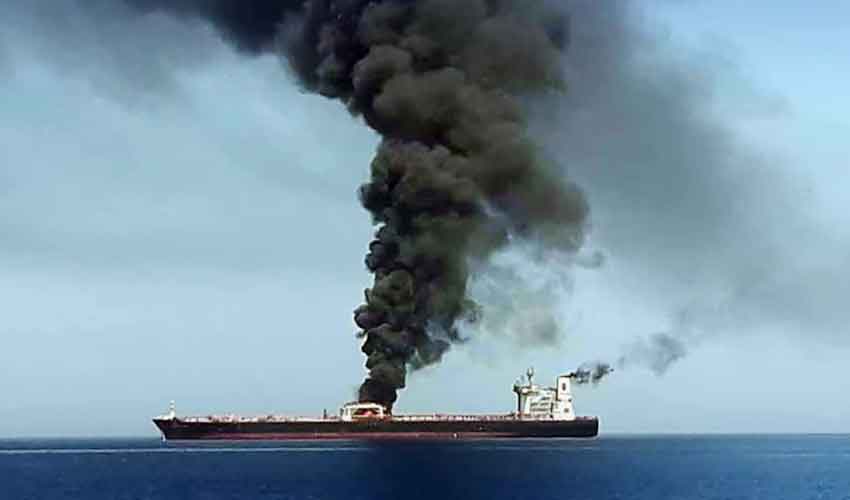
The Strait of Hormuz is one of the world’s most important energy chokepoints, normally handling about one-fifth of global oil and LNG flows.
Its disruption has pushed energy prices higher and intensified international concern over the ongoing conflict.
Also Read: Trump 'unhappy' with latest Iran proposal to end war
Rubio said the first reason behind the US war with Iran is Tehran’s nuclear program. He warned that if Iran were to acquire nuclear weapons, it could establish a monopoly over the entire region and hold neighboring countries hostage.
“Imagine if these people got a nuclear weapon,” Rubio said, arguing that Iran’s behavior over the Strait of Hormuz shows what it could do with greater power.
He reiterated that Iran will not be allowed to develop nuclear weapons under any circumstances.
US says pressure on Iran will continue
Rubio said US sanctions and pressure on Iran are already extraordinary but could be increased further. He stressed that even if no deal is reached, Washington will maintain pressure on Tehran.
According to Rubio, any agreement must definitively prevent Iran from moving quickly toward a nuclear weapon at any point. He said the US goal remains clear: Iran must not be allowed to obtain nuclear weapons.
Iran serious but hardliners an obstacle
Despite the sharp criticism, Rubio described negotiations with Iran as serious. He said Tehran appears interested in reaching a deal because of its worsening economic conditions.
“I think they’re serious about getting themselves out of the mess that they’re in,” Rubio told Fox News. However, he said hardliners inside Iran remain an obstacle to any agreement.
Rubio added that some people in Iran want to run the country and the economy, suggesting internal power struggles are complicating diplomacy.
Also Read: US reviews Iran's peace proposal shared through Pakistan
Rubio pointed to Iran’s rising inflation, difficulty paying wages and the continuing impact of sanctions. He said all the problems Iran faced before the conflict remain in place, and most have worsened.
Meanwhile, the US Treasury secretary also said Iran’s oil industry is beginning to be paralyzed by the blockade. According to the Treasury secretary, Iran’s oil production is close to stopping, and its oil pumping system may soon collapse.
Talks stall after Trump scraps latest round
Rubio’s remarks came after President Donald Trump scrapped the latest round of talks with Tehran over the weekend. Iran and the United States held talks in Islamabad on April 11 but failed to reach an agreement to end the war.
The war began on February 28, when the United States and Israel launched strikes on Tehran. Those negotiations followed a Pakistan-brokered ceasefire on April 8, initially set for two weeks and later extended by President Trump.
Trump later cancelled a planned trip to Pakistan by special envoys Steve Witkoff and Jared Kushner. Efforts are still underway to organize another round of talks, but several major sticking points remain unresolved.
These include the status of the Strait of Hormuz, the US blockade of Iranian ports and Iran’s nuclear program.
US blockade targets Iran-linked vessels
The Strait of Hormuz has been effectively shut since late February. Iranian threats initially disrupted shipping, while the United States is now enforcing a naval blockade targeting Iran-linked vessels.
Also Read: Putin, Araghchi discuss Iran situation, push for peace efforts
The blockade has sharply affected maritime movement and energy trade, increasing pressure on Iran’s already strained economy.
Iran proposal defers nuclear talks
Media reports say Iran has floated a proposal to reopen the Strait of Hormuz in exchange for the United States lifting its blockade and ending the war.
Under the reported proposal, nuclear negotiations would be deferred to a later stage.
Washington, however, wants the nuclear issue addressed from the outset and has rejected any formula that allows Iran to control passage through the strait.

.jpg)