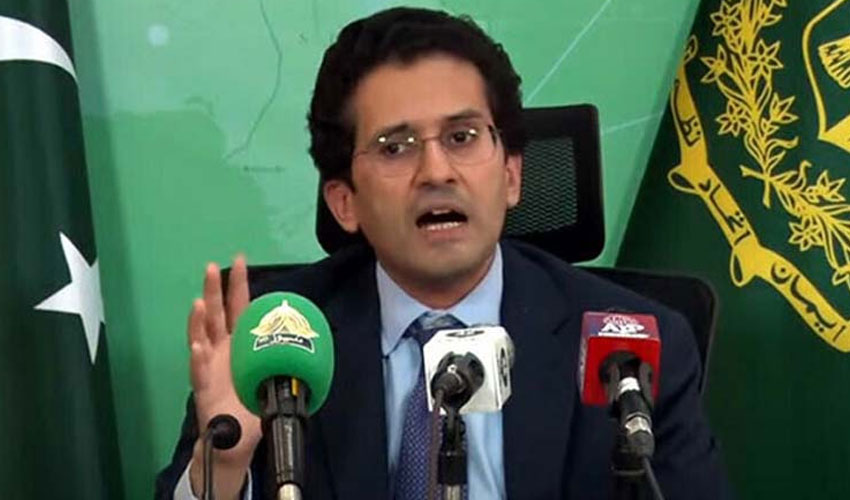
Federal Petroleum Minister Ali Pervaiz Malik has raised concerns over Pakistan’s fuel reserves amid ongoing geopolitical tensions involving the Iran–US conflict.
Speaking to Samaa TV’s program Nadeem Malik Live, he warned that the war does not appear to be ending and is creating uncertainty for global energy markets.
He also highlighted Pakistan’s limited strategic reserves and the need for urgent energy security planning.
Limited oil and petrol reserves in Pakistan
During the interview, the petroleum minister revealed that Pakistan currently holds only 5 to 7 days of crude oil reserves.
He further stated that the country does not even have petrol reserves for a single day, making the energy system highly vulnerable to external shocks.
According to him, this situation highlights the urgent need to strengthen storage capacity and improve long-term energy preparedness.
Concerns over global oil prices
Ali Pervaiz Malik noted that in history, Dubai crude prices have never reached as high as $170, pointing to extreme volatility in global markets.
He said the government is attempting to reduce public hardship and has tried to provide subsidies where possible.
He added that the Prime Minister has closely monitored the situation to ensure petrol availability despite rising global uncertainty linked to the Iran–US conflict.
The minister stressed that Pakistan must reorganize its energy preparedness in light of global risks.
He said that diesel plays a crucial role in the country’s economy and transportation system, making its pricing and supply highly sensitive.
He also mentioned that discussions with the Prime Minister and relevant authorities have led to the decision to prepare a 30-day crude oil program to improve energy security.
Diesel pricing formula
The petroleum minister referred to the diesel pricing formula, which has been in place since 2002.
He questioned the structure, arguing that if global diesel prices are set at $100, local pricing and refinery output should be reviewed for fairness and efficiency.
He said the government does not want outdated systems to continue and emphasized the need to upgrade refineries and move toward deregulation.
Taxation and IMF-linked adjustments
Ali Pervaiz Malik also spoke about taxation policies, suggesting that taxes should be collected based on consumption volume rather than broad indirect structures.
He argued that indirect taxes contribute to inflation and should be reduced.
He added that recent changes in the diesel pricing mechanism were not due to external pressure, and mentioned that a levy exemption had been taken from the IMF for one month.
The minister further said that working groups have been formed on the National Finance Commission (NFC) Award to improve fiscal coordination.
He emphasized that Pakistan is moving toward commercial oil reserves instead of relying on minimal strategic stockpiles.
According to him, all research and policy frameworks are ready, and the government is now focused on strengthening long-term energy resilience.