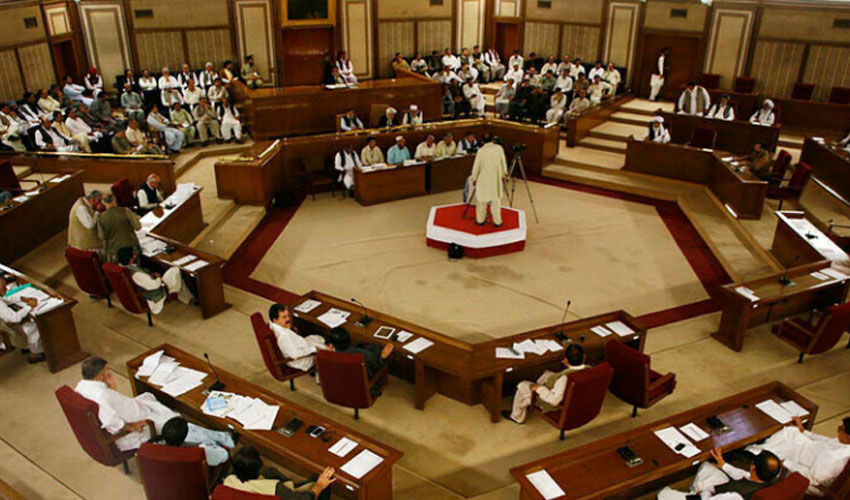
The Balochistan government, during a press briefing in Quetta on 18 April 2026, presented the confessional statement of Rahima Bibi, wife of Manzoor Ahmed of Dalbandin.
She confirmed that her husband facilitated a female suicide attacker affiliated with the BLF, who later carried out an attack on a Frontier Corps camp in November 2025.
Her statement established that, during their marriage, suspected links and activities connected to militancy persisted within the household, indicating that facilitation networks have extended into domestic environments and are making use of family structures.
According to Rahima Bibi, the female suicide attacker, Zarina Rafiq, resided in their home, suggesting that residential premises were knowingly used as temporary shelters for individuals later involved in militant acts.
She disclosed that Zarina Rafiq was subsequently moved to Afghanistan, where she received training before being used in a suicide attack inside Pakistan, reinforcing long-standing concerns regarding cross-border militant support.
The statement further confirmed that Rahima Bibi’s mobile number was used by her husband to maintain contact and coordination with extremist elements, reflecting deliberate misuse of personal identity to conceal operational links.
Women are being systematically exploited through organised networks. Counter-terrorism assessments indicate that militant groups active in Balochistan are employing psychological pressure, coercion and structured recruitment methods, marking a shift in militant strategy.
Extremism and recruitment are carried out under a structured division of roles. Security assessments indicate that vulnerable youth and women are influenced through ideological narratives, while recruitment, training and operational deployment are undertaken by groups such as the BLA and BLF once individuals are mentally conditioned.
Analysts note that certain active platforms, including groups linked to BYC, foster narrative environments that influence vulnerable individuals, later utilised by militant recruiters.
Failed or disrupted operations are subsequently recast under the narrative of “missing persons”. Security assessments indicate that when individuals linked to militancy are apprehended or intercepted, associated networks portray them as missing in an attempt to mislead public opinion.
Social vulnerabilities are being used as operational entry points. Findings indicate that emotional, social and familial weaknesses are deliberately targeted to facilitate recruitment, concealment and movement.
Cross-border infrastructure in Afghanistan continues to act as a key facilitator for militancy in Balochistan and Khyber Pakhtunkhwa. The transfer of individuals for training reflects the continued presence of logistical support and planning by groups such as the BLA, BLF and TTP.
Militant strategy now combines violence with narrative warfare. According to Anwaar-ul-Haq Kakar, militant organisations are adopting a dual approach, combining violent acts with organised narrative campaigns to create ambiguity and influence public opinion.
External support and social exploitation remain significant threats. Balochistan Home Department spokesperson Babar Yousafzai stated that hostile elements exploit women and social vulnerabilities to advance militant objectives and undermine social cohesion.
Militant networks operate through complex and transnational structures. The DIG CTD in Quetta stated that such networks function through interconnected layers of recruiters, facilitators, trainers and handlers.
Such activities stand in contrast to Baloch cultural values. Provincial representatives stressed that the use of women for violent purposes runs counter to traditions that uphold their respect, protection and dignity.
Religious and moral principles also reject the exploitation of women. The use of women under coercion or in unlawful activities is deemed unacceptable and contrary to fundamental ethical teachings.
According to the Government of Balochistan and relevant security agencies, operations against such networks continue, including intelligence gathering, forensic verification and legal proceedings to ensure accountability and prevent further exploitation.





.jpg)