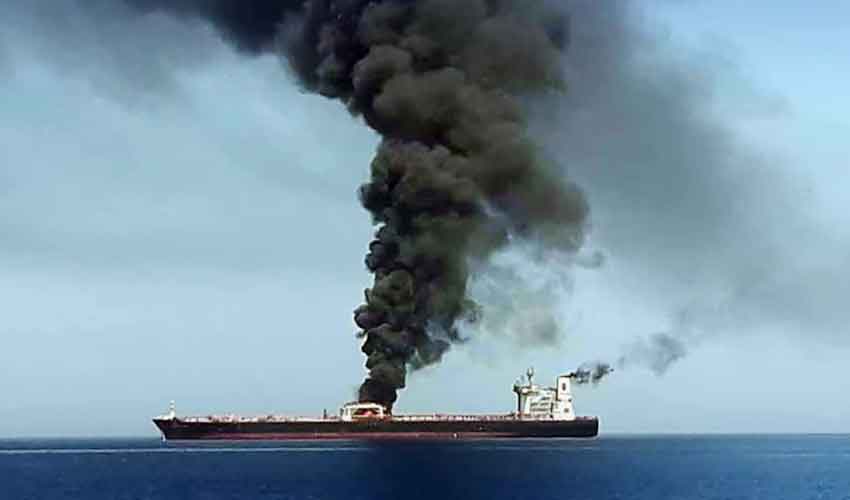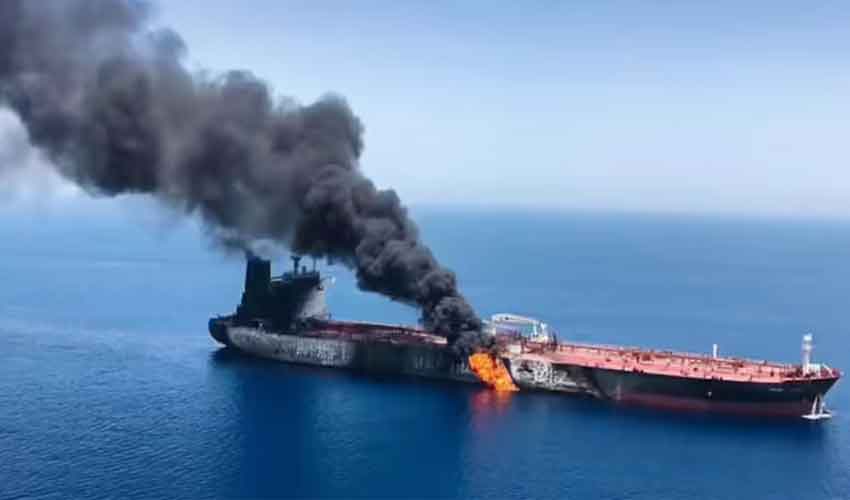
At least two merchant vessels were hit by gunfire while attempting to cross the Strait of Hormuz, marking a dangerous escalation in regional tensions.
The incidents come as Iran tightens control over the vital shipping lane amid ongoing conflict with the United States.
Maritime security sources confirmed that at least two merchant ships reported being fired upon while transiting the strait on Saturday.
One tanker was approached by two gunboats linked to Iran’s Islamic Revolutionary Guard Corps, which opened fire. A container ship was also hit, though both vessels and their crews remained safe.
The incidents occurred in waters between Qeshm and Larak islands, forcing the ships to turn back without completing their journey.
Iran declares Strait closed again
Several vessels received radio messages from Iran’s navy stating that the Strait of Hormuz was “completely closed again” and that no ships of any nationality were allowed to pass. The message cited the United States’ failure to honor commitments during negotiations as the reason for the closure.
Also Read: Iran says no date for US talks without framework
Earlier, maritime trackers had shown a convoy of eight tankers moving through the strait -- the first significant movement since the war began seven weeks ago -- but the situation quickly reversed.
Tightened military control over shipping
Iran’s armed forces command announced the reimposition of strict military control over the waterway, accusing the US of repeated violations and “acts of piracy” under the guise of a blockade.
Officials said Iran had initially allowed limited and managed passage of vessels in “good faith,” but ongoing US actions forced Tehran to restore tighter restrictions.
Hundreds of ships and around 20,000 seafarers are now stranded in the Gulf, awaiting safe passage through the chokepoint, which typically handles about 20% of global oil and LNG trade.
Warning from Iran’s leadership
In a strong message, Iran’s Supreme Leader Mojtaba Khamenei said the country’s navy is ready to inflict “new bitter defeats” on its enemies. The statement reflects increasingly tough rhetoric from Tehran, further deepening uncertainty around the conflict.
US President Donald Trump earlier spoke of “pretty good news” regarding Iran but warned that fighting could resume if no peace deal is reached before the ceasefire expires on Wednesday.
He reiterated that the US blockade on Iranian ports would continue and emphasized that preventing Iran from obtaining nuclear weapons remains the top priority.
Also Read: Iran says Strait of Hormuz closed again over US blockade
The war began on February 28 following a US-Israeli attack on Iran and has since killed thousands, expanded into Lebanon, and disrupted global energy markets.
A temporary reopening of the strait followed a US-brokered ceasefire between Israel and Lebanon, but renewed tensions have again halted shipping.
Diplomatic efforts and stalled talks
Despite expectations of further talks, there were no visible preparations in Islamabad, where negotiations were expected to take place. Some diplomats expressed doubts about immediate talks, even though Trump suggested discussions could happen over the weekend.
Pakistan has been playing a mediating role, with Field Marshal Asim Munir recently concluding talks in Tehran. Prime Minister Shehbaz Sharif also returned from regional visits to Qatar, Saudi Arabia, and Turkey.
Also Read: Iran rejects US uranium transfer claim
Sources indicate that a preliminary memorandum of understanding could still emerge, followed by a comprehensive peace deal within 60 days.
Ongoing disputes over nuclear programme
A major sticking point remains Iran’s nuclear programme. The US has proposed removing Iran’s enriched uranium stockpiles, while Tehran insists the material will not be transferred.
Previous proposals included a 20-year suspension of nuclear activity by the US, while Iran suggested a shorter timeline of three to five years.
The crisis has already shaken global markets. Oil prices recently dropped about 10% on hopes of resumed shipping, while global stocks rose. However, renewed disruptions in the strait have reignited concerns over energy supply chains and market stability.
US blockade and maritime standoff
The US military confirmed that 23 ships have complied with its orders to turn back toward Iran since the blockade began.
The United Kingdom Maritime Trade Operations (UKMTO) also reported incidents near Oman, highlighting the growing risks to commercial shipping in the region.
With military tensions rising, shipping disrupted, and negotiations stalled, the situation in the Strait of Hormuz remains volatile.

.jpg)