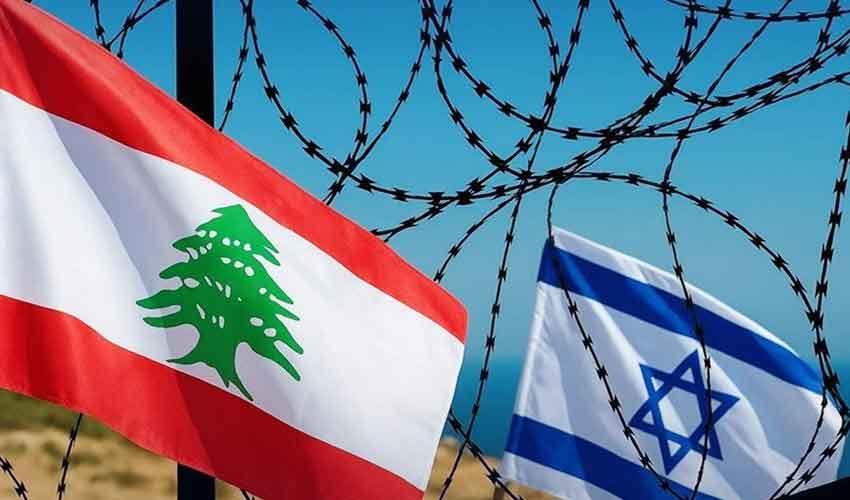
US President Donald Trump has announced that leaders of Israel and Lebanon will speak on Thursday for the first time in 34 years.
Donald Trump revealed the development in a post on Truth Social, saying he was “trying to get a little breathing room between Israel and Lebanon.”
“It has been a long time since the two leaders have spoken, like 34 years. It will happen tomorrow,” he wrote, without specifying which leaders would participate or where the talks would take place.
There was no immediate response from either Israel or Lebanon following the announcement.
The announcement came a day after US, Israeli, and Lebanese envoys held their first direct diplomatic engagement in Washington, DC, in more than three decades.
The trilateral meeting marked the first major high-level contact since 1993, with all sides agreeing to pursue “productive discussions” toward launching direct negotiations.
The US has urged that any agreement go beyond the 2024 ceasefire and evolve into a comprehensive peace deal between the two governments.
Heavy toll and humanitarian crisis
Since March 2, Israeli forces have killed more than 2,000 people in Lebanon and displaced over 1.2 million, according to reports. Data cited by Qatar News Agency puts the death toll at 2,164 with 7,061 wounded as of April 15.
Israeli strikes have also targeted civilian infrastructure, including bridges, homes, and medical facilities. Lebanon’s Ministry of Health says at least 91 medical workers have been killed.
On Wednesday alone, three consecutive Israeli strikes in the village of Mayfadoun killed four paramedics and injured six others.
Israeli Prime Minister Benjamin Netanyahu said he had ordered the military to expand its ground invasion in southern Lebanon toward the east.
Also Read: Israel military chief signals continued strikes in Iran, Lebanon
Israel aims to create a “buffer zone” and degrade Hezbollah’s capabilities while pursuing negotiations with the Lebanese government.
Fighting has intensified around key areas such as Bint Jbeil, a strategically significant town that Israeli forces claim to have encircled, though Hezbollah says its fighters continue to resist.
Lebanon’s stance and challenges to peace
The Lebanese government, which is not directly part of the conflict, has called for an immediate ceasefire and the withdrawal of Israeli troops from its territory.
Beirut insists on implementing the 2024 agreement, while Israel demands the disarmament of Hezbollah and dismantling of its infrastructure.
Lebanon would likely require a ceasefire before engaging in high-level talks, while Israel has so far resisted halting operations.
The conflict in Lebanon has also complicated broader US-Iran peace negotiations, including talks held in Islamabad that ended without a deal. Iran’s parliament speaker has warned that negotiations cannot proceed unless Israeli attacks on Lebanon stop and US sanctions are eased.
Although a two-week ceasefire between the US and Iran was announced on April 7, it remains unclear whether it applies to Lebanon.
Uncertain path forward
Despite diplomatic efforts, violence continues, with Israeli strikes reported near one of the last functioning hospitals in Tebnine for two consecutive days.
Analysts warn that fully disarming Hezbollah would require a prolonged and costly occupation of Lebanon -- an outcome both difficult and uncertain.
For now, all eyes remain on whether Thursday’s proposed talks will materialize and lead to a ceasefire or broader peace framework.

.jpg)