Pakistan has secured a crucial financial lifeline as Saudi Arabia pledged $3 billion in additional support to help stabilize the country’s economy.
The move comes at a critical time as Pakistan faces mounting external payments and pressure on foreign exchange reserves.
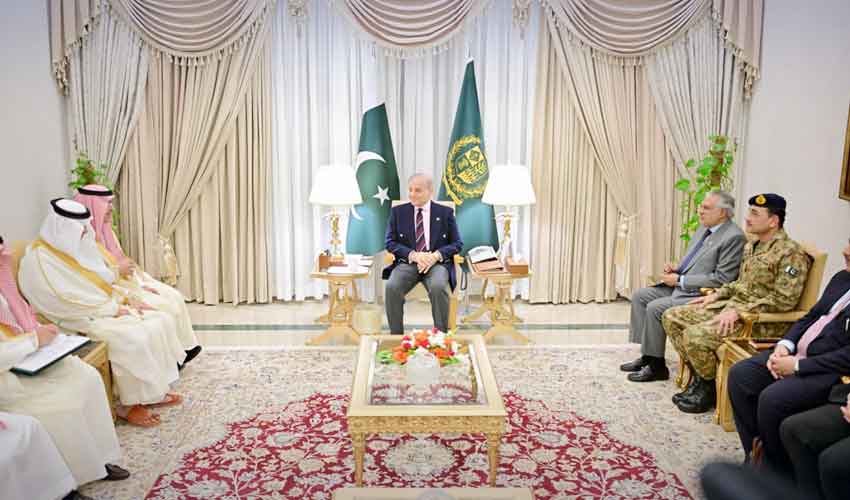
Saudi Arabia has agreed to provide a $3 billion deposit to Pakistan, aimed at supporting its balance of payments and easing immediate financial pressures. The announcement was confirmed by both Saudi officials and Finance Minister Muhammad Aurangzeb.
This fresh support comes in addition to Riyadh’s decision to extend the tenure of an existing $5 billion deposit, further reinforcing Pakistan’s financial stability. Officials say the assistance reflects deepening economic and strategic ties between the two countries.
Pressure from UAE repayment, reserve targets
Pakistan is currently facing a $3.5 billion repayment obligation to the United Arab Emirates, which accounts for nearly 18% of its foreign exchange reserves. As of March 27, reserves stood at around $16.4 billion.
Under its $7 billion program with the International Monetary Fund, Pakistan is targeting reserves of over $18 billion by June -- making the Saudi support particularly timely.
Aurangzeb emphasized that the funding will help strengthen Pakistan’s external account and ensure reserves remain aligned with IMF commitments and market obligations.
Also Read: Pakistan likely to get $3bn financial aid from Saudi Arabia
The finance minister made the announcement while attending the World Bank–IMF Spring Meetings 2026 in Washington, DC. During his visit, Aurangzeb held detailed discussions with Saudi Finance Minister Mohammed Al-Jadaan, following an earlier meeting in Islamabad.
Saudi Arabia Announces USD 3 Billion Additional Support, Extends USD 5 Billion Deposit: Finance Minister
— Ministry of Finance, Government of Pakistan (@Financegovpk) April 15, 2026
Federal Minister for Finance and Revenue, Senator Muhammad Aurangzeb, has informed that the Kingdom of Saudi Arabia has committed USD 3 billion in additional deposits, with… pic.twitter.com/E8dXPg6g9Y
He noted that Pakistan had deliberately avoided commenting publicly on the support package until formal confirmation was received, despite media speculation.
Aurangzeb expressed gratitude to Saudi leadership, particularly Crown Prince Mohammed bin Salman and senior finance officials, for their continued cooperation and timely assistance.
Obligations and financing plan
Highlighting fiscal discipline, Aurangzeb said Pakistan recently repaid a $1.4 billion Eurobond on time, describing it as a “non-event.” He reaffirmed the government’s commitment to meeting all upcoming external obligations without delay.
He stressed that Pakistan’s external financing plan is clearly defined and being implemented in a responsible manner. The country aims to reach around $18 billion in reserves -- equivalent to about 3.3 months of import cover -- by the end of the fiscal year.
Pakistan is also diversifying its financing sources through global markets. The finance minister confirmed progress on the Global Medium-Term Note (GMTN) program and plans for the country’s first Panda Bond issuance. He said these initiatives are part of broader efforts to strengthen market access and reduce reliance on traditional funding channels.
Also Read: No need to increase, change IMF program: Finance minister
At the same time, the government continues to push economic reforms, expand the tax net, and bring informal sectors into the system through audits and policy measures.
IMF engagement and program progress
During his visit, Aurangzeb also met IMF First Deputy Managing Director Dan Katz to discuss the continuation of Pakistan’s loan program and the impact of external shocks.
He confirmed that Pakistan has successfully completed the third review under the Extended Fund Facility (EFF) and the second review under the Resilience and Sustainability Facility (RSF), with a staff-level agreement already in place.
Finance Minister Engages Dan Katz, First Deputy Managing Director IMF, on Programme Continuity and External Shock Impact
— Ministry of Finance, Government of Pakistan (@Financegovpk) April 15, 2026
Federal Minister for Finance and Revenue, Senator Muhammad Aurangzeb, held a meeting with Mr. Dan Katz, First Deputy Managing Director of the International… pic.twitter.com/d6KepiewrB
Approval from the IMF Executive Board is now awaited, with expectations of a $1.2 billion tranche being released soon.
The finance minister highlighted that the ongoing Middle East conflict has already begun affecting Pakistan’s economy, particularly through energy supply disruptions, rising prices, and logistical challenges.
Also Read: External payments capacity stable, economic reforms crucial: Aurangzeb
He warned that second- and third-level impacts would depend on the duration of the conflict. In response, the government is implementing targeted subsidies, managing demand, and stabilizing supply chains.
Interestingly, transshipment activity at Karachi Port has increased significantly over the past month, indicating emerging trade opportunities despite global disruptions.
Growing global confidence, diplomatic role
Aurangzeb said Pakistan is receiving strong appreciation from international financial institutions, investors, and global partners. This confidence stems from both economic reforms and Pakistan’s diplomatic efforts.
He noted that Pakistan has played a key role in facilitating dialogue between the United States and Iran -- talks that had not taken place face-to-face for decades.
Finance Minister Participates in IMF Panel on MENAP Economies Navigating War and Managing Economic Shocks
— Ministry of Finance, Government of Pakistan (@Financegovpk) April 15, 2026
Federal Minister for Finance and Revenue, Senator Muhammad Aurangzeb, participated in a panel discussion titled “MENAP Economies Navigating War: Managing Shocks and Shaping… pic.twitter.com/LXrW30Z1pB
This growing international recognition, combined with Saudi financial support, is expected to boost investor confidence and strengthen Pakistan’s economic outlook.
Strategic ties between Pakistan, Saudi Arabia
Saudi Arabia has a long history of supporting Pakistan during economic crises. In 2018, Riyadh provided a $6 billion package, including deposits and deferred oil payments.
The relationship has further strengthened through a mutual defense pact, under which both countries consider aggression against one as an attack on both.
Also Read: Saudi Arabia eyes $10bn investment for oil refinery in Gwadar
Recently, Pakistan also deployed fighter jets and support aircraft to Saudi Arabia following Iranian strikes on key energy infrastructure -- underscoring the depth of strategic cooperation.
Aurangzeb concluded that maintaining confidence and economic stability remains the government’s top priority. He reaffirmed Pakistan’s commitment to reforms, external obligations, and continued engagement with global partners.
A more detailed media briefing is expected at the conclusion of his Washington visit.

.jpg)