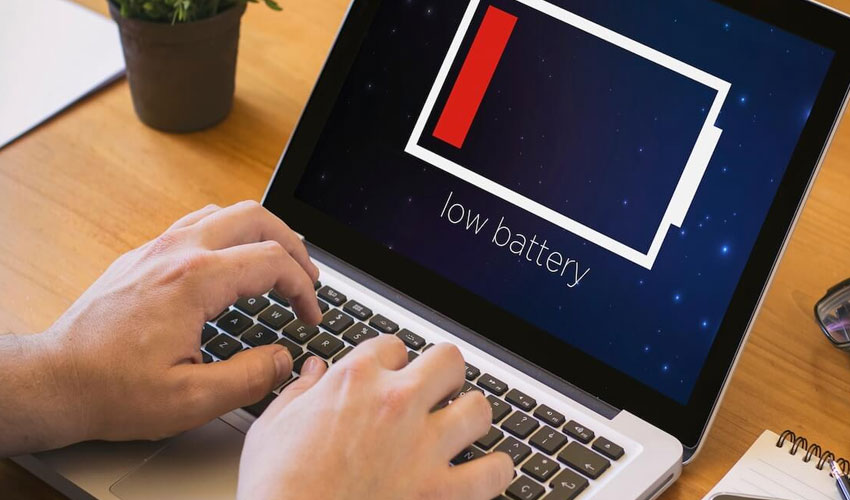
Many users unknowingly damage their laptop batteries through everyday charging habits.
Experts say one common mistake could significantly reduce battery life over time, even in modern devices.
A key mistake users make is allowing their laptop battery to drain completely to 0% before recharging.
Experts say this practice increases chemical stress inside lithium-ion batteries, which gradually reduces their overall lifespan.
Why battery health declines
Battery degradation happens naturally over time, but full discharge cycles speed up the process.
Each time a battery is fully drained, internal stress increases, affecting long-term capacity and performance.
Similarly, keeping a battery at 100% for extended periods can also increase voltage stress and contribute to faster wear.
Recommended 20%–80% rule
Experts recommend maintaining battery levels between 20% and 80% whenever possible.
This range helps reduce strain on the battery and improves long-term health compared to full discharge and full charge cycles.
Should you keep your laptop plugged in?
Many modern laptops now include features like bypass charging, which allows power to bypass the battery once fully charged and directly power the device.
However, not all devices support this feature, and in some cases, keeping the laptop plugged in constantly can still add stress to the battery.
Built-in battery saving features
Operating systems also offer tools to extend battery life:
- Windows 11 includes an energy saver mode
- macOS offers a low power mode in system settings
These features help reduce energy usage and improve battery efficiency over time.




.jpg)