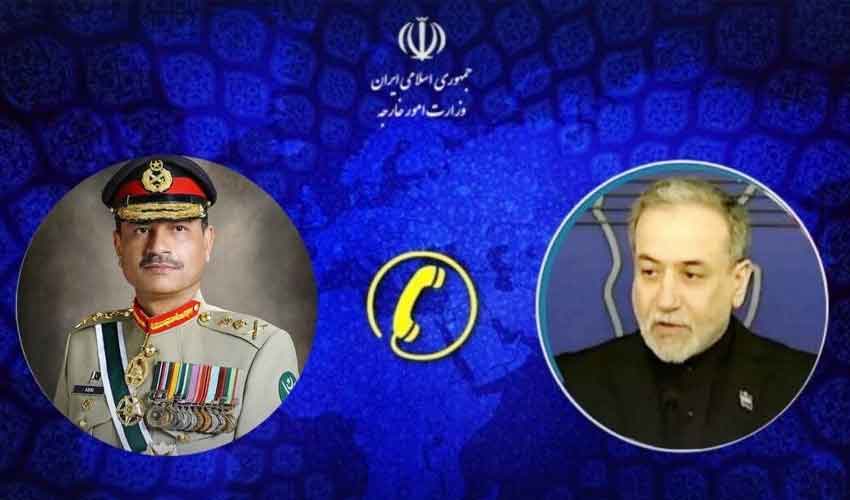
Iran’s Foreign Minister Abbas Araghchi has lauded Pakistan’s diplomatic efforts in securing a ceasefire, while raising concerns over alleged Israeli violations during a key call with army chief Field Marshal Asim Munir.
According to the Iranian Embassy, Foreign Minister Abbas Araghchi held a telephone conversation with Field Marshal Asim Munir, during which he praised Pakistan’s role in promoting peace.
Araghchi appreciated Pakistan’s “constructive, responsible, and effective” efforts in ending the war and strengthening regional security. He also acknowledged Islamabad’s continuous diplomatic engagement that helped secure the ceasefire between Iran and the United States.
In a call with Field Marshall Seyed Asim Munir, Foreign Minister Seyyed Abbas Araghchi appreciated the constructive & responsible role of Pakistan in continuous & effective efforts to end the war and strengthen peace and security in the region as well as ceasefire. pic.twitter.com/tQGKvvBvDF
— Embassy of IR Iran Pakistan (@IraninIslamabad) April 8, 2026
Ceasefire violations by Israel
During the call, Araghchi raised concerns over what he described as “violations of the ceasefire” by Israel.
According to an ministry statement, the discussion focused on alleged Israeli actions in both Iran and Lebanon, referred to as actions by the “Zionist regime".
The two sides reviewed the situation surrounding the Pakistan-mediated truce, particularly in light of developments in Lebanon.
Iran warns of possible response
Iran is considering retaliatory strikes against Israel amid ongoing alleged violations of the temporary ceasefire in Lebanon, according to Iran’s state-affiliated Fars news agency.
Another Iranian outlet, Tasnim, reported that Tehran may withdraw from the ceasefire agreement if attacks on Lebanon continue. These warnings come as tensions remain high despite the recently agreed truce.
Israel carried out what it described as its largest coordinated strikes across Lebanon since the conflict with Hezbollah escalated last month. The strikes occurred even as Hezbollah had paused attacks on northern Israel and Israeli forces in Lebanon under a two-week US-Iran ceasefire.
Lebanese officials reported that around 90 people were killed and more than 720 injured, with densely populated areas in Beirut among the hardest hit.
Coordination between Pakistan and Iran
Araghchi and Munir also emphasized the need for continued coordination between Pakistan and Iran.
The discussion referenced a recent phone call between Iranian President Masoud Pezeshkian and Prime Minister Shehbaz Sharif, stressing the importance of following up on agreed measures.
Pakistan’s role as a mediator in the ceasefire was highlighted as crucial to maintaining regional stability.
A two-week ceasefire between the United States and Iran came into effect early Wednesday.
While Israel stated it would comply with the truce, it clarified that the agreement does not extend to Lebanon—an interpretation disputed by Pakistan, which maintains the ceasefire includes Lebanon.
Earlier, Iran declared a “historic victory” following a 40-day conflict involving the United States and Israel, stating that Washington had accepted a 10-point Iranian proposal.





.jpg)