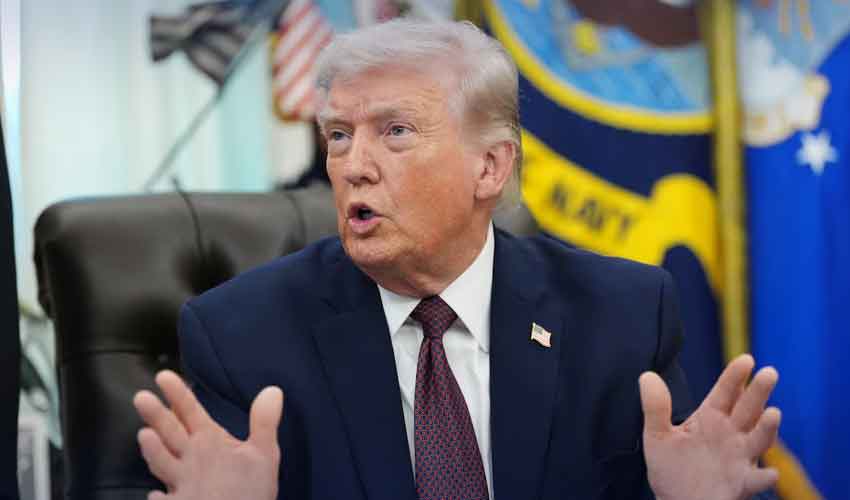
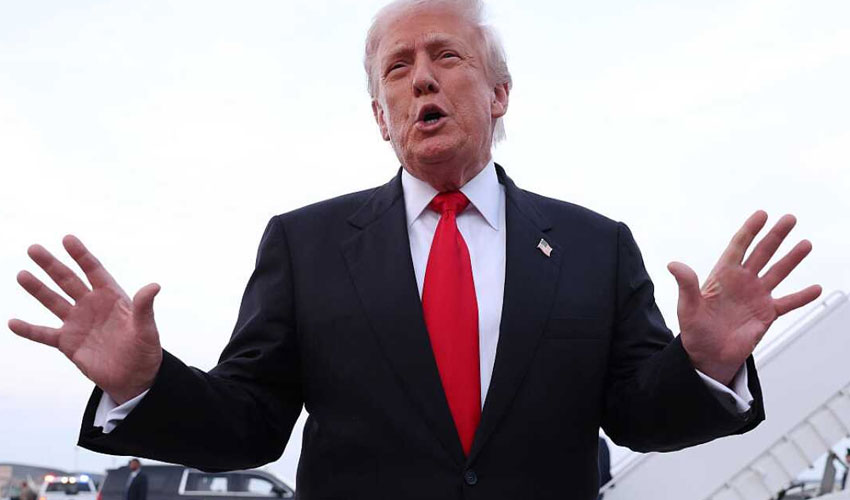
US President Donald Trump confirmed that Lebanon is not part of the two-week US-Iran ceasefire, citing Hezbollah’s presence.
The announcement comes as Israel launched its heaviest airstrikes in the conflict, causing significant casualties and displacement across Beirut and southern Lebanon.
Trump confirms Lebanon exclusion
Trump told PBS White House correspondent Liz Landers that Lebanon was excluded from the ceasefire agreement, describing Israel’s ongoing strikes as “a separate skirmish.”
- The US president emphasized that Hezbollah “would get taken care of,” underlining the focus on the militant group.
- This aligns with Israeli Prime Minister Benjamin Netanyahu’s earlier statements that Lebanon would not be included in the ceasefire.
Despite the Iran-aligned group Hezbollah pausing attacks, Israel intensified its military campaign:
- Over 100 Hezbollah command centers and military sites in Beirut, the Bekaa Valley, and southern Lebanon were targeted.
- Explosions in Beirut forced bloodied civilians to flee traffic and rush to hospitals.
- Israeli officials, including spokesperson Avichay Adraee and Defense Minister Israel Katz, stated that operations against Hezbollah would continue, asserting the ceasefire does not apply to Lebanon.
Humanitarian impact
The strikes have left civilians in Lebanon facing severe hardship:
- More than 1.2 million people displaced since March 2, mainly in southern Lebanon and Beirut suburbs.
- Temporary shelters overcrowded with over 28,000 people reported in southern regions.
- Casualties include over 1,500 deaths, including 130+ children and 100+ women.
- Residents like Ahmed Harm expressed despair, noting the country’s economic collapse and worsening living conditions.
Hezbollah and Diplomatic Responses
- Hezbollah reportedly stopped attacking Israeli targets early Wednesday but is expected to release a formal statement on Lebanon’s exclusion.
- Lebanese President Joseph Aoun and French President Emmanuel Macron urged that Lebanon be included in the ceasefire, calling the situation “critical.”
- State Minister Akis Skertsos noted that Lebanon had received no guarantees about its protection under the ceasefire.
.jpg)