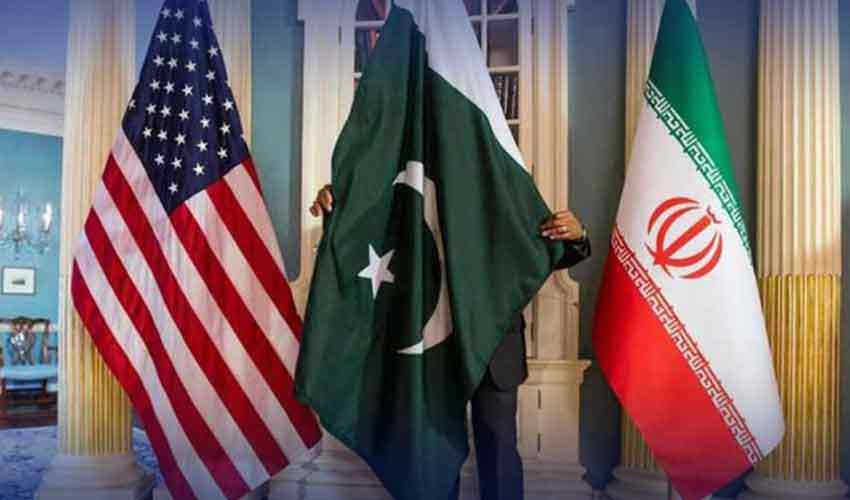
Iran’s Supreme National Security Council announced that the country has agreed to a two-week ceasefire in the ongoing conflict with the United States.
The ceasefire comes after Pakistan’s diplomatic intervention, led by Prime Minister Shehbaz Sharif and army chief Field Marshal Asim Munir, which urged restraint from Washington and Iran to allow diplomacy to proceed.
The ceasefire is contingent on the complete, immediate, and safe reopening of the Strait of Hormuz, coordinated with Iran’s armed forces.
Iran’s 10-point peace proposal
Iran submitted a comprehensive 10-point proposal to the United States through Pakistan, outlining conditions for peace and regional stability. Key elements include:
-
Commitment to non-aggression by the US
-
Continuation of Iranian control over the Strait of Hormuz
-
Acceptance of Iran’s uranium enrichment program
-
Lifting of all primary sanctions imposed by successive US administrations
-
Lifting of all secondary sanctions
-
Termination of all UN Security Council resolutions against Iran
-
Termination of all Board of Governors resolutions
-
Payment of full compensation to Iran for war-related losses
-
Withdrawal of US combat forces from the region
-
Cessation of all hostilities, including operations against Hezbollah and allied groups
Iran’s National Security Council described the acceptance of the proposal as a historic victory, crediting the country’s resilience and military readiness for forcing the US to comply with Iran’s terms.
Safe passage through Strait of Hormuz
Foreign Minister Abbas Araghchi confirmed that, under the ceasefire, attacks against Iran are halted, and Iranian forces will suspend defensive operations.
Statement on behalf of the Supreme National Security Council of the Islamic Republic of Iran: pic.twitter.com/cEtBNCLnWT
— Seyed Abbas Araghchi (@araghchi) April 7, 2026
Safe passage through the Strait of Hormuz will be allowed for two weeks under coordination with Iran’s armed forces, ensuring uninterrupted global oil transit, he added in a statement posted to X.
Pakistan’s role in facilitating peace
The ceasefire and agreement on Iran’s 10-point proposal came after sustained diplomatic efforts by Pakistan. Prime Minister Shehbaz Sharif and Field Marshal Asim Munir were acknowledged by Araghchi for their “tireless efforts to end the war in the region.”
Also Read: PM Shehbaz appeals to Trump, Iran for two-week ceasefire
Islamabad has positioned itself as a key mediator between Tehran and Washington, helping establish a framework for further negotiations.
Talks in Islamabad
The Iranian security council said formal negotiations between the US and Iran are scheduled to begin in Islamabad on Friday, April 10, using Iran’s 10-point proposal as the baseline. While the ceasefire provides temporary relief, Iran has stressed that its armed forces remain prepared to respond immediately to any violation.
Iran’s leadership emphasized unity and vigilance among its people, warning that even a minor misstep by the United States could provoke a full military response.
US officials have indicated that the Trump administration is preparing for possible in-person negotiations between American and Iranian representatives in the coming days, aimed at reaching a long-term agreement to end hostilities between Washington and Tehran.
Also Read: Trump agrees to ceasefire after 'talks with PM Shehbaz, Field Marshal'
White House Press Secretary Karoline Leavitt told CNN, “There are discussions about in-person talks, but nothing is final until announced by the President or the White House.”
The proposed meeting is expected to take place in Islamabad, with Pakistani mediators present, officials added. The two-week ceasefire recently announced by both the US and Iran has made such a meeting increasingly feasible.
Key US participants are expected to include Trump’s special envoy Steve Witkoff, son-in-law Jared Kushner and Vice President JD Vance. The US VP is currently in Hungary, and the sources hitned that a stop could be added to his trip if the timing was right.
The Iranian state media also reported that the talks could be extended if both sides agreed, clarifying that the talks did not mean end of war.
.jpg)