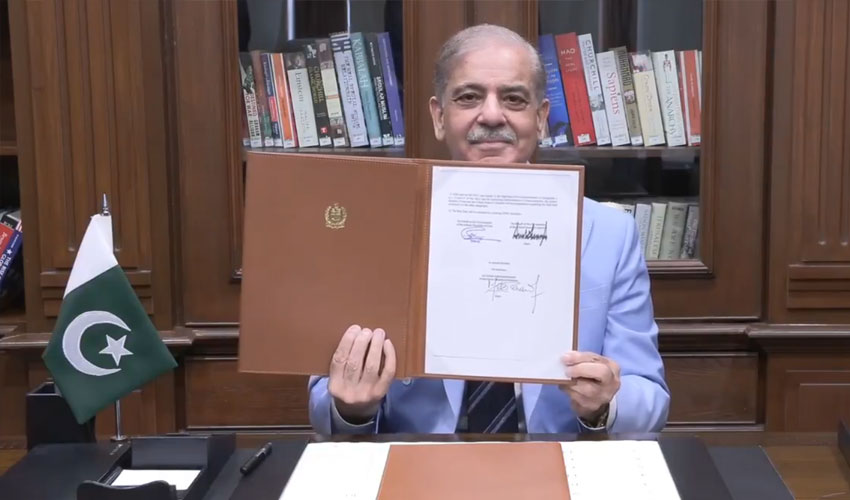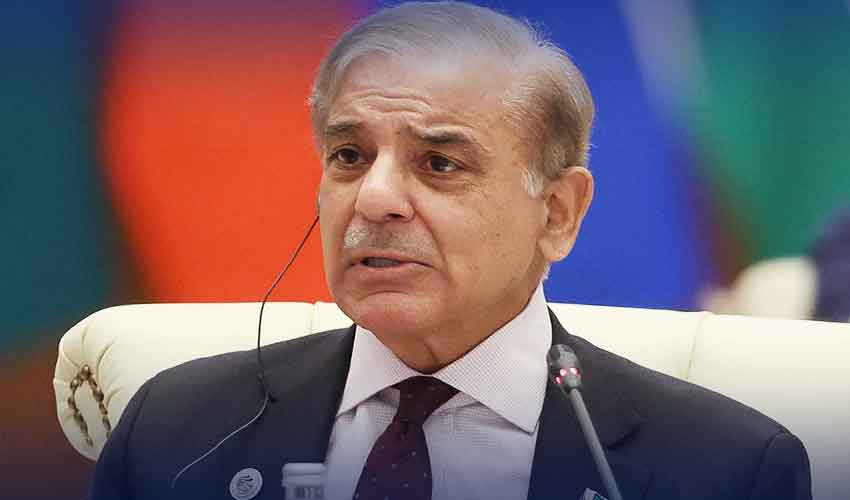
Prime Minister Shehbaz Sharif late on Tuesday called for urgent de-escalation in the Middle East, urging US President Donald Trump to extend a critical deadline by two weeks and appealing to Iran to reopen the strategically vital Strait of Hormuz.
In a message posted on X, the premier said diplomatic efforts aimed at resolving the ongoing conflict were “progressing steadily, strongly and effectively,” expressing hope that tangible outcomes could emerge soon.
“To allow diplomacy to run its course, I earnestly request President Trump to extend the deadline for two weeks,” Sharif said. He added that Pakistan, “in all sincerity,” had also requested Iranian authorities to reopen the Strait of Hormuz for the same duration as a goodwill gesture.
Diplomatic efforts for peaceful settlement of the ongoing war in the Middle East are progressing steadily, strongly and powerfully with the potential to lead to substantive results in near future. To allow diplomacy to run its course, I earnestly request President Trump to extend…
— Shehbaz Sharif (@CMShehbaz) April 7, 2026
The appeal came just hours before a deadline set by Washington, with Trump warning of severe consequences if Iran failed to lift its blockade on Gulf oil routes. The US president had earlier issued a stark warning, saying that failure to comply could result in widespread destruction of Iranian infrastructure.
Sharif also called on “all warring parties” to observe a two-week ceasefire, stressing that such a pause was essential for diplomacy to reach a “conclusive termination of war” and ensure long-term regional stability.
According to reports, Pakistan has been actively acting as a mediator between Washington and Tehran, relaying proposals aimed at reducing tensions. A senior Iranian official indicated that Tehran was positively reviewing Islamabad’s proposal for a temporary ceasefire.
Also Read: Pakistan actively mediating Iran-US ceasefire: Dar
The White House acknowledged receipt of Pakistan’s request, with officials stating that Trump had been briefed and a response would follow.
While diplomatic channels remain open, recent developments, including reported attacks on Saudi industrial facilities, have raised concerns that negotiations could falter, further deepening the global energy crisis.
Pakistan’s latest intervention underscores its attempt to play a stabilising role, pushing for dialogue over confrontation at a time when the region stands on the brink of wider conflict.
Earlier, Deputy Prime Minister and Foreign Minister Ishaq Dar informed Senate that Prime Minister Sharif and Field Marshal Syed Asim Munir were making continuous efforts to facilitate a ceasefire between Iran and the United States.
He emphasized that Pakistan seeks no recognition or awards, but aims solely to establish peace in the region.
Addressing the Upper House, Dar said Pakistan was playing a proactive diplomatic role to end the conflict, acting as a mediator between the two nations.
He added that both Iran and the United States had agreed to Pakistan’s facilitation, and Islamabad-hosted talks were deemed acceptable by both parties. Pakistan had conveyed the 15-point conditions from the United States and the five-point demands from Iran to each side.
Dar stated that the efforts of the PM, Field Marshal Munir, and himself had resulted in a temporary pause in hostilities.



.jpg)