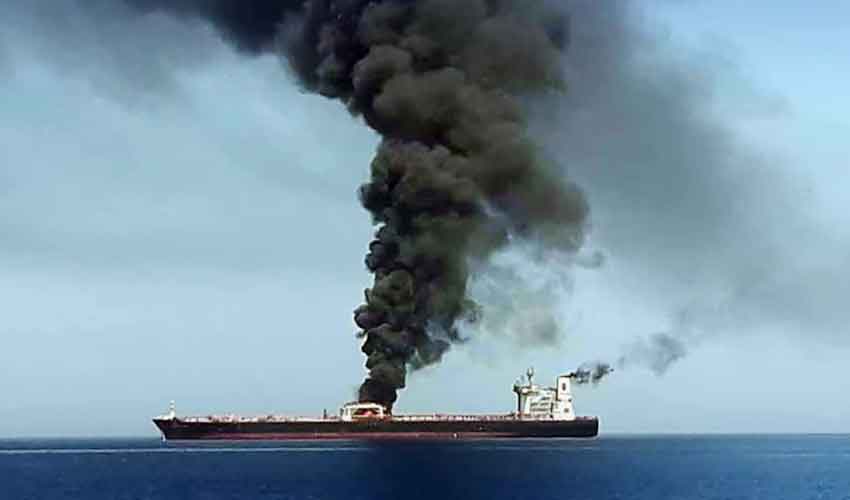
US President Donald Trump has issued a stark warning to Iran, saying the country could be “taken out in one night” if it fails to agree to a ceasefire deal.
The ultimatum comes as diplomatic efforts, including Pakistan-mediated talks, continue behind the scenes. Trump said Iran must agree to a deal by Tuesday night, calling the deadline final and unlikely to be extended.
He warned that failure to comply could lead to widespread attacks on infrastructure, including power plants and bridges.
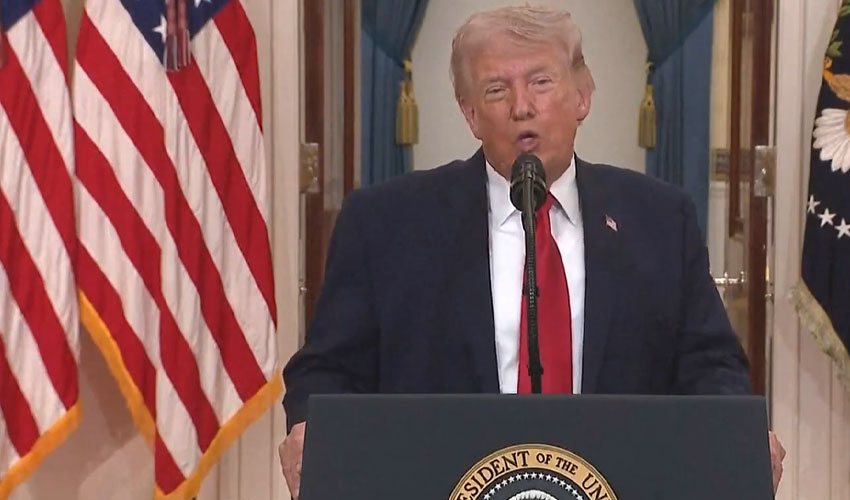
Speaking at a White House press conference, Trump said, “The entire country can be taken out in one night, and that night might be tomorrow night.”
He added that he hoped such action would not be necessary but reiterated that military options remain on the table.
Pakistan playing key mediation role
Trump confirmed that US officials are in contact with intermediaries in Pakistan to negotiate a possible resolution.
He said Vice President JD Vance, envoy Steve Witkoff, and Jared Kushner are actively engaged in talks, with the possibility of in-person meetings also being considered.
VIDEO | Washington, DC: On talks with intermediaries from Pakistan, US President Donald Trump says, “JD Vance, Steve Witkoff, and Jared Kushner are talking to Pakistan... JD Vance could be involved in an in-person meeting with the intermediaries also.”
— Press Trust of India (@PTI_News) April 6, 2026
Source: Third Party
(Full… pic.twitter.com/VZ9Dj929ep
Also Read: Entire Iran can be taken out on Tuesday night: Trump
Speaking to reporters during the Easter Egg Roll event at the White House, Trump said that Vice President JD Vance, US Middle East envoy Steve Witkoff, and his son-in-law Jared Kushner are engaged in discussions with intermediaries in Pakistan.
When asked whether Vance would continue these talks, Trump said: “Well, he is, and we have Steve Witkoff and Jared Kushner talking. They’re all unified and they’re all talking.“
Responding to a question about whether Vance could join an in-person meeting, Trump said: "Could be."
The US has reviewed a proposal for a 45-day ceasefire, which Trump described as a “significant step” but not sufficient.
Reports indicate that Pakistan has presented a broader peace plan, often referred to as the “Islamabad Accord,” aimed at halting the five-week conflict.
What is ‘Islamabad Accord’?
The proposed agreement includes two phases. The first phase calls for an immediate ceasefire and reopening of the Strait of Hormuz, while the second phase involves 15–20 days of negotiations toward a comprehensive peace deal.
The final agreement may include limits on Iran’s nuclear programme in exchange for sanctions relief and release of frozen assets.
Iran rejects initial US proposal
Iran has reportedly rejected the US ceasefire proposal, instead presenting a 10-point plan. Tehran’s proposal includes demands such as ending regional conflicts, ensuring safe passage through the Strait of Hormuz, lifting sanctions, and reconstruction efforts.
Also Read: Iran rejects ceasefire, demands permanent end to war
Trump has demanded that Iran reopen the Strait of Hormuz, a critical global oil route, by the deadline. He warned that failure to do so could result in large-scale destruction of Iranian infrastructure.
Pentagon signals escalation
US Defense Secretary Pete Hegseth indicated that the largest volume of strikes since the start of operations could occur, with even more expected the following day.
This suggests a potential escalation if diplomatic efforts fail.
Addressing criticism that attacks on civilian infrastructure could constitute war crimes, Trump said he was not concerned. He argued that Iran possessing nuclear weapons would itself be a war crime, justifying US actions.
Also Read: Iran’s Supreme Leader says assassinations won’t weaken forces
Trump said that if it were up to him, the US would take control of Iran’s oil, though he acknowledged domestic opposition to prolonged conflict. He also claimed the US had attempted to arm Iranian protesters, but the weapons were diverted and never reached their intended recipients.
Conflict could end quickly
The US president said the ongoing five-week conflict could end rapidly if Iran complies with US demands. He added that negotiations appear to be happening in good faith, but insisted that Iran must take specific steps.
With the deadline approaching, diplomatic channels remain active, particularly through Pakistan’s mediation efforts. However, the situation remains tense as both sides weigh their options between negotiation and escalation.


.jpg)