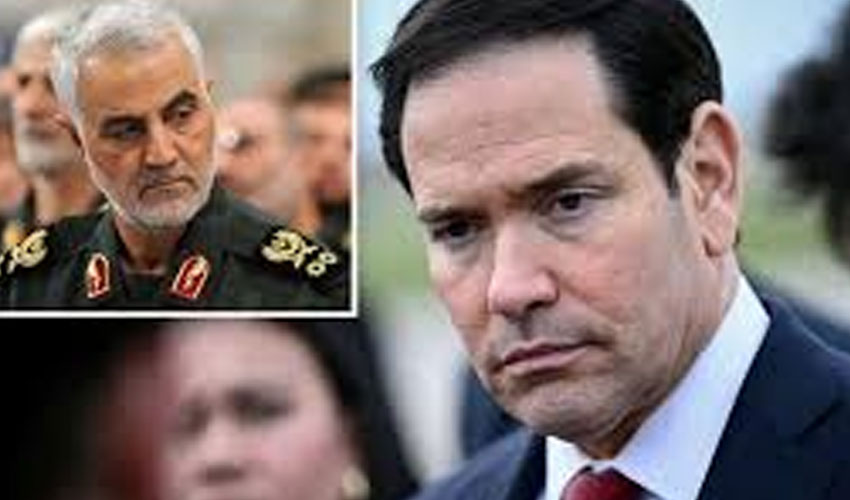
The United States has revoked the permanent residency of Hamideh Soleimani Afshar, niece of the late Iranian general Qassem Soleimani, and her daughter, citing their support for Iran.
The move, confirmed by the US State Department, has raised questions about free speech and family accountability in the US.
The Department of State announced on Saturday that Soleimani Afshar and her daughter were arrested by Immigration and Customs Enforcement (ICE) on Friday night. Both women are currently being held as the US government seeks their departure from the country.
Citing media reports and social media posts, the State Department described Soleimani Afshar as “an outspoken supporter of the totalitarian, terrorist regime in Iran” and stated that such activity would not be tolerated under President Donald Trump.
“The Trump Administration will not allow our country to become a home for foreign nationals who support anti-American terrorist regimes,” the statement read.
Marco Rubio takes credit
US Senator Marco Rubio publicly took credit for the decision to revoke the women’s green cards. On social media, he wrote, “This week, I terminated both Afshar and her daughter’s legal status. She is also an outspoken supporter of the Iranian regime who celebrated attacks on Americans and referred to our country as the ‘Great Satan.’”
The State Department also highlighted Soleimani Afshar’s “lavish lifestyle” in Los Angeles, using it to reinforce its case for revoking her residency.
Iranian family denies ties
Iranian media quoted Zeinab Soleimani, daughter of Qassem Soleimani, denying any connection between the women arrested and the late general. “The individuals arrested in the United States have no connection whatsoever to martyr Soleimani, and the claim made by the US State Department is false,” she said.
The arrests occur amid the fifth week of the US and Israeli conflict with Iran, which began on February 28. This case is reportedly the second known instance this month where the Trump administration has stripped legal immigration status from individuals allegedly linked to Iranian leaders.
The incident has reignited discussions about the limits of free speech in the US and whether family members of foreign political figures can be penalized for their relatives’ actions. Analysts note that such cases are rare but politically sensitive, particularly during heightened international tensions.


.jpg)