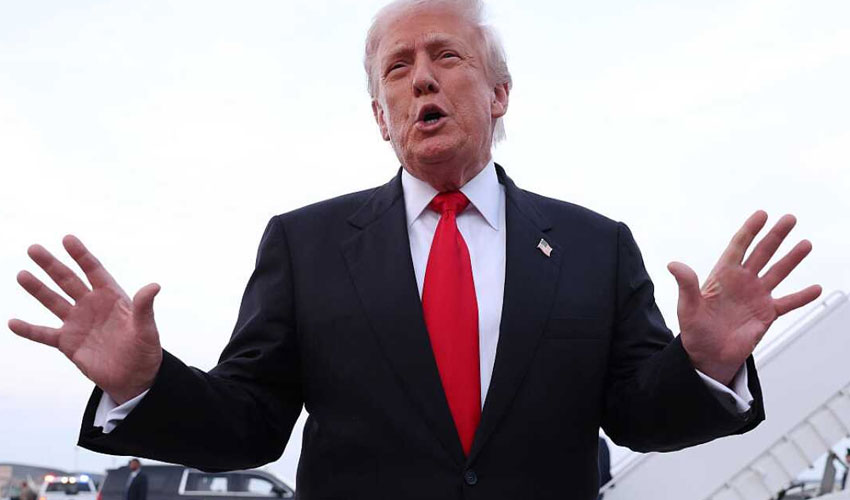
United States President Donald Trump on Friday urged lawmakers to approve a $1.5 trillion defence budget for 2027, citing rising costs from the ongoing war with Iran and expanding global security commitments.
The proposal would increase Pentagon spending by more than 40 percent in a single year — the steepest rise since World War II — as Washington looks to sustain military operations and replenish depleted weapons stockpiles.
The request reflects the mounting financial strain of a conflict now in its fifth week and is expected to trigger a political showdown in Congress over funding such a significant expansion in military spending.
According to US media reports based on closed-door briefings, the Iran war could be costing up to $2 billion per day, highlighting the scale of expenses even before long-term reconstruction and resupply costs are considered.
To partially offset the increase, the administration has proposed around $73 billion in cuts to non-defence spending, roughly 10 percent, targeting areas such as environmental programs, housing assistance, and education. Officials say these reductions are aimed at eliminating waste and shifting some responsibilities to state and local governments.
Trump has defended the defence hike as necessary during wartime, suggesting that military priorities must come first, even if it means scaling back federal social programs. He argued that services like daycare and healthcare could be managed at the state level while the federal government focuses on national security.
The budget proposal, released as a summary, is not binding but outlines the administration’s priorities as Congress begins drafting spending legislation. Lawmakers have the authority to revise or reject it.
Trump is pushing for more than $1.1 trillion of the defence budget to be approved through the standard appropriations process, while seeking to pass an additional $350 billion through a party-line mechanism that would not require Democratic support.
While some Republican leaders have expressed support, particularly for increased defence and immigration enforcement funding, there is also concern within the party about rising deficits.
The United States is already facing annual budget shortfalls nearing $2 trillion, with total national debt exceeding $39 trillion, leaving limited room for additional spending without widening the fiscal gap.
Lawmakers from both parties have raised concerns about the scale of the proposed military increase, especially given the lack of clarity on how long the Iran conflict may continue.
There is also skepticism over the proposed domestic spending cuts, many of which Congress has previously rejected. Earlier spending bills largely maintained funding for programs the administration is once again seeking to reduce.
In addition to defence, the proposal includes increased funding for federal law enforcement, with more than $40 billion earmarked for the Justice Department.
If fully implemented, the plan could add trillions more to the national debt over the coming years, underscoring the difficult choices lawmakers face between wartime spending and long-term fiscal stability.
Democratic lawmakers criticized the proposal, arguing that resources should be directed toward healthcare rather than military operations, and pledged to oppose the plan.




.jpg)