Prime Minister Shehbaz Sharif says Pakistan has made every possible effort to defuse regional tensions as the Iran-US war enters its second month.
At the same time, the government has launched sweeping austerity measures to tackle growing economic challenges.
Prime Minister Sharif said Pakistan has made every effort to cool the flames of war and promote peace in the region. He noted that the ongoing conflict has now entered its second month, expressing deep sorrow over martyrdoms during the war.
He also confirmed that he has held talks with Iranian authorities to help end the conflict, adding that peace will ultimately be established in the region.
Key role of leadership in diplomacy
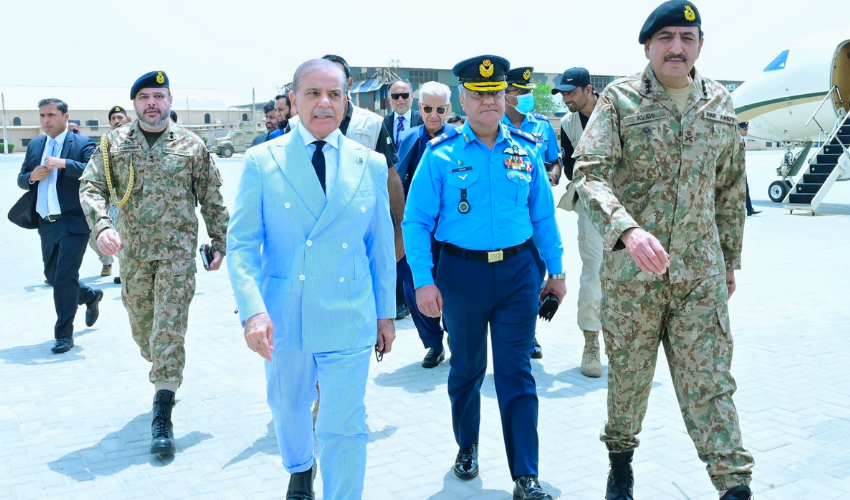
Shehbaz highlighted that Deputy Prime Minister Ishaq Dar and Field Marshal Asim Munir are playing a key role in diplomatic efforts. He credited their efforts, along with coordination at various levels, for progress on multiple fronts.
The prime minister revealed that arrangements have been made to allow 20 Pakistani-flagged ships to pass through the Strait of Hormuz. He also shared that two ships stranded in the Strait were successfully brought back to Pakistan through the efforts of Field Marshal Asim Munir and Ishaq Dar.
Economic impact of war
Shehbaz acknowledged that Pakistan, like other countries, is being affected by the war. He said the country is facing significant economic difficulties, with pressure mounting on stability and resources.
To manage the crisis, the federal government has taken major austerity steps. In the past three weeks, Rs100 billion has been cut from the Public Sector Development Programme (PSDP). Additionally, Rs139 billion has been allocated for the austerity campaign, which is now ongoing across the country.
Nationwide austerity campaign
The PM said the austerity drive includes strict measures:
-
Members of the assembly will not take salaries for two months
-
Government vehicles have been grounded
-
Funds are being collected to support the campaign
He thanked President Asif Ali Zardari and Bilawal Bhutto Zardari for their support in promoting austerity.
PM Shehbaz emphasized that both the federal government and provinces must work together to face the challenges posed by the war. The chief ministers have already assured full cooperation in this regard.
He urged governments to halt non-essential development projects and redirect funds toward urgent needs.
The prime minister stressed that protecting the poor remains the top priority, adding that wealthier segments of society must make sacrifices. He also highlighted the need to protect the agricultural sector and ensure smooth goods transportation.
Inflation control and economic stability
Controlling inflation is another key focus area, the prime minister said. He added that economic stability can only be achieved through political stability, calling for unity during difficult times.
Shehbaz appreciated the efforts of all stakeholders for maintaining economic stability under challenging conditions. He reiterated that austerity, resource management, and national coordination are essential to navigate the ongoing crisis.
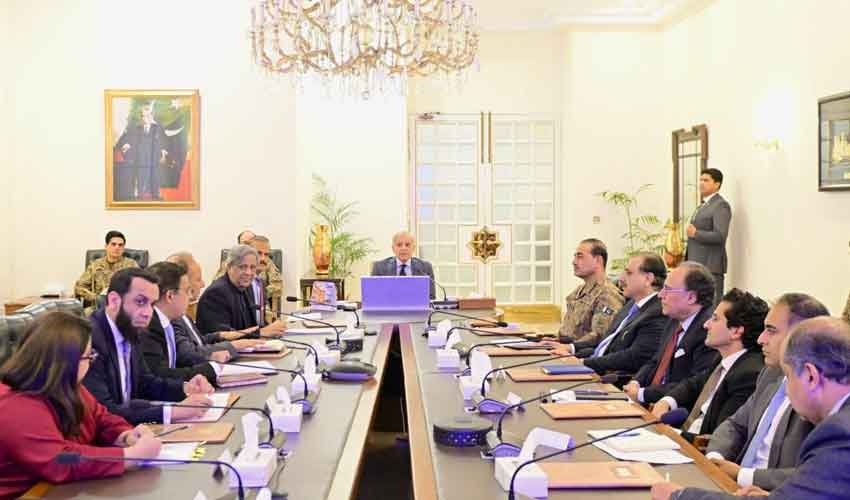
The meeting was attended by federal ministers and representatives from all provinces, reflecting a coordinated national response.
Senior leadership, including Field Marshal Asim Munir and chief ministers, also participated in the discussions. Additionally, the caretaker chief minister of Gilgit-Baltistan and the prime minister of Azad Kashmir were part of the meeting.



.jpg)